
Best Smart Locks for New York Apartment Buildings
New York apartment buildings demand more from a door lock than convenience alone. The best smart locks for New York apartment buildings combine reliable access control with practical installation and a dependable mechanical backup. They also make life easier for tenants, owners, property managers, and approved service providers.
Why New York Apartments Need a Different Smart Lock Strategy
New York housing includes prewar walk-ups, co-ops, condominiums, rentals, and newer managed buildings. Many apartment doors use mortise hardware, steel construction, or dimensions that do not match a standard suburban deadbolt.
For that reason, compatibility should lead the buying process. Measure door thickness, identify whether the door has a mortise lock or a standard deadbolt, and inspect the interior thumbturn. Ask management or the landlord for permission before changing exterior hardware. A renter-friendly smart lock that mounts inside over an existing deadbolt may be the simplest option because it preserves the building’s original exterior appearance.
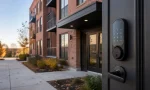

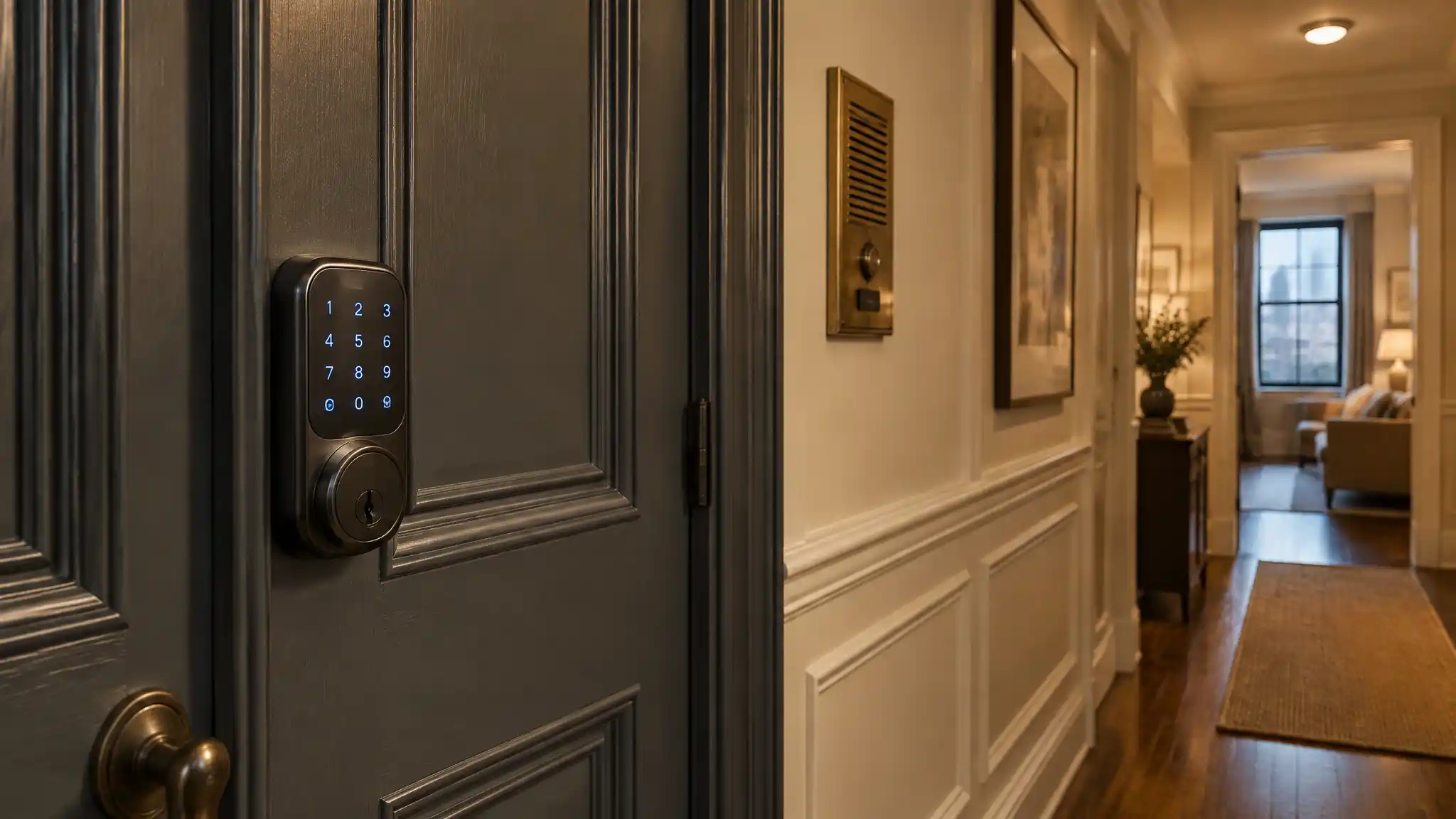
Security is equally important. Choose a model with a physical key backup or another clearly documented emergency-access method. A keypad door lock should also let residents use temporary codes rather than share a permanent code with every visitor.
Top Smart Lock Types for Apartment Buildings
Retrofit smart locks suit many renters because they automate the interior thumbturn while retaining the existing key cylinder. These models can support keyless entry without requiring a visible exterior replacement. They work especially well when a lease restricts modifications or when the apartment door must maintain a consistent look within the hallway.
Full replacement smart deadbolts fit owners and residents who receive approval for a hardware change. They commonly include a touchscreen or push-button keypad, app control, auto-lock settings, and a keyway. This approach creates a clean all-in-one entry point, but installation must match the door preparation precisely.
Some buildings need a broader apartment access control approach. A property manager may coordinate entrance credentials, unit access policies, intercom systems, and package-room permissions across the property. Individual unit locks should complement, not bypass, the building’s existing security plan. Never assume a consumer lock can control a common entrance without formal authorization and a suitable managed system.
Features That Deliver Real Value
Remote access is helpful when residents need to admit a dog walker, cleaner, family member, or maintenance professional. Yet convenience works best with limits. Set time-bound guest access codes for a specific day or recurring service window. Delete the code immediately when the arrangement ends. This practice gives residents far more control than copying a metal key.
An activity log offers another useful layer. It can show when an authorized code unlocked the door, helping residents confirm arrivals without handing over unrestricted access. Treat these records responsibly and review the privacy policy before selecting a connected lock. Smart home security should protect both the doorway and the information created by daily use.
Auto-lock is valuable for busy city households, but users should configure it carefully. A short delay can reduce accidental unlocked doors after a rushed departure. Door-status sensors can add confidence by distinguishing between a locked bolt and a door that is actually closed. Before relying on automation, test it repeatedly from inside and outside.
Biometric door locks can offer fast entry, but fingerprints should be only one choice, not the only choice. Residents need accessible alternatives such as a keypad, phone app, key, or backup credential. A battery-powered lock also needs a clear maintenance routine. Replace batteries on schedule, respond to low-power warnings, and keep emergency instructions available to everyone who is authorized to enter.
How to Choose the Best Model
Start with the resident profile. A single renter may value a reversible retrofit design and app-based control. Roommates may prefer multiple named codes. Owners may want a premium smart deadbolt with advanced integration, durable materials, and an elegant keypad. Building operators should prioritize consistent policies, audit capabilities, and professional installation.
Next, examine connectivity. Bluetooth can provide local control with modest power use. A Wi-Fi smart lock can enable remote access directly, although wireless reliability and battery consumption deserve attention. Select the connection method that fits the apartment’s network, rather than choosing features that will remain unused.
Smart home integration can be useful when it supports everyday habits. Residents may pair locks with a doorbell or voice assistant. However, a secure lock must still operate reliably if the internet is unavailable. Keep manual access available, protect the account with a strong unique password, and enable multi-factor authentication whenever the provider offers it.
Installation and Building Approval
Do not order a lock until you verify that it fits the door and complies with the lease, co-op rules, condominium policies, and fire-safety requirements. Management may require access for emergencies or may prohibit changes to a corridor-facing lock. A professional locksmith can confirm door preparation, alignment, backset, and clearance before a resident purchases hardware.
During installation, make sure the bolt moves smoothly. A motor cannot solve a badly aligned strike plate. Test locking, unlocking, the keypad, the physical key, alerts, and auto-lock several times. Give authorized building contacts only the access they are entitled to receive. When moving out, remove codes, disconnect the lock from the app, restore hardware, and reset the device according to the manufacturer’s instructions.
Final Recommendation
The best smart lock for a New York apartment building is the one that fits the existing door, respects building policy, and provides secure daily access without creating operational headaches. Prioritize compatibility, reliable fallback entry, controlled guest access, and thoughtful account security. For many renters, a retrofit lock protects the original hardware. For approved owner installations, a well-built keypad smart deadbolt adds convenient, flexible access.
Product Recommendation
Consider the Yale WiFi Smart Lock Deadbolt with Keypad, Assure Lock 2, for an approved standard-deadbolt installation. Amazon lists Wi-Fi remote app control, scheduled code sharing, keyless entry, and a backup key for this model. Confirm exact door compatibility and current listing details before purchasing: Yale Assure Lock 2 on Amazon.