
Best Air Purifiers for Florida Mold and Humidity Problems
Florida homes face a distinctive indoor-air challenge. Warm outdoor temperatures, frequent rain, coastal moisture, and long air-conditioning seasons can leave rooms damp even when windows stay closed. The right unit cannot repair a leak or remove established growth from drywall. It can, however, capture airborne particles and improve the comfort of a home while you solve the moisture source.
Why Florida Humidity Changes the Buying Decision
In a dry climate, homeowners may select an air purifier mainly for dust, pollen, or pet dander. In Florida, moisture control deserves equal attention. High indoor humidity can encourage mold growth on cool surfaces, behind furniture, around supply vents, and in closets with weak airflow. A purifier helps reduce exposure to airborne mold spores, but it does not lower humidity by itself unless the appliance specifically includes dehumidification.
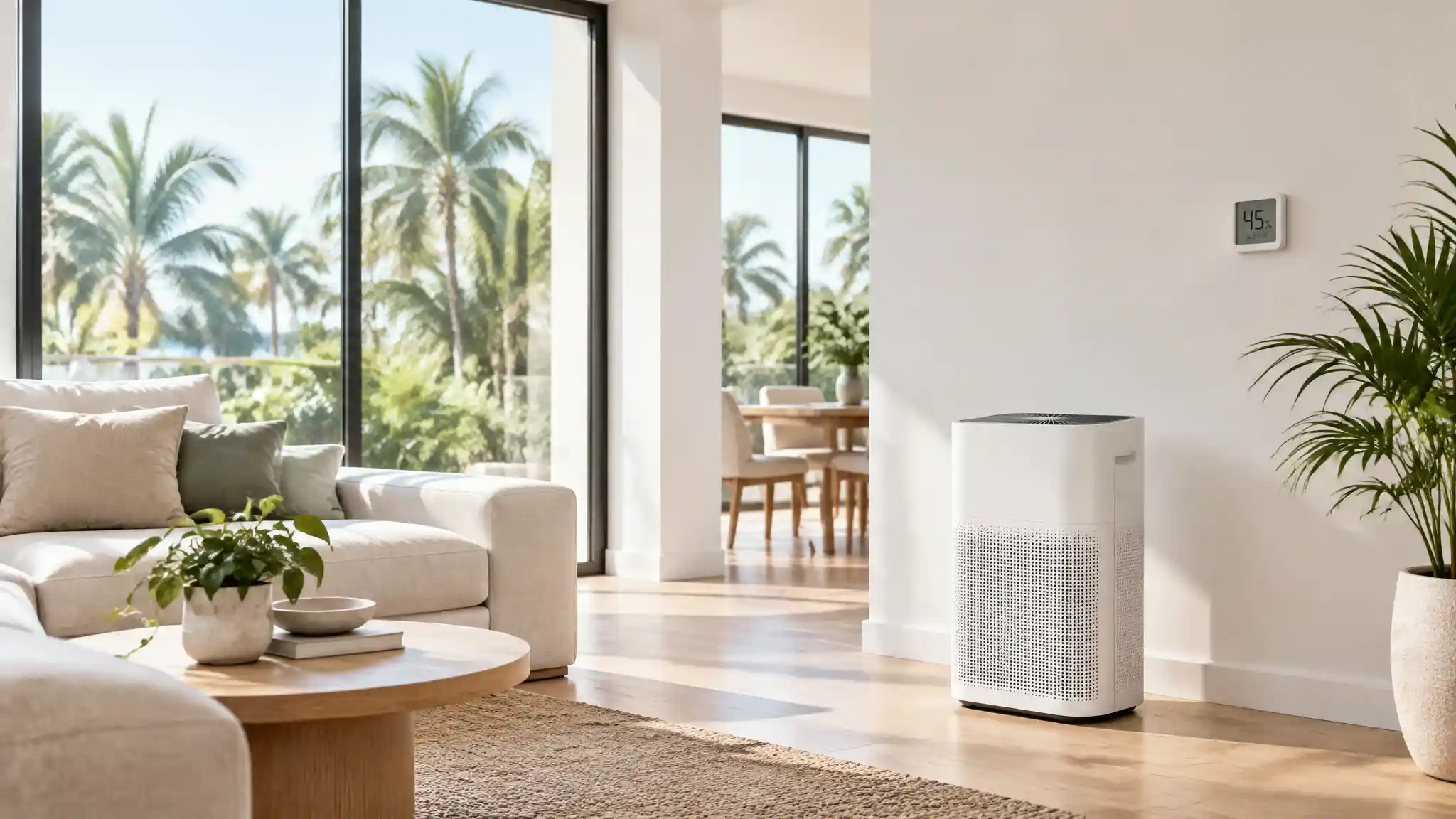
Start by measuring humidity instead of guessing. Many people find a compact hygrometer useful for checking bathrooms, bedrooms, and basements. Aim to keep indoor relative humidity below 50 percent when possible. Run exhaust fans during showers and cooking, dry wet towels quickly, and inspect condensation near windows or air handlers. These actions make a mold prevention plan more effective than buying a powerful machine and ignoring trapped moisture.


Look for True HEPA Filtration
The key feature in an air purifier for mold spores is a genuine high-efficiency particle filter. A True HEPA filter is designed to capture small airborne particles, making it a sensible choice for homes managing dust, pollen, and mold-related concerns. Avoid treating vague phrases such as “HEPA-type” as identical to True HEPA.
A layered design works best for most Florida households. The pre-filter catches larger debris such as hair and lint before it reaches the main filter. The HEPA layer handles fine particles. An activated carbon filter can help with musty odor and other household smells. Carbon does not remove visible mold from a wall, but it can make a room more pleasant while remediation and ventilation improvements take place.
Match CADR and Coverage to the Room
Room size matters more than a stylish housing or an oversized coverage claim. Clean Air Delivery Rate, commonly called CADR, indicates how quickly a purifier can deliver filtered air for certain particle categories. Choose a unit whose recommended area suits the actual room, not the entire floor plan. For a Florida bedroom with doors usually closed, use the bedroom’s square footage. For an open living area, include connected spaces where air moves freely.
It is wise to give the appliance extra capacity rather than running a small purifier at maximum speed all day. A properly sized unit can circulate air effectively at a quieter setting, which makes consistent use easier. Check coverage conditions, because brands may use different assumptions. In areas with recurring musty smells or known moisture history, stronger airflow and more frequent air changes can help, but they never replace professional mold remediation when contamination is extensive.
Choose Features That Support Daily Use
The best air purifier is one you will actually operate and maintain. For sleeping areas, prioritize a quiet air purifier with a true sleep mode and dimmable lights. For busy households, an air quality sensor and auto mode can adjust fan speed as particle levels change. A filter-change indicator also reduces the chance that you forget routine maintenance.
Consider the ongoing cost before purchasing. Replacement filters, electricity use, and availability affect the long-term value of any HEPA air purifier. Washable pre-filters can reduce the lint that reaches the main filter, but do not wash a non-washable HEPA cartridge unless the manufacturer explicitly permits it. Set a calendar reminder to inspect the pre-filter and replace filters on schedule. In Florida’s humid conditions, a neglected filter can restrict airflow and undermine performance.
Where to Place an Air Purifier
Placement shapes results. Position the machine on a stable, open surface or floor area with clearance around the intake and outlet. Keep it away from curtains, furniture, and tight corners that block circulation. In a bedroom, place it where air can move across the room without blowing directly at a sleeper all night.
If you notice a moldy smell near a closet, bathroom, or HVAC return, first investigate the source safely. Then run the purifier in the occupied area nearby, rather than expecting it to pull air efficiently through closed doors and walls. Keep interior doors open when practical, or use separate units for isolated rooms. Regular vacuuming with appropriate filtration, cleaning hard surfaces, and controlling moisture complement air purification.
What an Air Purifier Cannot Do
An air cleaner cannot kill or remove mold embedded in building materials, stop a roof leak, dry wet insulation, or replace an HVAC inspection. It also cannot substitute for medical advice if someone has breathing symptoms or allergies. When you see visible growth, persistent water damage, or a strong odor that returns after cleaning, identify and correct the moisture source.
Avoid relying solely on ionizers or ozone-producing devices for mold control. Focus first on mechanical filtration, adequate ventilation, and humidity management. Some products offer UV-C features, but a strong filter, appropriate room capacity, and consistent operation remain the core priorities for everyday indoor air quality.
A Practical Florida Buying Checklist
Before you buy, measure the room, identify moisture sources, and decide where the unit will run. Select a purifier with True HEPA filtration, a useful carbon layer, and room coverage that fits your space. Review filter availability, noise information, and the manufacturer’s cleaning instructions. If humidity stays high, add a dehumidifier rather than assuming an air purifier handles both jobs. This balanced approach supports cleaner air, better odor control, and a more resilient Florida home.
Amazon Product Recommendation
For a medium room, consider the Clorox Medium Room Air Purifier on Amazon. Its Amazon listing describes a True HEPA filter, automatic mode, quiet operation, and coverage up to 1,000 square feet; it also states that the unit reduces mold particles. Confirm the current price, availability, replacement-filter cost, and suitability for your room before ordering. Use it alongside moisture control, not as a standalone fix for active mold damage.