
Florida Diving and Snorkeling: Choosing Best Underwater Action Cameras
Florida rewards people who bring a camera beneath the surface. Springs reveal glassy blue water and shifting shafts of light, while reefs, wrecks, seagrass beds, and shore entries deliver fast-moving subjects. The best underwater action cameras help divers and snorkelers record that experience without turning a relaxed water day into a complicated technical project. A strong choice protects the camera, stays easy to operate with wet hands, and produces usable clips when visibility or light changes.
Why Florida Conditions Change the Buying Decision
Florida is not one single underwater environment. A shallow snorkel outing can be bright, warm, and active; a spring dive can look clear but create challenging contrast; an offshore reef dive may lose color and light as depth increases. Salt, sand, spray, boat handling, and repeated entries also test every seal and button.
Prioritize Reliable Video Over Inflated Specifications
Resolution matters, but it does not tell the entire story. A 4K action camera gives you room to crop a wide shot or export a detailed travel video. However, a sharp-looking specification cannot rescue unstable, dark, or badly colored footage. Look for a sensor and processing system that retain detail in moving water and mixed light.
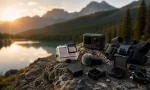
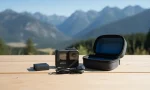
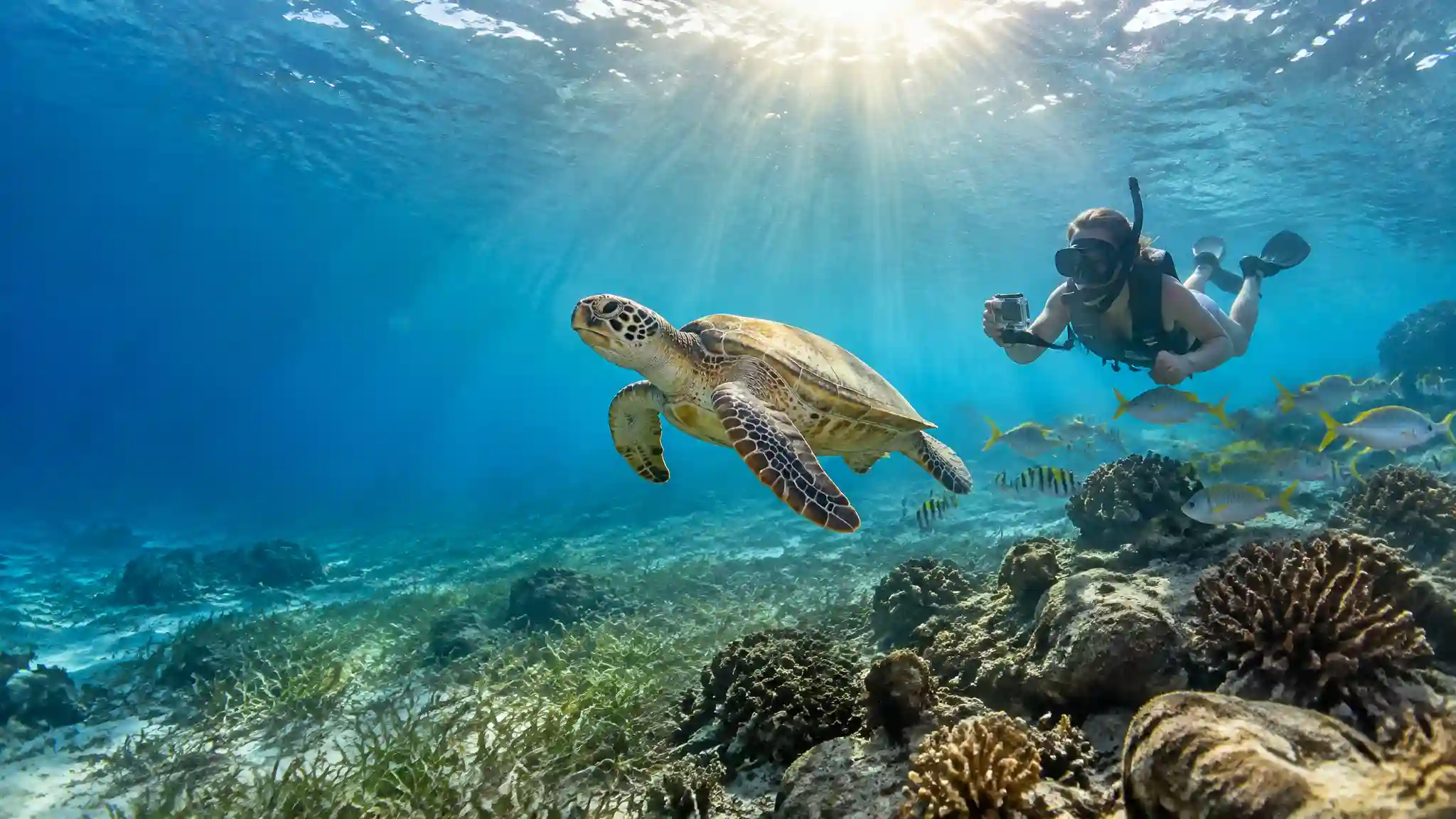
Image stabilization deserves equal attention. While swimming, even smooth fin kicks create small movements that become distracting on screen. Effective electronic stabilization helps create watchable sequences of turtles, schooling fish, or a diver moving through an opening. It also benefits first-time users who do not yet hold a camera steadily. Avoid assuming every stabilization mode works at every resolution or frame rate; review the available recording options before buying.
A wide-angle underwater lens works well for reefs, dive buddies, and scenic spring walls because it lets you move closer while keeping the subject and surrounding water in the frame. Getting close remains one of the most effective underwater video tips. Water reduces contrast and apparent detail between camera and subject, so respectful proximity generally looks better than aggressive digital zoom.
Color, Low Light, and Filters
Water absorbs warm colors rapidly. At shallow depths on a clear day, automatic settings may deliver pleasing results. As you go deeper, scenes can become increasingly blue or green. An underwater color correction filter can help in appropriate conditions, but it is not magic. The filter choice must fit the water color, depth, light, and camera’s white-balance behavior.
Choose a camera that offers practical white balance control, dependable automatic color, or easy color adjustment during editing. For deeper dives, consider adding a dive video light instead of relying entirely on a filter. A light restores color on close subjects and helps the camera focus, though it will not illuminate an entire reef. Keep your beam controlled and never shine it directly into marine animals’ eyes.
Choose a Housing and Mounting System You Trust
An action camera is only as dive-ready as its housing. For snorkeling, the camera’s native waterproof rating may cover shallow use, but a dedicated housing adds protection from impacts and may be necessary for scuba depth. Confirm the stated depth limit, compatibility with your exact camera, and whether buttons remain usable underwater.
A secure grip also improves safety and storytelling. A floating hand grip helps keep a camera from sinking during snorkeling, although it is unsuitable for a deep dive if it creates excessive buoyancy. A tray with two handles offers greater stability and room for lights, while a wrist lanyard provides a helpful backup. Use a snorkel camera mount thoughtfully: chest, mask, and pole mounts create different points of view, and none should interfere with safe movement, mask clearing, or access to essential gear.
Battery, Storage, and Dive-Day Workflow
Underwater filming drains batteries faster than many people expect. Recording high-resolution video, running stabilization, and using a rear screen all consume power. Pack fully charged spare batteries where the manufacturer permits replacement, and take more memory-card capacity than your rough estimate suggests. A fast, reliable card that meets the camera’s stated requirement reduces the risk of interrupted recording.
Best Camera Features for Different Florida Adventures
Snorkelers often benefit most from compact size, a wide field of view, a floating grip, and easy one-button recording. They can focus on short, bright clips of fish, rays, and friends at the surface. Divers may place more value on a robust dive housing, color controls, battery swaps, and mounting options for lights. Freedivers should favor a small, streamlined setup that does not snag or add unnecessary drag.
Travelers who want social-ready videos may appreciate automatic editing tools and reliable stabilization. Creators planning longer projects should value manual controls, flat color profiles where available, and files that edit well. The right camera is not automatically the most expensive model; it is the one whose controls you can learn and whose complete underwater setup you can use confidently.
How to Capture Better Footage Immediately
Start every session with a short test clip. Check that the lens is clear, the recording indicator is active, and the housing has no trapped bubbles across the port. Hold shots longer than feels necessary, then move slowly. Let fish enter and leave the frame rather than chasing them. Film at their level whenever possible, use the sun behind you when conditions allow, and include a human or natural foreground element to show scale.
Respect Florida’s underwater environment as you shoot. Maintain buoyancy, avoid touching coral or wildlife, and never reposition an animal for a photo. Great Florida snorkeling videos come from patience and observation, not from getting too close. When you surface, review only a few clips; spending the entire trip on a screen can make you miss the experience you came to record.
Final Recommendation
For a versatile starting point, consider the GoPro HERO13 Black with an appropriate compatible dive housing for scuba use. It is a well-known action-camera option for travelers who want wide-angle video, stabilization, and a broad accessory ecosystem. Before ordering, confirm the current Amazon.com listing, included accessories, housing compatibility, seller details, and warranty terms. Availability and bundles can change, so choose the listing that clearly identifies the camera version and the depth-rated housing you need.
A thoughtful setup, careful seal checks, and restrained shooting technique will make more difference than any single feature. Choose the best underwater action camera for your Florida plan, practice above water, and enter each dive ready to protect both the reef and your footage.