
Body Network Technology: How Smart Wearables and Implants Could Transform Healthcare
A New Way for Medical Devices to Communicate
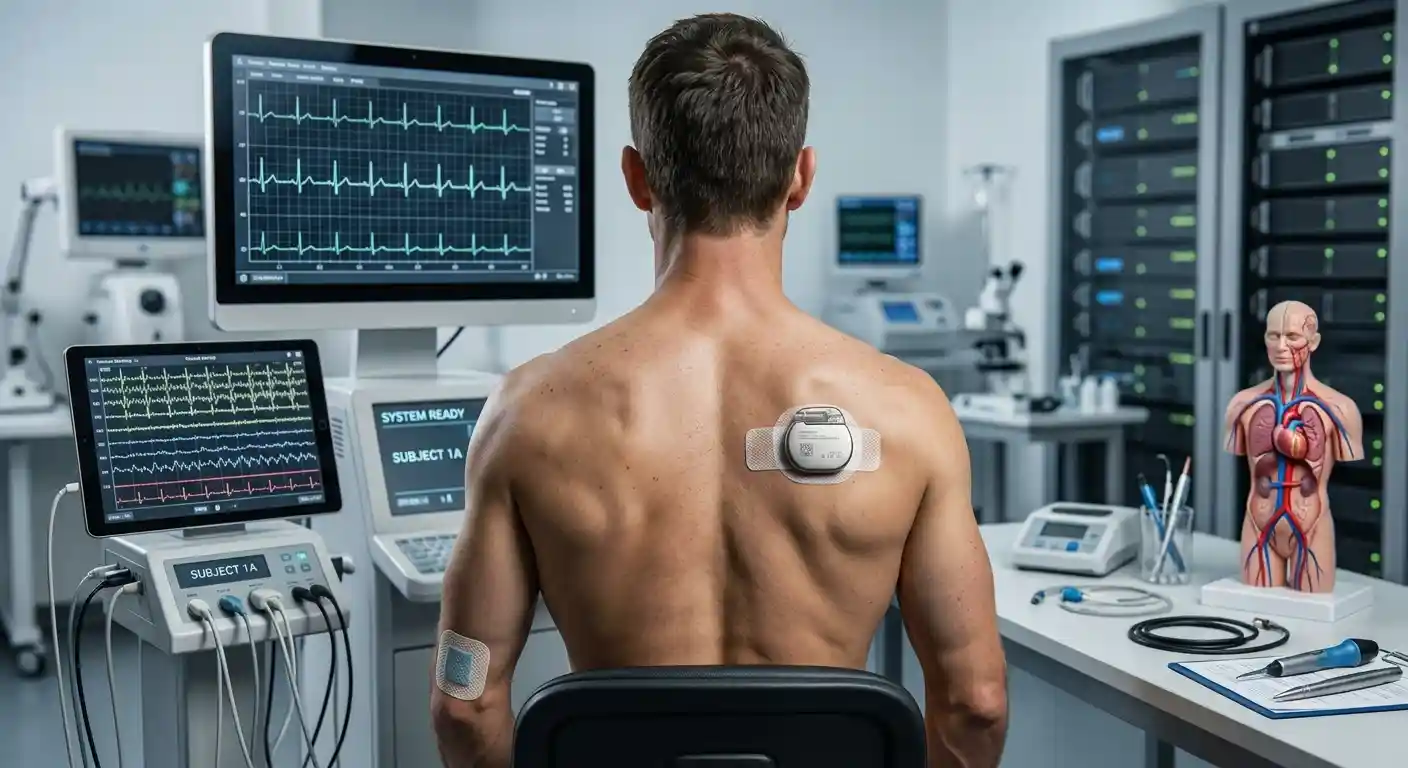
Engineers at the Georgia Institute of Technology have developed a wireless networking system that lets health wearables and implantable devices communicate through the human body. Instead of relying on conventional radio signals, the system uses the body’s natural ionic conductivity to carry tiny electrical pulses between devices. The research, published in Science, introduces a platform called SWANS, or Smart Wireless Autonomous Networking System.
A sensor could monitor a biological signal in one area, while a separate implant could deliver a therapeutic response somewhere else. Because the devices do not need to sit next to one another, align precisely, or share a direct connection, researchers can place each component where it performs best. This design may support more responsive and personalized healthcare in the future.
Why Traditional Wireless Signals Are a Challenge
Bluetooth and NFC work well for many consumer electronics, but body tissue creates major obstacles for traditional wireless communication. The body does not transmit these signals efficiently, especially when devices sit deep inside tissue. Conventional systems may also require antennas, batteries, and supporting electronics that increase implant size and energy consumption.
SWANS addresses those limitations by treating tissue as the communication channel. Each implant responds to electrical pulses with a specific voltage and duration. This selective response helps the network activate the intended device without triggering every implant at once. The approach can connect several sensors and actuators throughout the body, including devices positioned deep inside the stomach.
Millimeter-Scale Implants and Low-Power Operation
The team created implants smaller than three millimeters, making them small enough for delivery through a syringe rather than conventional surgery. These devices use passive electronic components and consume essentially no power while they wait for a signal. When an authorized pulse arrives, an implant wakes up and performs its programmed action.
This low-power design could extend the useful life of an implant and reduce the need for frequent replacement procedures. In experiments, the researchers estimated that a tiny actuator triggered once per day could operate for about a year before replacement. They also reported that the electrical pulses produced no damage in the tissue samples they tested. These findings are promising, although future studies must establish how the system performs in larger animals and human patients.
Demonstrating Coordinated Motor Control
The researchers tested the network in a rat by combining sensors with neural interfaces. A sensor detected movement in the animal’s front paw, then the system autonomously sent a signal to another device. That second device stimulated and contracted a muscle in the hind leg, creating a coordinated movement that simulated part of the animal’s natural walking pattern.
A device can sense an event in one location and trigger an action in another without requiring a bulky central implant. The study does not claim that these applications are ready for routine clinical use; instead, it provides an early proof of how distributed medical devices might cooperate.
Small Data, Smarter Healthcare
SWANS is not designed to send large files or stream complex information between implants. It communicates simple signals, such as whether a biological condition is present or whether an action should begin. An external wearable hub can handle larger data transfers, combine readings from multiple sensors, and coordinate the network.
Tiny implants can remain simple, small, and energy efficient, while a wearable device supplies computing power and a user-facing connection. The arrangement could help clinicians design closed-loop healthcare systems that monitor a patient continuously and respond when a specific condition appears. For example, a future network might detect a physiological change and activate a therapy only when necessary, potentially reducing unnecessary treatment.
The research also shows how engineers can separate sensing from treatment, creating flexible architectures that may adapt to different conditions and individual therapeutic needs over time.
What This Means for Bioelectronic Medicine
The Georgia Tech work points toward a body area network in which wearables, implantable sensors, and therapeutic actuators function as one coordinated system. Instead of treating each device as an isolated tool, clinicians could place specialized devices across the body and allow them to exchange targeted commands.
However, questions remain. Researchers must evaluate long-term biocompatibility, reliability, cybersecurity, device retrieval, and performance across different body tissues. Medical teams will also need clear evidence about safety and clinical benefit before using such networks in people. Ethical standards and secure data practices will become important as connected medical devices take a more active role in treatment.
A Step Toward Automated, Personalized Care
SWANS offers a compelling model for future healthcare: detect a biological signal where it appears, interpret it through an intelligent network, and deliver therapy exactly where it is needed. Its body-based communication method could reduce implant size while enabling devices to cooperate across distant locations.
By combining wearable health technology with implantable therapeutics, engineers are moving toward more adaptive and patient-centered bioelectronic medicine. The next stage will depend on careful validation, transparent clinical research, and product development. If those challenges are addressed, in-body networking could become more widely used in medical care systems that act faster, work more precisely, and fit more naturally into everyday life.
Amazon Product Recommendation
For readers who want to explore today’s consumer wearable health technology, the Google Fitbit Inspire 3 is a practical starting point. Amazon lists it with stress management, sleep tracking, and continuous heart-rate features. It is not an implantable medical device and cannot reproduce the SWANS network, but it can help users observe everyday health trends through a wearable format. Check the listing, compatibility, subscription terms, and medical-use limitations before purchasing: Google Fitbit Inspire 3 on Amazon.com.