Can U.S. Data Centers and Electric Vehicle Fleets Co‑Exist on the Same Grid?
The rapid growth of artificial intelligence, cloud computing, and digital services is driving an unprecedented expansion of data centers across the United States. At the same time, the transportation sector is undergoing a major transformation as electric vehicles (EVs) move from niche status to mainstream adoption. These two megatrends are converging on a single, critical infrastructure: the electricity grid.
This raises an increasingly urgent question: Can U.S. data centers and electric vehicle fleets reliably operate on the same grid without overwhelming it? The short answer is yes—if the right technologies, policies, and planning strategies are adopted. In fact, with smart management, data centers and EV fleets can not only coexist, they can actively support grid reliability and accelerate the energy transition.
Rising Electricity Demand From Data Centers and EV Fleets
Data centers are among the most energy‑intensive facilities in the modern economy. They run 24/7, host thousands of servers, and require constant cooling to maintain performance. As AI workloads and cloud services expand, the power demand per facility can reach hundreds of megawatts, comparable to a small town or industrial plant.
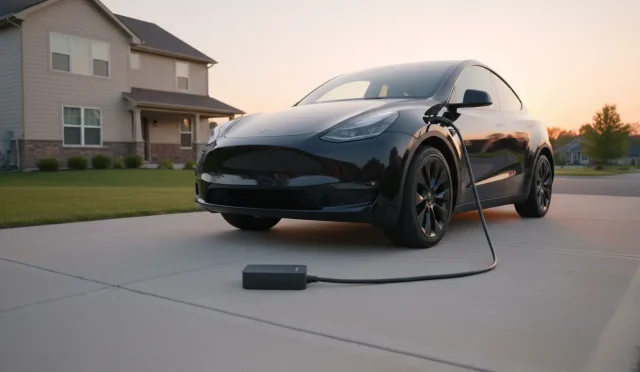
On the other side, electric vehicles—especially fleet operations such as delivery vans, ride‑hailing cars, municipal buses, and corporate fleets—introduce large, concentrated charging loads. When many vehicles plug in at the same depot during evening hours, local demand can spike dramatically.
In many U.S. regions, these demands are rising at roughly the same time:
- More hyperscale data centers clustered near major cities and fiber routes
- Growing corporate and municipal commitments to electrify vehicle fleets
- Aging grid infrastructure in need of modernization
Without coordination, simultaneous growth in both sectors can create local grid bottlenecks, higher peak demand, and potential reliability risks.
Why Co‑Location on the Same Grid Matters
In practice, U.S. data centers and EV fleets often share the same substations, distribution lines, and regional transmission systems. The question is not whether they can be physically connected—they already are—but whether the grid can accommodate both without excessive upgrades or instability.
Co‑location matters for several reasons:
- Cost of Grid Upgrades
Building new transmission lines, substations, or feeders is capital‑intensive and time‑consuming. If data centers and EV fleets both drive up peak demand in the same area, utilities may need to invest heavily in upgrades, with costs ultimately passed to ratepayers. - Peak Demand and Reliability
If EV charging peaks in the evening and data center loads remain high and constant, the combined effect can stretch grid capacity. This is especially critical during extreme weather events, when electricity demand is already high. - Decarbonization Goals
Both sectors are key to U.S. decarbonization strategies: EVs reduce tailpipe emissions, and efficient data centers can help optimize energy use across the economy. Ensuring they grow in a coordinated, grid‑friendly way is essential to meeting climate targets.
The Role of Smart Charging and Load Management
The key to making coexistence work lies in flexible, intelligent demand management. Unlike traditional industrial loads, both data centers and EV fleets can incorporate some degree of flexibility in when and how they consume power.
For EV fleets, smart charging technologies allow operators to:
- Schedule charging during off‑peak hours
- Stagger vehicle charging sessions to avoid local overloads
- Respond to price signals from utilities to reduce consumption when the grid is stressed
Fleet operators can plan charging based on route schedules, battery state of charge, and grid conditions. For example, a logistics company may delay charging a portion of its fleet until late-night hours when overall demand is lower and renewable energy output may be higher in certain regions.
For data centers, the options for flexibility are more nuanced but still significant:
- Workload shifting: Some non‑urgent computing tasks, such as batch processing or model training, can be shifted to times or locations with more available grid capacity.
- Demand response participation: Data centers can reduce non‑critical loads or temporarily rely more heavily on on‑site energy during grid emergencies.
- Optimized cooling strategies: Advanced cooling systems can pre‑cool facilities or adjust settings based on grid conditions.
When these strategies are coordinated, data centers and EV fleets can avoid overlapping peaks and ease the stress on shared grid infrastructure.
On‑Site Renewables, Storage, and Microgrids
Another crucial piece of the puzzle is the increasing use of on‑site energy resources by both data centers and large EV fleets. These resources can significantly reduce reliance on the grid during critical moments.
- Solar and Wind Power
Many U.S. data centers are already contracting large amounts of utility‑scale solar and wind through power purchase agreements (PPAs). Some also deploy on‑site solar arrays. EV fleets, particularly those based at large depots, can integrate rooftop or ground‑mounted solar to supply daytime charging. - Battery Energy Storage Systems (BESS)
High‑capacity batteries allow both sectors to store energy when it is plentiful and cheap, then discharge it during peaks. Data centers can pair batteries with on‑site generation to form resilient microgrids, while EV fleets can use stationary storage alongside vehicle batteries. - Microgrids and Islanding Capability
Advanced data centers increasingly explore microgrids capable of “islanding” from the main grid during outages or price spikes. In some scenarios, EV fleets located within the same industrial park or campus can be integrated into a shared microgrid, helping balance local supply and demand.
Vehicle‑to‑Grid (V2G): From Load to Grid Asset
One of the most promising developments for long‑term coexistence is vehicle‑to‑grid (V2G) technology. Instead of being passive loads, EVs—especially fleets with predictable schedules—can act as mobile energy storage assets.
In a mature V2G ecosystem, EV fleets could:
- Discharge power back to the grid during peak demand
- Support local voltage and frequency regulation services
- Provide backup power to critical data center operations in emergencies
While V2G is still in early stages of deployment in the U.S., the technical potential is significant. For data centers, having large EV depots nearby that can flexibly interact with the grid can actually improve grid stability, rather than threaten it.
Policy, Regulation, and Utility Planning
Technical potential alone is not enough. The ability of U.S. data centers and EV fleets to share the grid depends heavily on regulatory frameworks and utility planning practices.
Key policy and planning needs include:
- Time‑of‑use and dynamic pricing that incentivize EV fleets and data centers to shift demand away from peak hours.
- Clear interconnection procedures for both large data centers and high‑capacity charging depots, reducing delays and uncertainty.
- Grid modernization investments such as advanced metering, distribution automation, and digital twins to forecast and manage load growth.
- Programs for demand response and flexibility that explicitly include data centers and commercial EV fleets as participants.
In many U.S. regions, regulators and utilities are beginning to treat data centers and EV fleets as strategic partners in grid management, rather than as passive consumers. This shift is essential to enabling high penetrations of both.
Can the Grid Handle Both? Conditions for Success
Under current trajectories, U.S. grids will face substantial stress from growing digital and transportation loads. However, successful coexistence is achievable under several conditions:
- Early, Coordinated Planning
Utilities, data center developers, and fleet operators need to collaborate from the earliest project stages. Proactive planning of substation capacity, line upgrades, and local generation can prevent future bottlenecks. - Flexible Demand and Smart Technologies
Both sectors must embrace smart charging, demand response, and workload management as standard practice, not afterthoughts. - Decentralized and Clean Energy Resources
Broad deployment of renewables, storage, and microgrids will reduce the strain on traditional grid infrastructure, especially in high‑growth corridors. - Supportive Regulatory Environment
Policies must reward flexibility, transparency, and investments in grid modernization, while aligning financial incentives across utilities, large customers, and technology providers.
When these conditions are met, data centers and EV fleets are not simply compatible with the U.S. grid—they become powerful tools to stabilize it, decarbonize it, and drive economic growth.
Conclusion
U.S. data centers and electric vehicle fleets can absolutely coexist on the same grid, but not under a “business as usual” approach. Their integration requires smarter planning, advanced technologies, and a new mindset that treats large electricity consumers as active participants in grid stability.
With coordinated action—combining smart charging, flexible data center operations, on‑site renewables, storage, and evolving regulatory frameworks—the same grid that powers AI and cloud computing can also support millions of electric vehicles. Instead of competing for scarce capacity, data centers and EV fleets can become complementary pillars of a more resilient, efficient, and sustainable U.S. energy system.