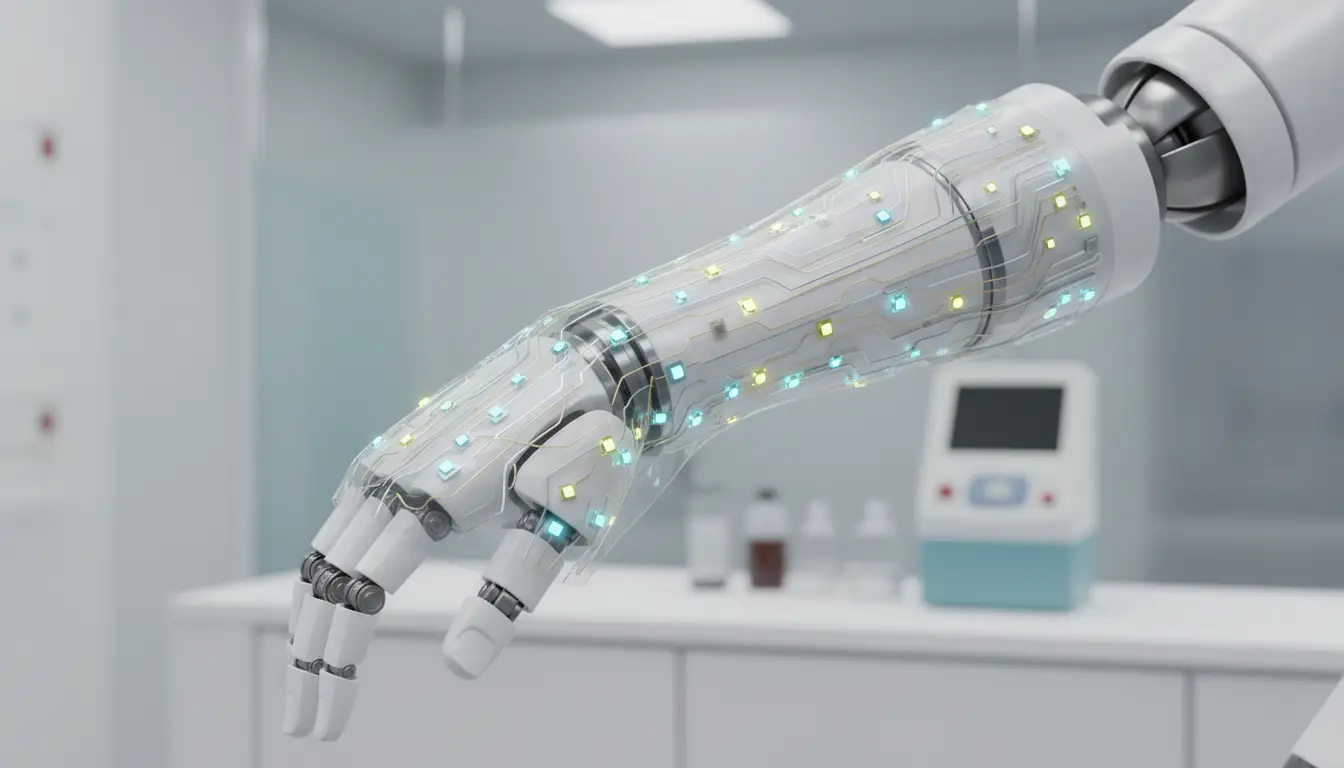

E‑Skin Sensors — Flexibility as Sensitive as Human Skin
Electronic skin, commonly known as e‑skin, represents one of the most transformative innovations in modern material science. Designed to mimic the flexibility, sensitivity, and tactile perception of human skin, e‑skin sensors are reshaping the way machines interact with the physical world. From medical wearables to soft robotics, these ultra-thin devices merge engineering with biology to deliver intuitive and adaptive sensing capabilities. As industries race toward smarter, more responsive technologies, e‑skin is emerging as a cornerstone of next‑generation products.
What Makes E‑Skin Sensors Unique?
E‑skin stands apart from traditional sensors because it can bend, stretch, twist, and compress without losing performance. Unlike rigid electronics, these sensors integrate flexible polymers, conductive nanomaterials, and stretchable circuits, enabling them to conform to irregular surfaces. This structural elasticity allows e‑skin to mimic human tactile functions such as pressure, vibration, temperature, and even humidity detection.
Researchers design e‑skin materials to be ultra-lightweight and biocompatible, supporting daily use on human skin or sensitive robotic components. Their high‑resolution sensing grid helps capture real-time data with remarkable precision, providing meaningful insights in applications like rehabilitation, wearable health tracking, and autonomous machines.
How E‑Skin Sensors Work
The operation of e‑skin sensors involves multiple layers engineered to perform specific functions. The top layer typically acts as a protective, breathable membrane, while deeper layers contain microstructured pressure sensors, stretchable electrodes, and temperature-sensing films. These layers collaborate to convert physical stimuli into electrical signals that can be processed instantly.
Most e‑skin systems use piezoresistive, capacitive, or piezoelectric mechanisms to measure force changes. The material’s structure allows deformation to directly influence electrical properties, which is then interpreted as tactile feedback. This makes e‑skin ideal for any application requiring sensitive real‑time touch detection.
Applications Across Industries
1. Wearable Health Monitoring
One of the fastest‑growing applications of e‑skin sensors is in healthcare. Their softness and breathability make them ideal for continuous use on the human body. These sensors can track:
- Heart rate
- Blood pressure
- Muscle movement
- Body temperature
- Hydration levels
Flexible bio-sensors enhance remote patient monitoring and early disease detection by transmitting live data to healthcare providers. Their precision helps reduce errors associated with traditional devices.
2. Prosthetics With Real Sensation
E‑skin is revolutionizing prosthetic technology by restoring a sense of touch. When applied to artificial limbs, e‑skin sensors allow users to experience pressure, vibration, and temperature, making movements more natural and intuitive. This human‑machine interface dramatically improves prosthetic comfort and usability.
3. Robotics and Automation
Soft robotics rely heavily on tactile sensing to interact safely with humans and delicate objects. E‑skin sensors give robots a human‑like ability to perceive pressure changes, slip detection, and surface textures. In manufacturing, this capability helps robots handle fragile materials while improving precision.
4. Smart Textiles and Fashion Tech
E‑skin can be embedded into smart clothing to monitor physiological signals without the need for bulky devices. Fitness apparel manufacturers integrate these sensors to track muscle activation, posture alignment, and performance metrics. The seamless design ensures comfort while delivering advanced biofeedback.
5. AR/VR and Gaming Interfaces
E‑skin plays a vital role in immersive technologies. Wearable haptic suits equipped with tactile sensors create a realistic feedback loop, enhancing virtual reality experiences. Gamers feel interactions that mirror real‑world sensations, bridging digital and physical environments.
The Advantages of E‑Skin Sensors
E‑skin sensors offer several advantages over conventional electronics:
- Ultra-flexibility allows full-body coverage and adaptation to curved surfaces.
- High accuracy and sensitivity mimic natural human touch.
- Lightweight and breathable materials allow long-term wear.
- Low power consumption supports continuous monitoring.
- Biocompatibility ensures safe contact with human skin.
These benefits make e‑skin a preferred choice for next‑generation wearables and robotics.
Challenges and Ongoing Developments
Despite significant breakthroughs, e‑skin technology faces challenges that researchers are actively working to overcome:
1. Durability Under Repeated Stress
Long-term mechanical stretching may degrade performance. Scientists are experimenting with self-healing materials to increase durability.
2. Power Supply Integration
Ultra-thin power solutions remain a challenge. Innovations like energy‑harvesting circuits—powered by movement or body heat—are promising.
3. Scalability for Mass Production
Manufacturing flexible circuits at a large scale is costly and complex. Advances in printed electronics could help reduce expenses.
4. Data Security
Continuous health monitoring requires robust encryption to protect sensitive data.
E‑skin continues to evolve, and its future depends on solving these technical challenges while expanding multidisciplinary collaboration.
The Future of E‑Skin Technology
Looking ahead, e‑skin sensors will likely become as common as smartphones in daily life. Future developments may include:
- Artificial intelligence integration for smart pattern recognition
- Self-powered e‑skin patches that never require charging
- Medical implants with sensory capabilities
- Ultra-thin displays integrated into e‑skin
- Human‑robot hybrid interfaces
Innovators across healthcare, robotics, sports, and consumer technology are already preparing products that rely on e‑skin to deliver superior human‑centric experiences. As e‑skin transitions from research labs to real-world products, it will pave the way for intuitive, adaptive, and responsive digital ecosystems.