
E-waste Recycling Guide (USA): How to Responsibly Dispose of Electronics and Protect the Planet
Electronic waste, or e-waste, is one of the fastest-growing waste streams in the United States. From smartphones and laptops to printers, cables, and smart home devices, Americans upgrade electronics frequently, which leads to millions of tons of discarded devices every year. When e-waste isn’t handled properly, it can release toxic substances such as lead, mercury, and cadmium into the environment. But when recycled responsibly, those same devices become valuable sources of recoverable materials like gold, copper, aluminum, and rare earth elements. This guide explains how e-waste recycling works in the U.S., why it matters, how you can recycle your electronics safely, and which laws and programs can help you do it right.
What counts as e-waste in the U.S.?
E-waste includes any discarded electronic device or accessory. This covers:
- Computers, laptops, monitors, and keyboards
- Smartphones, tablets, and e-readers
- TVs (LCD, LED, plasma) and set-top boxes
- Printers, scanners, and fax machines
- Audio equipment, speakers, headphones, and gaming consoles
- Small household electronics like routers, modems, smart home hubs, and digital cameras
- Batteries, chargers, cables, and power supplies
Note: Appliances like refrigerators and microwaves may fall under “e-scrap” or “appliance recycling” depending on your local program, but many e-waste collection sites accept them or can refer you to the correct facility.
Why e-waste recycling matters
- Environmental protection: Electronics contain hazardous substances that can leach into soil and groundwater if landfilled. Safe recycling ensures toxic components are properly managed.
- Resource recovery: A single ton of circuit boards can contain more gold than a ton of mined ore. Recycling recovers metals and rare materials that reduce the need for virgin mining.
- Energy and emissions savings: Recovered metals and plastics require far less energy to reuse than to extract and refine from raw materials, lowering greenhouse gas emissions.
- Data security: Certified recyclers follow strict protocols to wipe or destroy data-bearing components, protecting consumers and businesses from data breaches.
- Circular economy: Responsible reuse and refurbishment extend device life, lower costs for consumers, and reduce waste.
U.S. e-waste regulations and standards
The U.S. does not have a single federal e-waste law; instead, regulations exist at the state level. Over 25 states have electronics recycling laws, and many require manufacturers to fund or manage take-back programs. Two widely recognized certification standards help you identify responsible recyclers:
- R2 (Responsible Recycling): Focuses on environmental, health, safety, and data security practices for electronics reuse and recycling.
- e-Stewards: A rigorous standard that prohibits export of hazardous e-waste to developing countries and ensures best-practice environmental and worker protections.
When possible, choose recyclers or collection programs that are R2 or e-Stewards certified. Many municipalities list approved vendors on their websites.
How e-waste recycling works
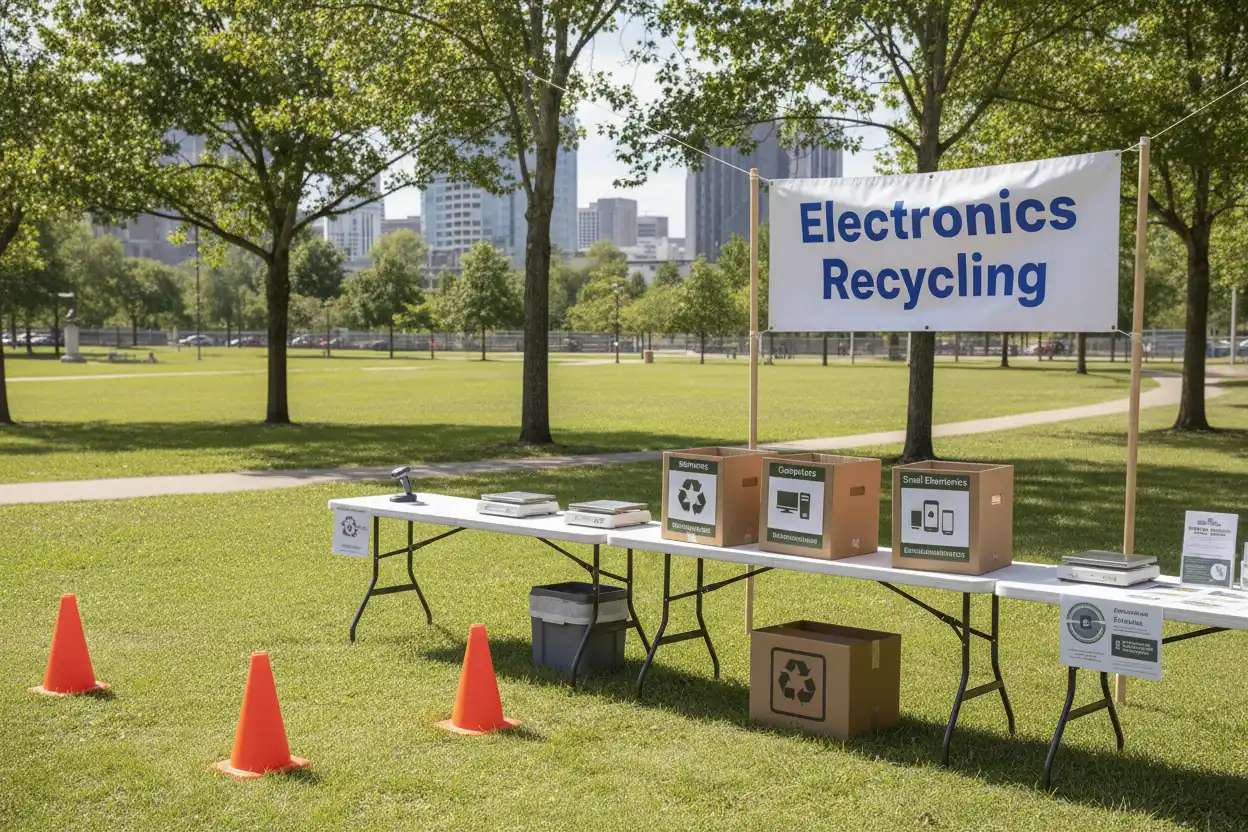
- Collection: Devices are gathered through drop-off events, retail take-back programs, mail-in services, or municipal collection sites.
- Sorting and triage: Reusable devices are identified for refurbishment, while non-functional items go to material recovery.
- Data sanitization: Certified recyclers securely wipe or shred storage media (HDDs, SSDs, memory cards) using NIST-compliant methods.
- Disassembly: Devices are taken apart to separate batteries, circuit boards, plastics, and metals.
- Material recovery: Advanced processes extract copper, gold, silver, palladium, aluminum, steel, and high-grade plastics for re-entry into manufacturing.
- Responsible disposal: Non-recyclable or hazardous fractions are treated and disposed of according to environmental regulations.
Practical steps to recycle electronics in the U.S.
- Audit your devices: Gather old phones, laptops, cords, and accessories in one place. Check drawers where cables and chargers pile up.
- Back up and reset: Save your data to an external drive or cloud. Perform factory resets on phones, tablets, and laptops, and sign out of accounts (Apple ID, Google, Microsoft).
- Remove SIM and storage: Take out SIM cards, memory cards, and detachable storage.
- Wipe or destroy drives: If you have a PC with a removable drive, consider using secure erase tools or request a certificate of data destruction from the recycler.
- Verify certifications: Look for R2 or e-Stewards credentials. Check your state or city website for approved collection sites.
- Use manufacturer and retailer programs: Brands like Apple, Dell, HP, and others offer trade-in or free recycling. Many retailers (Best Buy, Staples, etc.) accept a wide range of electronics, often including cables and batteries.
- Handle batteries separately: Lithium-ion and rechargeable batteries require special handling. Tape over terminals and bring them to designated drop-off points if required by your local program.
- Consider donation or resale: If your device still works, donate to a school, nonprofit, or refurbisher, or sell it on a reputable platform. Reuse is even better than recycling.
Special categories: batteries, TVs, and data-bearing devices
- Batteries: Never toss rechargeable batteries in the trash. Many states prohibit this due to fire risks and toxicity. Use retailer take-back bins or municipal hazardous waste programs.
- Televisions and monitors: Older CRTs and some LCDs contain hazardous materials and may incur a small recycling fee. Plan ahead for bulky item drop-off or pick-up services.
- Hard drives and SSDs: For business or sensitive personal data, request serialized tracking and a destruction certificate. Some recyclers offer on-site shredding services.
How to find e-waste drop-off locations near you
- Your city or county website: Search for “electronics recycling” or “household hazardous waste” pages with calendars and approved lists.
- Manufacturer portals: Check the “recycling” or “trade-in” sections of brand websites.
- Retail take-back: Many national chains provide drop-off services; confirm accepted items and quantity limits before visiting.
- Mail-in services: If local options are limited, certified recyclers offer prepaid shipping kits for phones, laptops, and accessories.
Tips to reduce e-waste before it starts
- Buy for longevity: Choose devices with repairable designs, replaceable batteries, and long software support windows.
- Maintain and repair: Replace batteries, upgrade RAM or SSDs, and fix cracked screens rather than replacing the entire device.
- Opt for refurbished: High-quality refurbished electronics can cut costs and environmental impact without sacrificing performance.
- Share and trade: Participate in device libraries, swap groups, or trade-in programs to keep products in use longer.
- Minimize accessories: Standardize on universal chargers and cables to avoid excess e-waste.
What to expect at a certified recycler
A reputable U.S. e-waste recycler should:
- Provide clear acceptance lists and any fees
- Offer data sanitization/destruction with documentation
- Disclose certifications (R2 or e-Stewards) and audit status
- Maintain worker safety and environmental controls
- Ensure downstream vendors are vetted and compliant
Transparency is a strong indicator of responsible handling.
Common myths about e-waste recycling
- “Throwing small electronics in the trash is fine.” Even small devices can cause fires or leach toxins. Always use proper channels.
- “Deleting files is enough.” Simple deletion doesn’t permanently remove data; use factory resets and secure erase where possible.
- “Recycling isn’t worth it.” Material recovery rates and energy savings are significant, and reuse/refurbishment can dramatically extend product life.
Business e-waste and compliance
Companies in the U.S. face additional obligations:
- Data protection: Implement certified data destruction for all storage media and maintain records.
- Asset tracking: Use serial-number tracking for chain-of-custody documentation.
- Policy and vendor due diligence: Establish an electronics disposition policy and choose certified partners.
- Reporting: Maintain certificates of recycling and destruction for audits and ESG reporting.
The bottom line
E-waste recycling in the U.S. is both a personal responsibility and a practical opportunity. By choosing certified programs, preparing your devices properly, and prioritizing reuse, you help protect the environment, recover valuable materials, and safeguard your data. With a few informed steps, every upgrade can have a smaller footprint and a bigger positive impact.