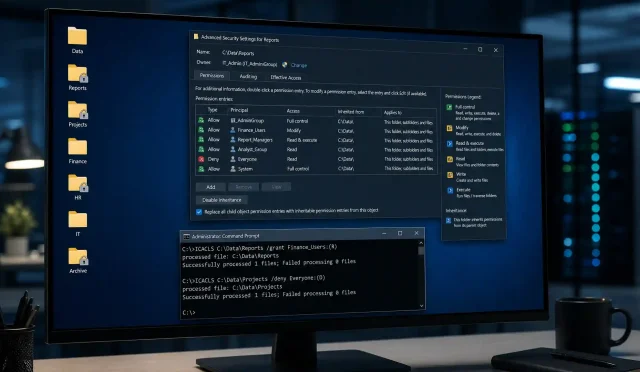

In modern software development, data analysis, and content operations, file versioning and rollback are foundational practices that ensure continuity, traceability, and resilience. Whether you are maintaining a codebase, collaborating on design assets, or managing business documents, a clear versioning strategy prevents data loss, reduces human error, and accelerates recovery from mistakes. This guide explains the key principles, actionable best practices, and practical tooling to help you implement robust file versioning and rollback procedures—while keeping SEO in mind for discoverability.
Why file versioning matters
File versioning is the practice of tracking changes to files over time. It allows you to:
- Reconstruct any historical state of a file or project
- Audit who changed what and when (and why)
- Experiment with features safely without destabilizing main files
- Enable concurrent collaboration without overwriting others’ work
- Roll back quickly when a change introduces defects or breaks workflows
Rollback, the companion practice, is the controlled process of reverting files or systems to a previously known-good state. Together, they form a safety net that reduces downtime and boosts team confidence.



Core principles of effective versioning
- Semantic clarity over chaos
Adopt a naming or tagging convention that communicates intent. For code, semantic versioning like MAJOR.MINOR.PATCH is common (e.g., 3.4.2). For documents and assets, use structured file names with timestamps and authors (e.g., proposal_v2025-10-29_JD.docx). - Single source of truth
Centralize your files in a version control system (VCS) or repository to avoid divergence. A unified system prevents shadow copies and ensures everyone works from the same baseline. - Atomic, frequent commits
Make small, self-contained changes with clear commit messages. This improves traceability and reduces the blast radius of bad changes. - Immutable history with reversible changes
Prefer adding new commits over rewriting history, except in cases where commit squashing or rebase is agreed upon in team policy. Immutability simplifies auditing and compliance. - Strong metadata and documentation
Every version should be accompanied by context: author, date, purpose, scope, and link to tickets or approvals. This informational layer is invaluable for diagnostics and governance.
Best practices for version control workflows
- Use branches strategically
- Main (or trunk): always production-ready.
- Develop: integration branch for features.
- Feature branches: isolated development work.
- Hotfix branches: urgent fixes to production.
Protect main with reviews and automated checks.
- Enforce code reviews and approvals
At least one peer review before merging to main. Use checklists for testing, security, and documentation. Reviews not only catch defects but also standardize design and style. - Automate tests and validations
Integrate CI pipelines to run unit tests, linters, security scans, and build checks on each PR. Prevent merges that violate quality gates. - Tag releases and create changelogs
Use annotated tags for releases. Maintain a human-friendly changelog summarizing features, fixes, and breaking changes. This accelerates rollback decisions and stakeholder updates. - Set up protected branches and required status checks
Require passing CI, code review approvals, and up-to-date branches before merge. This policy discipline significantly reduces regression risk.
Rollback strategies that minimize risk
- Roll forward if possible
Sometimes it’s faster and safer to fix forward with a new change rather than revert. Use rollback only when the impact is severe or the root cause is unclear. - Prepare reversible deployments
- Blue/green deployments: switch traffic between two identical environments.
- Canary releases: gradually roll out to a small percentage of users first.
- Feature flags: toggle features on/off without redeploying.
These patterns provide low-risk rollback levers.
- Keep database changes reversible
- Write migration scripts with down/rollback steps.
- Use backward-compatible schema changes (e.g., expand-and-contract).
- Avoid destructive operations without backups and rehearsed restores.
- Snapshot and back up regularly
For binary assets and large files, create frequent snapshots and test your restore procedure. A backup you haven’t restored successfully is not a reliable backup. - Document runbooks
Create step-by-step rollback procedures with clear roles, commands, and verification checks. During incidents, clarity prevents mistakes.
Tooling options for versioning and rollback
- Git and hosted platforms (GitHub, GitLab, Bitbucket)
Industry standard for source code and text-based assets. Offers branching, pull requests, protected branches, tags, and issue links. - Large File Support (LFS) and artifact repositories
Git LFS, Nexus, or Artifactory help manage large binaries, datasets, and builds. Tag artifacts with versions and metadata for reproducibility. - Content management and document systems
SharePoint, Google Drive (with version history), or Notion maintain document versions and restore points for business teams. - Infrastructure as Code (IaC)
Terraform, Pulumi, or CloudFormation keep infrastructure declarative and versioned. Use state locking, plan reviews, and drift detection to facilitate safe rollbacks. - Observability and tracing
Link releases to telemetry dashboards (logs, metrics, traces). A fast detection signal shortens time-to-rollback and prevents prolonged impact.
Governance, compliance, and security considerations
- Access controls and least privilege
Restrict who can push to protected branches, create releases, or perform rollbacks. Use signed commits and enforce MFA on repository hosts. - Audit trails and retention policies
Keep complete history for a defined retention period aligned with regulatory requirements. Export audit logs periodically. - Policy as code
Use configuration files to codify rules (e.g., required approvers, DCO, commit message formats). Automated enforcement scales better than manual policing. - Data privacy and secrets management
Never commit secrets. Use secret scanners and vaults. If a secret leaks, rotate immediately and record the remediation in the changelog.
Collaboration patterns that improve outcomes
- Write great commit messages
Follow the structure: short imperative summary, a body explaining the “why,” and references to tickets. Example: “Fix race condition in upload worker; ensure idempotent retries (Fixes #842).” - Keep changesets small and focused
Avoid “kitchen sink” commits. Smaller diffs mean faster reviews, easier merges, and simpler rollbacks. - Standardize naming and tagging
Decide on a cross-team convention for branches and tags, and document it. Consistency reduces cognitive load. - Regularly rehearse recovery
Run game days or drills: simulate failures, practice rollbacks, and measure recovery time. Continuous practice builds muscle memory.
Example versioning policy template
- Branches:
main,develop,feature/*,hotfix/* - Protection:
mainrequires 2 approvals, passing CI, and up-to-date with target - Releases: tagged with
vMAJOR.MINOR.PATCH - Changelog: human-readable, updated on each release
- Rollback: documented runbook; prefer feature-flag off, then canary rollback, then tag-based revert
- Backups: daily snapshots for artifacts; weekly restore tests
Common pitfalls to avoid
- Relying on manual file copies or ambiguous names like “final_v3_new_REAL_final.docx”
- Skipping tests or reviews due to time pressure
- Tight coupling of schema changes that can’t be reversed
- Not linking releases to monitoring, making it hard to detect regressions
- Treating backups as optional or untested
Measuring success
- Mean Time to Detect (MTTD) and Mean Time to Recover (MTTR) trend downward
- Fewer hotfixes to production
- Higher deployment frequency with lower change failure rate
- Faster, cleaner rollbacks with minimal user impact
By adopting disciplined versioning, robust automation, and thoughtful rollback strategies, teams can ship faster with greater confidence. The compounding benefits—traceability, resilience, and compliance—turn version control from a developer convenience into an organizational capability.