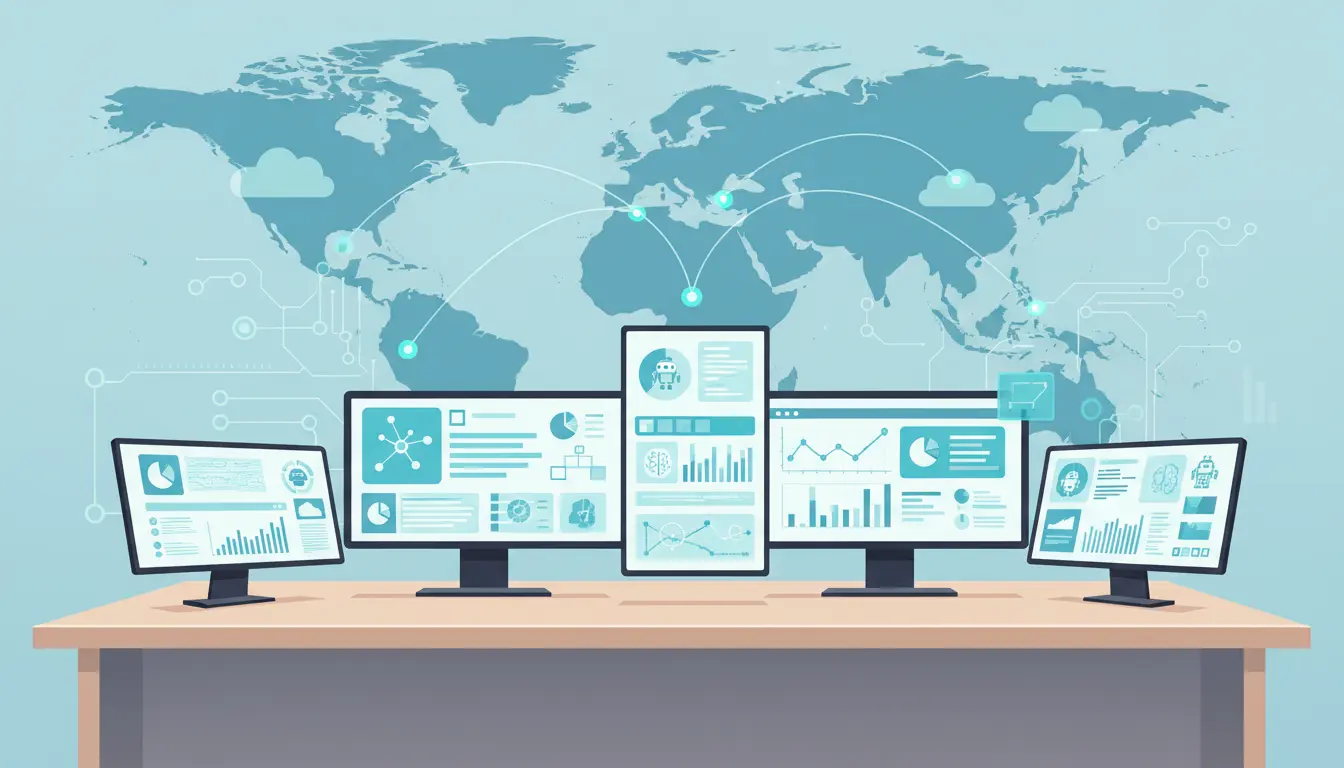

AI and Remote Work: Boosting Productivity in International Teams
The rise of artificial intelligence (AI) and remote work has completely changed how international teams collaborate and perform. Instead of relying only on physical offices and fixed working hours, companies now use AI‑powered tools to coordinate global teams across time zones, languages, and cultures. When used correctly, AI does not replace humans; it augments their abilities, reduces repetitive tasks, and creates a more efficient, data‑driven work environment.
In distributed organizations, productivity can easily suffer due to miscommunication, unclear processes, and time zone conflicts. AI helps solve these challenges by supporting smarter communication, better project management, and more personalized workflows. As a result, remote employees can focus on high‑value tasks while AI handles routine operations in the background.
How AI Transforms Communication in Global Remote Teams
Effective communication is the foundation of productive international teams. However, remote collaboration often struggles with delayed responses, language barriers, and misunderstandings. AI‑based communication tools reduce these friction points in several ways:
- Real‑time translation and transcription
AI‑powered translation software and meeting assistants can translate voice and text in real time. This allows team members from different language backgrounds to participate fully in meetings, chat discussions, and documentation processes. Automated meeting transcription also ensures that decisions and action items are recorded accurately and can be reviewed later. - Smart email and message prioritization
AI algorithms can analyze communication patterns and prioritize important emails or messages based on relevance, urgency, and context. This helps remote workers avoid information overload and respond faster to what truly matters, instead of wasting time sorting through full inboxes. - Virtual AI assistants for coordination
Digital assistants can schedule meetings across time zones, suggest optimal meeting times, send reminders, and even summarize previous conversations. This reduces the administrative burden on team members and eliminates many coordination errors that often occur in distributed teams.
AI‑Driven Project Management and Task Automation
One of the most impactful uses of AI in remote work is in project management. International teams often manage multiple complex projects simultaneously, involving stakeholders in different parts of the world. AI‑integrated project management platforms can:
- Predict deadlines based on historical data and current workload
- Identify potential bottlenecks before they slow down progress
- Automatically assign tasks according to skills, availability, and performance patterns
These systems help leaders gain a clear overview of what is happening in real time, instead of depending only on manual status updates. For team members, AI‑based automation can handle repetitive tasks such as:
- Generating regular project reports
- Updating task statuses
- Organizing files and documentation
- Sending reminders about deadlines and milestones
By reducing this low‑value workload, remote employees can invest more time in creative thinking, problem solving, and innovation.
Personalizing the Remote Work Experience with AI
Every team member has different working styles, productivity peaks, and learning needs. AI tools can analyze individual behavior and create personalized work experiences to maximize performance. For example:
- Focus and distraction management: AI‑powered apps can detect when a user is frequently switching between tasks or applications and recommend focused work sessions, silence notifications, or suggest break times.
- Personal learning and development paths: AI learning platforms can recommend training materials, courses, and resources based on performance data, career goals, and skill gaps. For international teams, this supports continuous growth without requiring physical training sessions.
- Adaptive workload distribution: AI can monitor workloads and help managers balance responsibilities more fairly, reducing burnout and improving employee satisfaction.
This level of personalization is difficult to achieve manually, especially in large, distributed organizations. With AI, remote work can become more human‑centered, not less.
Overcoming Cultural and Time Zone Challenges
Remote work in international environments introduces cultural differences and time zone gaps that can slow down collaboration. AI can help organizations manage these challenges more strategically:
- Time zone‑aware scheduling: Smart scheduling tools factor in working hours, local holidays, and team preferences to reduce meeting fatigue and late‑night calls.
- Cultural analytics: Some AI tools can analyze communication styles, feedback patterns, and engagement levels to highlight cultural misunderstandings or inclusion issues. This allows managers to adjust communication strategies and team norms.
- Asynchronous collaboration support: AI encourages asynchronous work by enabling clear documentation, auto‑generated meeting summaries, and task‑based collaboration. Team members do not have to be online at the same time to move projects forward.
As a result, global teams can operate more smoothly, with fewer delays and less frustration.
Measuring and Improving Productivity with Data‑Driven Insights
One of AI’s biggest advantages in remote work is its ability to transform raw data into actionable insights. Instead of guessing where productivity problems come from, organizations can rely on AI to identify patterns and trends. For example, AI analytics tools can show:
- Which projects regularly suffer from delays
- How communication frequency affects project outcomes
- When certain teams are overloaded or underutilized
- How employee engagement relates to performance
These insights help leaders make more informed decisions about resource allocation, workflows, and organizational structure. When used ethically and transparently, AI‑based monitoring focuses not on controlling people, but on improving systems and removing obstacles to productivity.
Balancing AI Automation with Human Creativity and Trust
While AI offers powerful advantages, it must be implemented carefully to maintain trust and motivation in remote teams. Over‑monitoring or using AI for intrusive tracking can damage morale and create a culture of fear. Instead, organizations should use AI to:
- Support employees, not replace them
- Provide transparency around what data is collected and why
- Encourage feedback and involve teams in tool selection
- Focus on outcomes and well‑being, not just activity levels
The most productive international teams are those that combine AI‑driven efficiency with human empathy, creativity, and collaboration. When employees trust that AI tools are there to help them succeed, they are more likely to adopt them and use them effectively.
Future Outlook: AI as a Strategic Partner in Remote Work
Looking ahead, AI will become an even more integrated part of remote work environments. We can expect smarter collaborative workspaces, intelligent knowledge bases that answer questions instantly, and more advanced virtual coworkers that support everything from customer service to product development.
For companies with international teams, the strategic question is not whether to use AI, but how to use it responsibly and effectively. Those that design clear policies, invest in training, and focus on human‑centered implementation will see the highest productivity gains. AI will be a strategic partner—enhancing collaboration, enabling flexible work models, and allowing global teams to perform at their best.