
Using Remote Desktop on a Tablet: Complete Guide for Secure and Productive Work
Accessing your computer from anywhere is no longer a luxury; it is a daily necessity for many professionals, students, and freelancers. Using remote desktop on a tablet combines mobility with full desktop power. With the right setup, you can edit documents, manage servers, access business apps, or even run design tools from your Windows or Mac computer directly on your iPad or Android tablet.
This guide explains, in detail, how to use remote desktop on a tablet, which apps to choose, how to secure your connection, and how to optimize performance. The structure and wording are designed for SEO, with natural, organic language and high uniqueness.
1. What Is Remote Desktop on a Tablet?
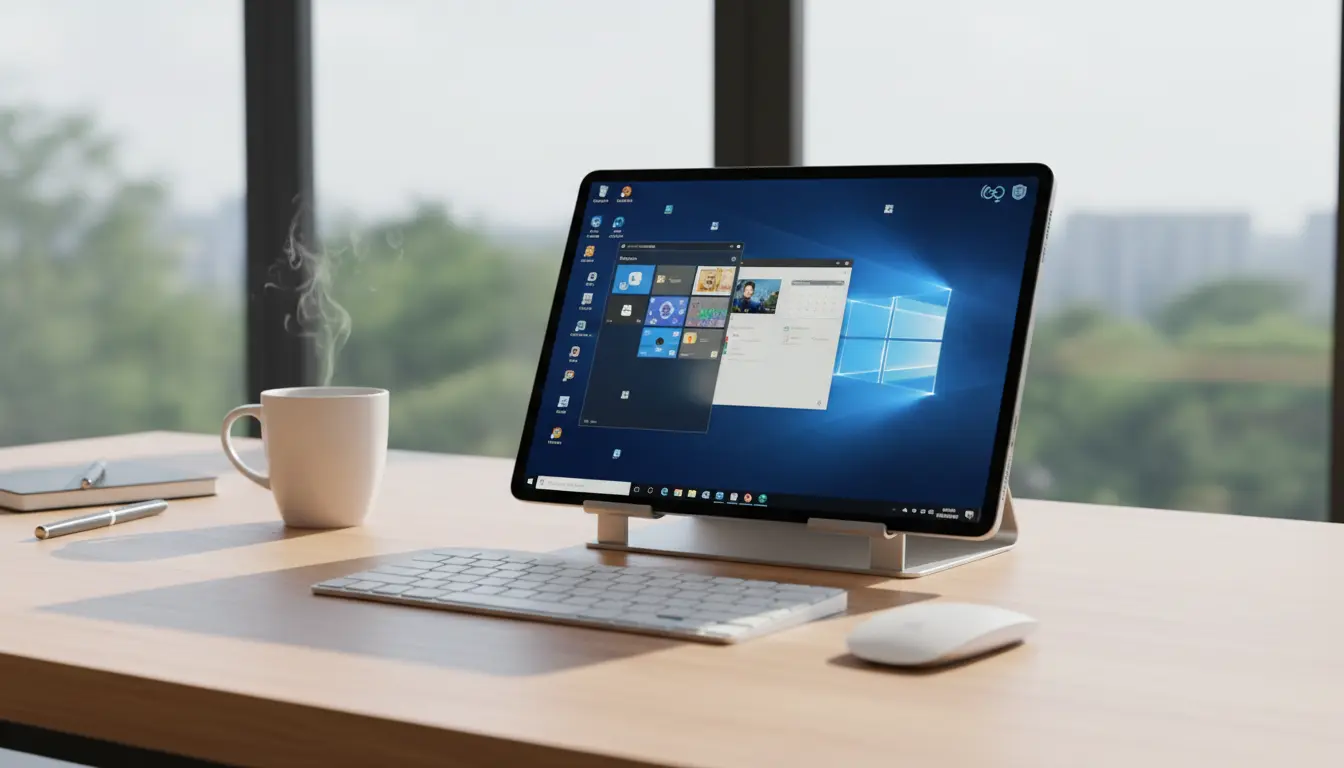
Remote desktop is a technology that lets you connect to another computer over the internet and control it as if you were sitting in front of it. When you use it on a tablet:
- The tablet acts as a thin client.
- Your main computer (Windows, macOS, or even a server) does the heavy processing.
- The tablet simply displays the screen and sends your touch or keyboard inputs back.
This setup is ideal when:
- You travel frequently but need full access to office software.
- You want to manage a home PC or office workstation from the sofa or on the go.
- You need access to licensed software that is only installed on your desktop.
2. Advantages of Using Remote Desktop on a Tablet
Using a remote desktop with a tablet offers several clear benefits:
2.1 Portability and Flexibility
A tablet is light, has long battery life, and is easy to carry. Instead of transporting a laptop, you can:
- Connect to your office PC from a café.
- Quickly log into a remote server during a meeting.
- Handle urgent tasks during travel delays.
2.2 Full Desktop Power on a Mobile Device
Many tablet apps are simplified versions of desktop software. With remote desktop:
- You can run full versions of Office, Adobe tools, IDEs, and internal business applications.
- You are not limited by mobile app features.
- Your tablet becomes a window into a more powerful machine.
2.3 Centralized Data and Better Security
Instead of copying files to your tablet:
- All data stays on your main computer or company server.
- Only the screen image and inputs travel over the network.
- If your tablet is lost, sensitive files are not stored locally (as long as you avoid local downloads).
3. Popular Remote Desktop Apps for Tablets
To use remote desktop on a tablet, you need a reliable app. Below are some of the most popular options:
3.1 Microsoft Remote Desktop
Best for connecting to Windows PCs and Windows Servers.
- Available for iOS and Android.
- Works well if you already have Windows Pro, Enterprise, or a remote desktop–enabled server.
- Supports multi-touch gestures and external keyboards.
3.2 Chrome Remote Desktop
Simple and free, ideal for basic usage.
- Works via the Chrome browser extension and companion app.
- Cross‑platform: Windows, macOS, Linux to Android or iPad.
- Great for quick tech support or light remote work.
3.3 AnyDesk and TeamViewer
These tools are popular for remote support and professional use.
- High‑performance streaming even on slower networks.
- Easy setup with session codes, ideal if you must help non‑technical users.
- Offers business features such as unattended access, file transfer, and session recording.
4. How to Set Up Remote Desktop on Your Tablet (Step‑by‑Step)
The exact steps depend on the app, but the core process is similar. Below is a general workflow that you can adapt.
4.1 Prepare the Host Computer
- Keep the computer on and connected
Make sure your desktop or laptop is powered on, not in deep sleep, and connected to the internet. - Install or enable remote desktop software
- For Microsoft Remote Desktop, enable Remote Desktop in Windows settings or via System Properties.
- For Chrome Remote Desktop, install the extension in Chrome and set up remote access.
- For AnyDesk or TeamViewer, install the desktop client and configure unattended access if necessary.
- Create a strong user password
Avoid simple passwords. Use a mix of letters, numbers, and symbols to protect remote login.
4.2 Configure the Tablet
- Download the remote desktop app
From the App Store or Google Play, install the app that matches the software on your host computer. - Add a new connection or PC
- Enter the computer name or IP address (for Microsoft Remote Desktop or similar).
- Or sign into your account (for Chrome Remote Desktop, TeamViewer, AnyDesk).
- Test the connection on the same network
Before you rely on it while traveling, test the connection at home or in the office. This helps you fix firewall or permission problems early.
5. Optimizing Your Remote Desktop Experience on a Tablet
To make remote desktop work smoothly, you need to fine‑tune settings based on your network and device.
5.1 Network Requirements
- Prefer Wi‑Fi over mobile data to get a stable connection.
- If you must use LTE/5G, stay in areas with strong signal.
- Reduce video quality or disable background wallpaper in the remote desktop app to save bandwidth.
5.2 Touch and Keyboard Controls
Tablets are touch‑first devices, while desktops expect keyboard and mouse input. Adjust settings so control feels natural:
- Enable gesture support for right-click, scroll, and zoom.
- Use an external Bluetooth keyboard for typing-intensive tasks.
- Consider a Bluetooth mouse or trackpad for precise control in design or coding tools.
5.3 Display and Resolution
- On small tablets, choose a scaled resolution so text is readable.
- On larger tablets (11″ or more), you can use native resolution for more workspace.
- If your host machine has multiple monitors, decide whether to view a single screen or switch between them.
6. Security Best Practices for Remote Desktop on Tablets
Remote access always introduces risk, so you must secure your setup carefully.
6.1 Use Strong Authentication
- Protect remote desktop sessions with strong passwords and, whenever possible, two‑factor authentication (2FA).
- Avoid using the same password across services.
6.2 Encrypt the Connection
- Most modern remote desktop tools encrypt traffic by default.
- When working on public Wi‑Fi, consider using a VPN to add an extra layer of security.
6.3 Limit Access
- Only enable remote desktop on machines that truly need it.
- Restrict access to specific user accounts with limited privileges.
- Regularly review who can log into your systems remotely.
7. Use Cases: When Remote Desktop on a Tablet Shines
7.1 Remote Work and Hybrid Offices
Employees can log into their office workstation from home or while traveling using a tablet, without carrying heavy laptops. This works particularly well in companies that keep sensitive data inside the corporate network.
7.2 IT Support and Administration
System administrators and IT professionals can:
- Restart services.
- Check logs.
- Manage servers and network devices from a tablet during off‑hours.
7.3 Education and Learning
Students can access campus computer labs remotely:
- Run specialized software (CAD, statistics, programming IDEs) that their personal devices cannot handle.
- Connect to lab machines from a tablet in the library or dorm.
8. Common Problems and Simple Fixes
Even with the best setup, you may face issues. Here are frequent problems and quick solutions:
- Cannot connect to the PC
- Check internet on both devices.
- Verify remote access is enabled on the host.
- Confirm IP address or computer name.
- Connection is slow or laggy
- Reduce display quality, disable animations and background images in the app.
- Move closer to the Wi‑Fi router or switch network.
- Keyboard layout issues
- Adjust keyboard settings in the remote app to match the host OS language.
- Test special characters and shortcuts before important sessions.
9. Recommended Accessory from Amazon
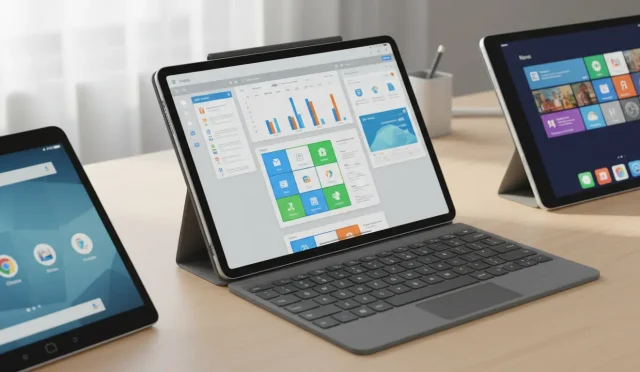
To significantly improve your tablet remote desktop experience, consider an external keyboard case. A popular option on Amazon is the Logitech Combo Touch for iPad, which combines a detachable backlit keyboard and trackpad with a protective case. It turns your tablet into a lightweight laptop‑like workstation, perfect for extended remote desktop sessions.