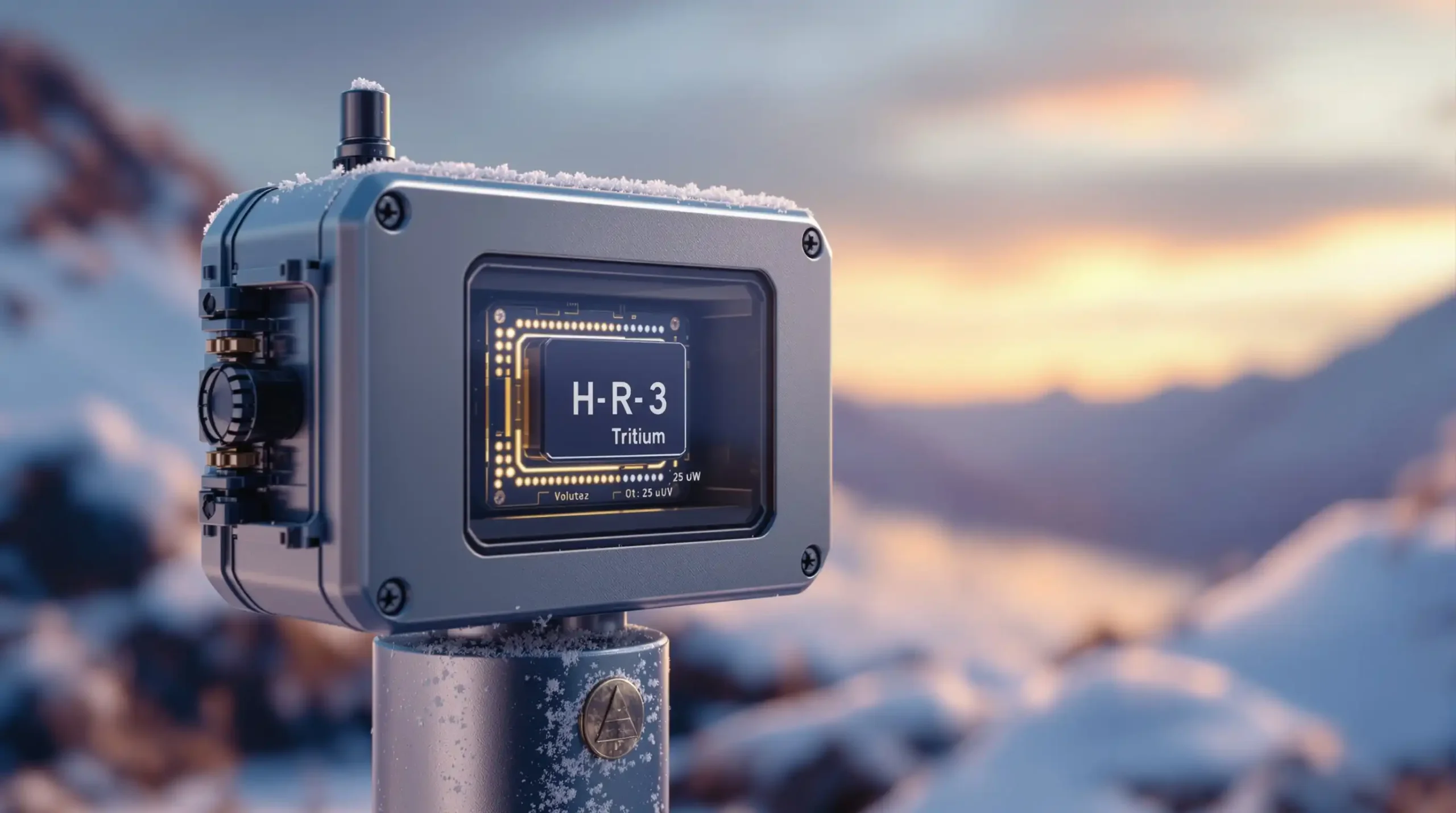

Mini nuclear batteries—often called atomic batteries, radioisotope batteries, or betavoltaics—are emerging as a compelling solution for ultra‑long‑life power in distributed sensors. As the Internet of Things (IoT), industrial monitoring, environmental science, and defense applications demand unattended operation for years or even decades, traditional chemical batteries struggle. The need to replace or recharge them is costly, risky, or outright impossible in remote, harsh, or sealed environments. Mini nuclear battery concepts step into this gap, promising multi‑year to multi‑decade energy delivery in a compact, reliable form factor.
At their core, these devices convert energy from the natural decay of a radioisotope into electricity. The most established high‑power space‑grade approach is the radioisotope thermoelectric generator (RTG), which uses heat from decay to drive thermoelectric modules. However, for small sensors and embedded devices where power needs are in the microwatt‑to‑milliwatt range, alternative architectures such as betavoltaic cells and radioisotope micro‑thermoelectric generators (micro‑TEGs) offer far better size and efficiency trade‑offs. These technologies are not about “mini reactors.” Instead, they harness passive decay—no moving parts, no chain reactions—prioritizing safety and predictability.
Why sensors need decade‑scale energy
- Hard‑to‑reach deployments: subsea pipelines, high‑altitude balloons, glaciers, remote forests, deserts, or deep mines.
- Sealed or sterilized systems: medical implants, hermetically sealed industrial instruments, or hazardous environments where servicing is dangerous.
- Mission‑critical reliability: defense perimeter sensors, border monitoring, seismic and volcano networks, or structural health monitoring in bridges and tunnels.
- Cost of maintenance: truck rolls, specialized crews, or shutdowns dwarf the cost of the power source over the system lifetime.
Conventional lithium primary cells deliver impressive energy density, but they lose capacity with temperature extremes, self‑discharge over time, and necessitate replacement. Energy harvesting (solar, vibration, thermal) is attractive, yet intermittent. A mini nuclear battery can act as a steady “base load,” often combined with supercapacitors or micro‑batteries to buffer peak loads like radio bursts.
How mini nuclear batteries work
- Betavoltaics: These devices use beta radiation—high‑energy electrons—from isotopes such as tritium (H‑3) or nickel‑63 (Ni‑63). The beta particles interact with a semiconductor junction (similar to a photovoltaic cell) to generate electron‑hole pairs, producing a small but continuous current. Shielding requirements are modest because beta particles are easily stopped by thin materials, making tritium‑based designs especially attractive for compact, safe sensor applications.
- Micro‑TEGs (radioisotope heat to electricity): For slightly higher power, a small quantity of a radioisotope generates heat that flows across a thermoelectric gradient. With optimized materials and heat sinking, micro‑TEGs deliver stable microwatts to milliwatts over many years.
- Hybrid architectures: Designers can combine betavoltaics with energy storage and power management ICs, waking the sensor periodically to sample, compute, and transmit before returning to ultra‑low‑power sleep.
Safety, regulation, and public perception
Safety is the central concern for any nuclear‑adjacent technology. With mini nuclear batteries:
- There is no fission or chain reaction; energy comes from passive decay.
- Isotope selection emphasizes low penetration (e.g., tritium beta emissions) and robust containment. Encapsulation often uses ceramics, metals, and multilayer barriers to prevent leakage even under shock or fire.
- Regulatory pathways differ by country. Approvals may involve nuclear regulatory bodies, radiation safety standards, transport rules, and end‑of‑life disposal protocols. Proper design aims to meet non‑specialized handling requirements where possible, especially for low‑activity tritium devices.
- Risk comparisons should be lifecycle‑based: manufacturing, operation, accidental damage, and disposal. In many scenarios, mini nuclear batteries can present lower operational risk than frequent maintenance missions in hazardous terrains.
Transparent communication and third‑party testing are crucial to build public trust. Certification for shock, crush, puncture, corrosion, and temperature extremes, plus clear return‑and‑recycling programs, help normalize adoption.
Power budgeting and system design
To run a sensor for years on microwatts, every nanoamp matters:
- Ultra‑low‑power MCUs: Modern microcontrollers can sleep under 100 nA and wake in microseconds, sampling sensors and performing edge ML inference in short duty cycles.
- Event‑driven architecture: Data logging and radio transmissions occur sparingly. For LoRa/FSK telemetry, bursts are buffered by a supercapacitor charged slowly from the nuclear source. Edge filtering reduces airtime.
- Smart sensing: Duty‑cycle the sensor front‑end, use low‑leakage op‑amps, and choose transducers with sleep modes. Consider analog event detection (comparators) to wake the digital system only when necessary.
- Power management ICs: Nano‑quiescent LDOs, DC/DC converters optimized for ultra‑low input power, and energy harvesting PMICs tuned for constant trickle inputs maximize end‑to‑end efficiency.
- Security at low power: Lightweight cryptography (e.g., AES‑CCM with hardware acceleration) and infrequent key rotations balance integrity with energy constraints.
A typical configuration might supply 10–50 microwatts continuous, accumulating energy between transmissions. If the application needs bursts in the 10–100 mW range, a storage element sized to minutes or hours of trickle charge can cover peak events.
Use cases poised for adoption
- Industrial and structural health monitoring: Strain gauges, acoustic emission sensors, and corrosion probes embedded in bridges, tunnels, and pipelines for decades.
- Environmental and wildlife sensing: Long‑term microclimate stations, hydrological monitoring, permafrost probes, and animal tracking tags where solar is unreliable.
- Smart agriculture: Soil moisture and nutrient sensors under thick canopy or buried in fields, reducing maintenance across large acreage.
- Logistics and defense: Tamper detection, perimeter sensors, and asset trackers in contested or remote regions where servicing is risky.
- Space and near‑space: High‑altitude platforms, small satellites, and deep freeze environments benefit from stable, temperature‑agnostic output.
Materials and isotope choices
- Tritium (H‑3): Low‑energy beta emitter with a half‑life of ~12.3 years. Often bound in a solid matrix (tritiated polymers or metal hydrides) and encapsulated. Safer handling profile, ideal for small sealed devices.
- Nickel‑63 (Ni‑63): Beta emitter with a ~100‑year half‑life. Attractive for very long‑life, ultra‑low‑power betavoltaics, though availability and cost are key considerations.
- Promethium‑147, Carbon‑14, and others: Used in specific legacy or experimental designs, balancing activity, availability, cost, and regulatory complexity.
- Thermoelectric materials: Bismuth telluride derivatives for room temperature; skutterudites or half‑Heuslers for higher temperature gradients in micro‑TEGs.
Manufacturing, cost, and scalability
Early units will command premium pricing due to isotope sourcing, encapsulation, and certification. Over time:
- Vertical integration of isotope production and packaging reduces cost.
- Wafer‑level semiconductor processes for betavoltaic junctions improve yield.
- Standardized modules (like coin‑cell form factors) accelerate design‑in for OEMs.
- Clear recycling logistics and buy‑back programs mitigate end‑of‑life concerns and improve total cost of ownership.
Even at higher upfront cost, total lifecycle economics can beat alternatives when factoring truck rolls, technician labor, safety permits, and downtime.
Environmental considerations
A small, well‑contained radioisotope can reduce the carbon and material footprint of frequent battery replacements. Key to environmental stewardship:
- Minimize activity while meeting power needs.
- Design for retrieval and recycling.
- Provide robust failure‑mode analysis and passive safety under extreme conditions.
The road ahead
Expect rapid convergence between nuclear micro‑sources and ultra‑low‑power electronics:
- Better betavoltaic semiconductors with higher conversion efficiency and radiation tolerance.
- PMICs tailored to constant‑current trickle inputs with sub‑100 nA quiescent draw.
- Secure, event‑driven protocols for sparse telemetry.
- Modular, certifiable form factors that OEMs can adopt without bespoke radiation engineering.
As standards solidify and supply chains mature, mini nuclear batteries can become a foundational energy option for sensors that must simply never stop.
Practical checklist for engineers
- Define worst‑case power budget and duty cycle; simulate multi‑year scenarios.
- Choose isotope and architecture (beta vs micro‑TEG) based on power, size, and regulatory pathway.
- Incorporate storage for peak loads; validate leakage and temperature behavior.
- Validate safety: mechanical shocks, puncture, fire exposure, and corrosion tests.
- Plan end‑of‑life retrieval and recycling; document compliance early.
With careful engineering and transparent safety practices, mini nuclear battery concepts can unlock a class of sensors that operate for years—quietly, reliably, and without maintenance—creating more resilient infrastructure and deeper environmental insight.