
Data loss during migration can be costly, disruptive, and damaging to trust. Whether you’re moving databases to the cloud, consolidating systems after a merger, switching storage platforms, or modernizing analytics infrastructure, the goal is the same: transfer data with zero loss and consistent integrity. This guide provides a practical, structured checklist to help you plan, execute, and validate data migrations safely. It also includes best practices for governance, security, performance, and rollback strategies to ensure you maintain business continuity.
1) Define Scope, Requirements, and Success Criteria
Start with clarity:
- Inventory your data: sources, volumes, formats, schemas, and dependencies.
- Define what “no data loss” means for your organization (e.g., zero missing records, exact field-level parity, referential integrity intact).
- Establish SLAs: RPO (Recovery Point Objective) and RTO (Recovery Time Objective).
- Document non-functional requirements: performance thresholds, downtime limits, security and compliance obligations (GDPR, HIPAA, PCI-DSS, SOC 2).
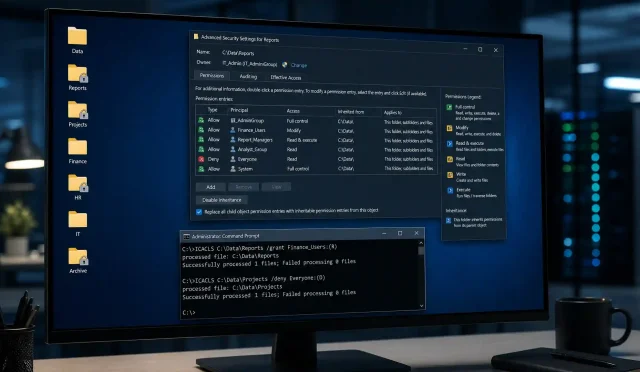
Tip: Create a migration charter that lists source systems, target environment, stakeholders, timelines, and a crisp definition of “done.”
2) Assess Source Data Quality and Readiness
Your migration is only as clean as your source data:
- Profile data for completeness, consistency, uniqueness, validity, and accuracy.
- Identify duplicates, missing values, unexpected nulls, type mismatches, and orphaned records.
- Map business rules and constraints (e.g., NOT NULL, unique keys, foreign keys).
- Decide on cleansing steps: deduplication, standardization, normalization, or enrichment.
- Document legacy quirks: time zones, encoding (UTF-8 vs. Latin-1), locale-specific formatting, and custom date/timestamp patterns.
Tip: Use a data profiling tool to generate baseline statistics and anomalies reports. Keep them for pre- and post-migration comparisons.
3) Plan the Target Architecture and Data Model
Align the destination with long-term goals:
- Choose the appropriate storage and compute: cloud data warehouse, data lakehouse, relational database, object storage, or hybrid.
- Design schemas for scalability and governance. Normalize or denormalize based on workload patterns.
- Decide on partitioning, clustering, and indexing strategies aligned with expected queries.
- Define data classifications and security policies for each domain (PII, PHI, financials).
Tip: Avoid 1:1 “lift and shift” if you’re modernizing; use the migration to resolve known schema issues and set consistent naming standards.
4) Map Schemas and Transformations
Clear mappings prevent downstream surprises:
- Create a field-by-field mapping document that includes data types, allowed ranges, units, and transformation logic.
- Align encodings, collations, and time zone conversions.
- Define handling for edge cases: truncation rules, rounding, default values, and null substitution.
- Validate constraints on the target: primary keys, foreign keys, check constraints, and unique indexes.
Tip: For complex transformations, adopt a version-controlled transformation layer (e.g., SQL scripts or dbt models) with code reviews.
5) Choose the Right Migration Strategy
Match approach to business needs:
- Big bang (cutover): Move everything at once during a planned window. Best when systems are small or downtime is acceptable.
- Phased migration: Move domain by domain or table by table to reduce risk.
- Parallel run: Keep both systems active for a defined period, compare outputs, and switch after confidence is high.
- Change Data Capture (CDC): Stream incremental changes from source to target to minimize downtime and reduce delta gaps.
Tip: For mission-critical systems, combine phased migration with CDC and a parallel run for confidence and continuity.
6) Build a Robust Backup and Rollback Plan
Never migrate without a safety net:
- Take immutable, verified backups of source systems. Test restore procedures.
- For cloud targets, enable point-in-time recovery, versioning, and snapshots.
- Define rollback triggers (e.g., error rate thresholds, data parity failures, performance regressions).
- Predefine a fast rollback path and document the exact steps, including access roles and commands.
Tip: Run a game-day simulation where you practice rolling back from a mock failure.
7) Secure the Data In Transit and At Rest
Protect confidentiality and integrity:
- Use encrypted channels (TLS) for all transfers and encrypt at rest (AES-256, KMS-managed keys).
- Apply least-privilege IAM roles and rotate credentials.
- Mask or tokenize PII/PHI where possible; restrict raw access to authorized personnel only.
- Log all access and changes for auditability; enable tamper-evident logs.
Tip: For cross-border transfers, verify data residency and compliance constraints before initiating any movement.
8) Establish Validation and Reconciliation Methods
Trust, but verify—quantitatively:
- Row counts: Compare source vs. target by table, partition, and time window.
- Checksums and hashes: Generate deterministic hashes (e.g., MD5/SHA-256) over sorted records or primary key–grouped batches to ensure byte-level parity.
- Referential integrity checks: Validate foreign key relationships post-migration.
- Field-level sampling: Randomly sample N% of records to compare field-by-field values and derived metrics.
- Business KPI parity: Recompute business metrics (revenue, churn, inventory levels) on both sides and validate alignment within tolerated thresholds.
Tip: Automate validations and produce signed reports for audit and sign-off.
9) Performance and Load Testing
A perfect copy that’s slow is still a problem:
- Benchmark load and query performance against baselines.
- Stress test ingestion, compaction, and indexing pipelines with production-like volumes.
- Monitor latency, throughput, I/O, memory, and concurrency behavior.
- Tune partition sizes, compression codecs, indexing strategies, and cache policies.
Tip: Include worst-case patterns (e.g., holiday traffic, month-end reporting) in test scenarios.
10) Orchestrate with Automation and Observability
Reduce manual error and increase transparency:
- Use workflow orchestration (e.g., Airflow, Prefect) to manage dependencies, retries, and alerts.
- Parameterize jobs and keep configs in version control.
- Instrument every step with metrics, logs, and traces; establish real-time dashboards for progress and error rates.
- Implement idempotent migration tasks to safely rerun on failure.
Tip: Use data quality gates that automatically halt promotion if validations fail.
11) Pilot, Dry Runs, and Parallel Validation
Prove it before production:
- Run a pilot on a representative subset of data.
- Execute full dry runs in a non-production environment that mirrors production topology.
- For critical systems, operate source and target in parallel for a period, route a small percentage of read traffic to the target, and compare outputs.
Tip: Keep a burn-in period where new data is written to both systems via CDC to catch drift early.
12) Cutover, Monitoring, and Post-Migration Hardening
Make the switch deliberately:
- Announce the cutover window to stakeholders and freeze risky upstream changes.
- During cutover, run final deltas and reconcilers; lock writes if required to achieve consistency.
- Post-cutover, intensively monitor errors, latency, and data parity for an agreed observation window.
- Decommission old pipelines and revoke unneeded access to minimize attack surface.
Tip: Document lessons learned, update runbooks, and refresh your disaster recovery plan based on insights.
13) Governance, Documentation, and Ownership
Sustainability matters:
- Assign data owners and stewards for each domain.
- Maintain a living data catalog with lineage from source to target, including transformations and business definitions.
- Set up regular quality audits and SLA reporting.
- Train teams on new schemas, access patterns, and operational procedures.
Tip: Treat documentation as part of the product. It enables faster troubleshooting and safer future migrations.
14) Common Pitfalls and How to Avoid Them
- Silent truncation: Enforce explicit type mappings and length checks; fail fast on overflow.
- Time zone drift: Standardize on UTC and document conversions.
- Encoding mismatches: Normalize to UTF-8 and validate with test strings from multiple languages.
- Partial loads: Use transaction boundaries or checkpointing with exactly-once semantics.
- Hidden dependencies: Use lineage tools to discover downstream consumers before changing schemas.
Tip: Create a pre-flight checklist that includes schema diffs, encoding verifications, foreign key enforcement, and hash parity tests.
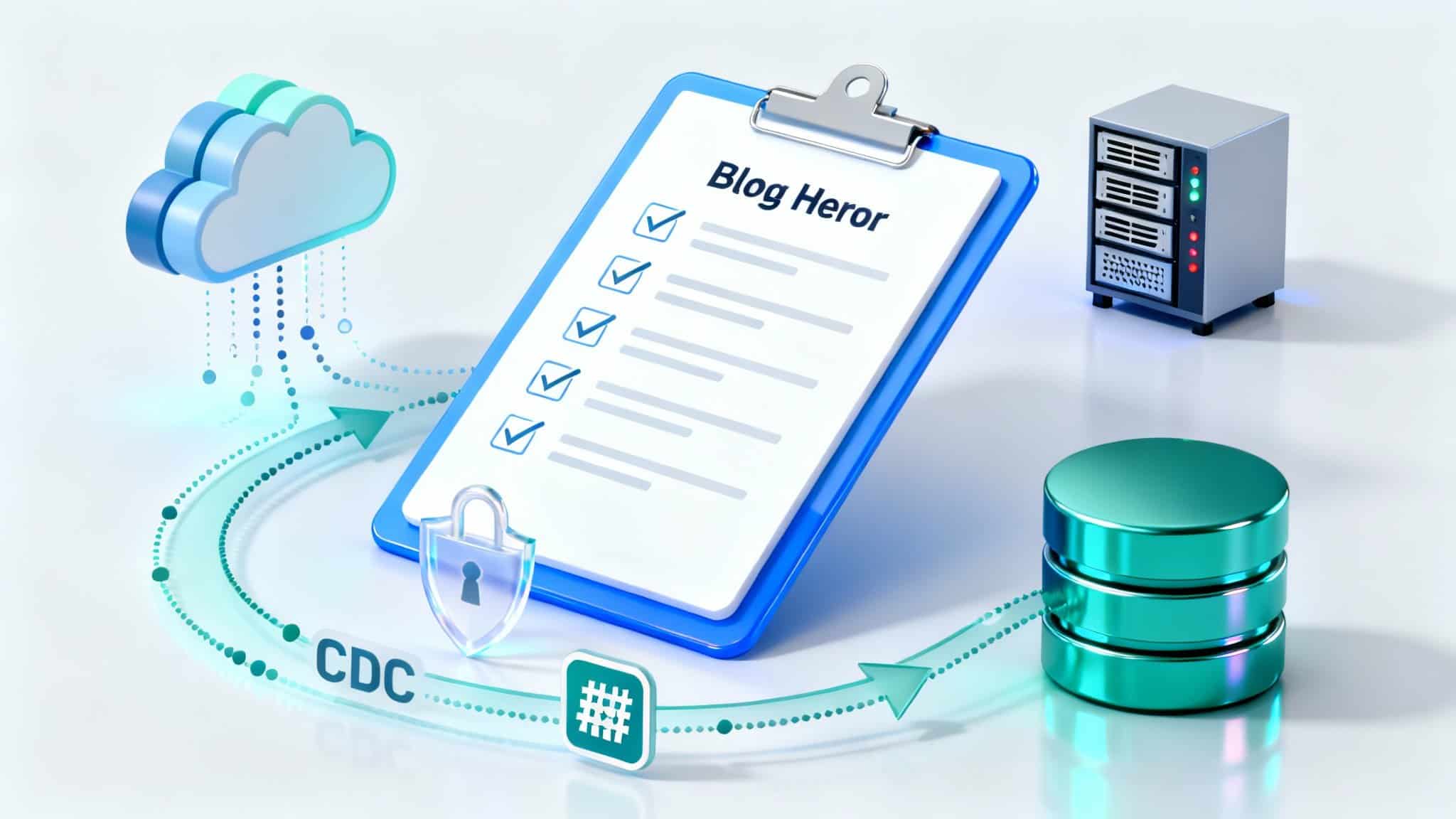
Quick Data Migration Checklist
- Define scope, SLAs, and success criteria.
- Profile and cleanse source data.
- Design target schema and security model.
- Map fields, types, and transformations.
- Select migration strategy (big bang, phased, CDC, parallel).
- Backups, snapshots, and tested rollback.
- Encrypt in transit and at rest; enforce least privilege.
- Validate with counts, checksums, RI checks, and KPI parity.
- Load/performance testing with production-like data.
- Orchestrate with automation, alerts, and dashboards.
- Pilot and dry runs; parallel validation.
- Controlled cutover; post-migration monitoring and hardening.
- Governance, documentation, and ongoing quality audits.
Conclusion
Flawless data migration is the product of discipline, automation, and rigorous validation. By following this end-to-end checklist—spanning scoping, data quality, architecture, transformation mapping, security, validation, and governance—you’ll dramatically reduce the risk of loss, corruption, and downtime. Build strong observability and rollback plans, prove your process through pilots and dry runs, and treat documentation and ownership as first-class citizens. With these practices in place, you can move fast without losing what matters most: trust in your data.