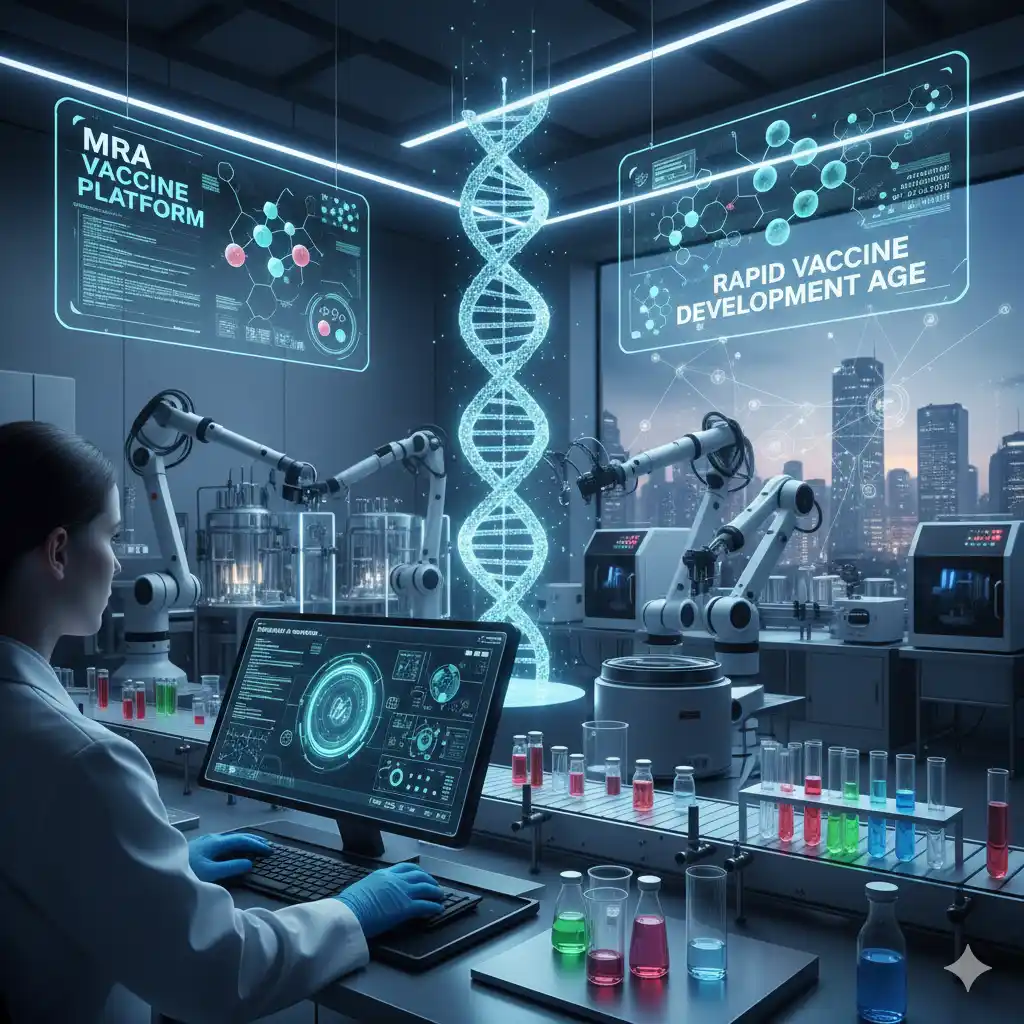

mRNA vaccine platform — The era of rapid vaccine development
The advent of messenger RNA (mRNA) vaccine platforms has reshaped modern vaccinology. During the COVID-19 pandemic, researchers used mRNA-based approaches to design, manufacture, and deploy safe, effective vaccines within months, while traditional vaccine development often required years or decades. This paradigm shift reflects not only a breakthrough in molecular biology but also a reimagining of public-health preparedness, manufacturing agility, and future personalized medicine.
What is an mRNA vaccine platform?
An mRNA vaccine platform uses a synthetic messenger RNA molecule that encodes a viral (or other disease-related) protein. Delivered into human cells—typically using lipid nanoparticles (LNPs)—the mRNA instructs the cellular machinery to produce the encoded protein antigen. The immune system recognizes that protein as foreign and mounts both antibody and cellular immune responses. Crucially, mRNA itself is non-infectious and does not integrate into the genome, making it a versatile and safe vector for antigen delivery.
Why mRNA platforms enable faster development
- Modularity: Once developers establish an mRNA delivery system and manufacturing process, they can use the same platform to encode different antigens by swapping the sequence—accelerating the design step. Synthetic manufacturing: Manufacturers synthesize mRNA vaccines enzymatically in cell-free systems, avoiding the time-consuming cell-culture steps used in traditional viral or protein vaccine production. Rapid iteration: Researchers can design, optimize, and screen sequences in vitro quickly, enabling fast responses to emerging pathogens or variants. Scalable production: Companies can scale up manufacturing using standardized equipment and reagents, reducing lead times for large batches.
Together these features turned vaccine timelines measured in years into timelines measured in weeks or months during the pandemic response.
How mRNA vaccines work (brief)
- Design: Scientists identify an antigen (e.g., spike protein) and design an mRNA sequence encoding it.
- Formulation: The mRNA is encapsulated in LNPs to protect it from degradation and enable cellular uptake.
- Delivery: Intramuscular injection delivers LNPs and mRNA into host cells.
- Expression: Cells translate the mRNA into protein antigens, which are processed and presented to the immune system.
- Immunity: The body generates neutralizing antibodies and T cell responses that confer protection.
Clinical success and validation
mRNA vaccines achieved global attention when mRNA-based COVID-19 vaccines demonstrated high efficacy and acceptable safety profiles in large clinical trials. These successes validated the platform’s potential and catalyzed investments into pipeline programs for infectious diseases, oncology, and rare genetic disorders.
Manufacturing, supply chain, and cold chain challenges
While mRNA manufacturing is faster, there are operational challenges:
- Cold chain requirements: Some early formulations required ultra-cold storage, complicating distribution—though newer formulations and advances in stabilization are reducing these constraints.
- Raw material supply: Specialized reagents (nucleotides, enzymes, LNP lipids) must be sourced at scale; supply bottlenecks can slow rollouts.
- Technology transfer: Deploying standardized production across multiple facilities requires regulatory harmonization and technical transfer.
Addressing these issues is central to ensuring equitable global access.
Safety and regulatory pathways
Safety monitoring of mRNA vaccines has shown reassuring results. Side effects are generally transient (injection site reactions, fever), and rare adverse events are monitored continuously through pharmacovigilance systems. Regulatory agencies have built emergency and accelerated pathways that preserve rigorous review standards while enabling faster approval during public-health emergencies. Continued long-term follow-up and transparent data-sharing remain essential for public trust.
Beyond infectious disease: therapeutic and personalized use
The mRNA platform’s flexibility extends beyond prophylactic vaccines:
- Cancer vaccines: Personalized mRNA vaccines can encode tumor-specific neoantigens tailored to an individual’s tumor mutations, aiming to stimulate targeted anti-cancer immune responses.
- Therapeutic proteins: Researchers (or biotech companies) can use mRNA to transiently produce therapeutic proteins in vivo, potentially replacing some protein-replacement therapies. Rapid outbreak response: Scientists can design an mRNA sequence almost immediately after determining a pathogen’s genome, enabling fast preclinical development.
Scientific and technical innovations
Ongoing research is improving mRNA stability, reducing innate immune activation that can blunt antigen expression, and optimizing LNP formulations to increase delivery efficiency and reduce reactogenicity. Novel storage modalities, lyophilization techniques, and room-temperature-stable formulations are active areas of development that will broaden access.
Ethical and equity considerations
Rapid vaccine development must be paired with equitable distribution. Intellectual property, manufacturing capacity in low- and middle-income countries, and financing mechanisms determine who benefits from platform technologies. Strengthening regional manufacturing hubs, technology transfer agreements, and global procurement strategies can mitigate inequities.
The future: platform convergence and preparedness
mRNA vaccine platforms exemplify a new model: platform-first strategies where an established delivery and regulatory framework can be reused for multiple targets. This model shortens response times for pandemic threats and supports a portfolio approach for endemic infections and chronic diseases. Integration with genomic surveillance, rapid clinical trial designs, and global manufacturing networks will be vital to capitalize on the platform’s promise.
Practical tips for stakeholders
- Policymakers: Invest in manufacturing capacity and streamlined regulatory processes while ensuring safety oversight and transparency.
- Researchers: Focus on thermostable formulations, alternative delivery routes, and broad-spectrum antigens.
- Manufacturers: Diversify supply chains and adopt modular, scalable production platforms.
- Public health leaders: Strengthen cold-chain logistics and community engagement to boost uptake.
Conclusion
mRNA vaccine platforms mark the beginning of a faster, more flexible era in vaccine development. Their modularity, speed of design, and adaptability make them powerful tools for both emergency response and long-term therapeutic innovation. Realizing the full potential of this technology will require scientific advances, targeted investments, and global cooperation to ensure that rapid development translates into equitable protection worldwide.