
If you sell to consumers in the United States, your messaging strategy likely lives at the intersection of iMessage, WhatsApp, and RCS. Each channel has a distinct audience footprint, feature set, and set of rules—and the brands winning right now are the ones that mix these channels into a single, compliant, revenue-focused strategy. This article breaks down the US messaging reality in plain English and shows you how to deploy the right channel at the right time to maximize deliverability, engagement, and sales.
The US reality: iMessage-first, Android rising, WhatsApp surging in niches
- iMessage dominates on iPhone. In the US, the iPhone share is large, and iMessage is the default, richly featured experience between iPhone users.
- Android’s RCS is catching up. Google Messages with RCS brings read receipts, typing indicators, high-res media, and branded features to Android. Apple has begun supporting RCS for cross-platform basics, which reduces friction in mixed-device conversations.
- WhatsApp is huge globally—and growing in the US for commerce, community, and support. It’s especially strong among immigrant communities, international shoppers, cross-border sellers, creators, and premium support use cases.
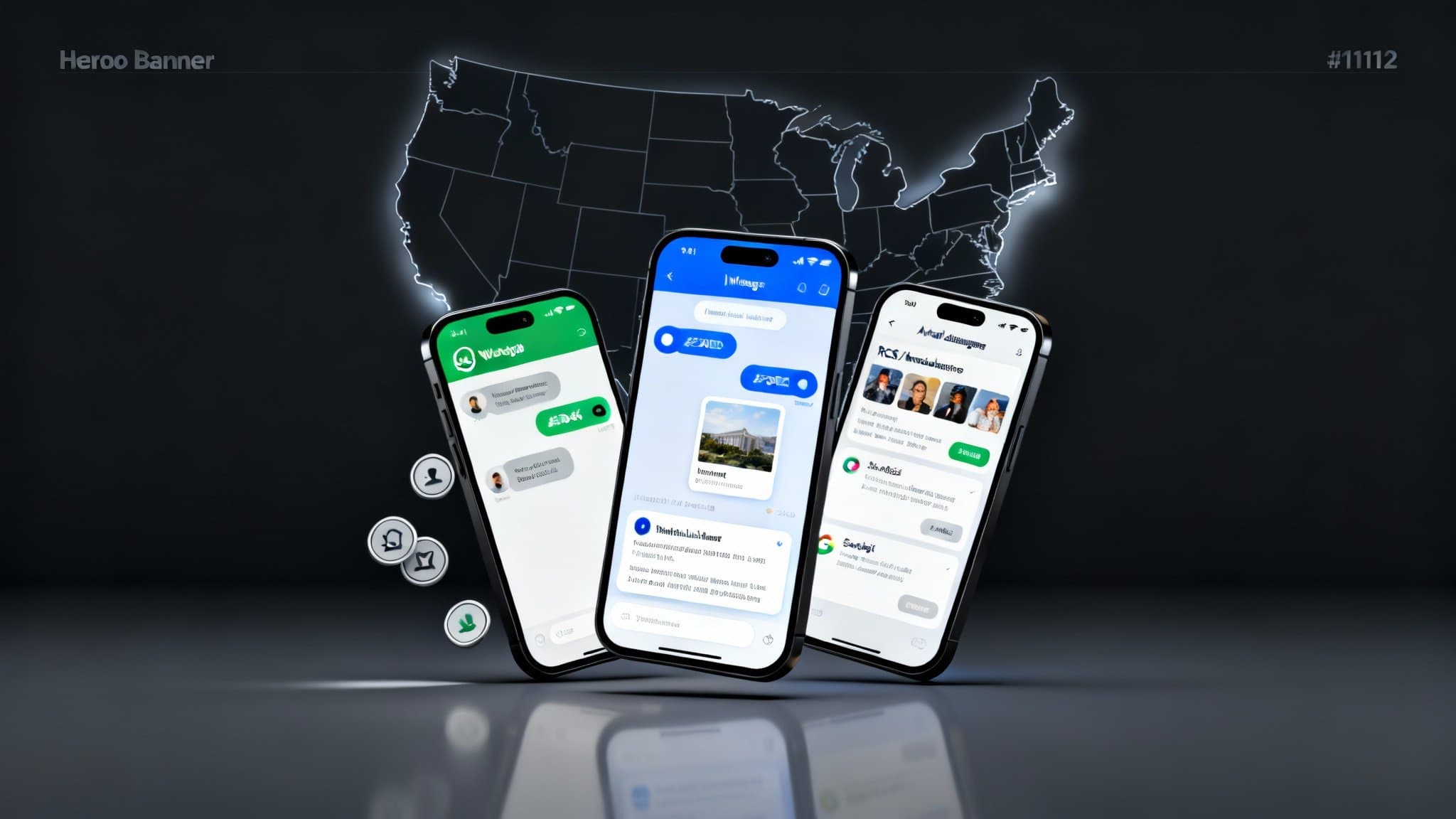
The implication for marketers: you don’t need a single “winner.” You need an audience-aware, purpose-built mix that uses iMessage for native Apple reach, RCS for modern Android experiences, and WhatsApp for two-way commerce and service where it’s already the preferred app.
iMessage: premium reach and trust for iPhone customers
iMessage is the most native, low-friction channel for iPhone users. Customers expect it to “just work,” with rich media, link previews, and a polished feel. For commerce:
- Use opt-in reminders, order updates, appointments, and concierge-style support for high-value segments.
- Keep it personal and human. iMessage feels like a personal space—overly promotional blasts can backfire.
- Leverage Apple’s ecosystem where available, such as Apple Messages for Business for verified brand conversations, scheduling, and support workflows.
Compliance and deliverability tip: Treat iMessage like a permission-based channel. Maintain clear opt-in, easy opt-out, and cadence control. Respect quiet hours and segment by engagement intensity.
RCS: the modern Android upgrade that makes SMS feel new again
RCS (Rich Communication Services) turns default Android messaging into a modern, app-like channel: high-resolution images, carousels, verified sender, read receipts, and suggested replies. For brands:
- RCS Business Messaging (RBM) enables branded sender IDs, richer CTAs, and interactive flows within the native messaging app.
- Great for high-intent, time-sensitive alerts: back-in-stock, delivery windows, fraud checks, appointment confirmations, and local store promos.
- As Apple’s support expands, cross-platform threads become cleaner, reducing the green/blue bubble friction in mixed groups.
Deliverability tip: Work with a provider that supports verified sender, campaign review, and carrier compliance. Segment Android users to maximize RBM features without over-messaging.
WhatsApp: two-way commerce, service, and global-grade reliability
WhatsApp is engineered for conversations, not just broadcasts. It’s end-to-end encrypted in personal chats and optimized for business workflows via the WhatsApp Business Platform:
- Conversational commerce: product catalogs, quick replies, payments in supported regions, and easy re-ordering.
- Customer support: asynchronous threads, media sharing (photos, invoices, screen recordings), and agent handoffs.
- Remarketing done right: session messaging after user-initiated chats, plus templated notifications with clear utility—shipping updates, appointment reminders, and order issues.
US go-to-market tip: Don’t force WhatsApp if your audience isn’t there. Instead, add it as a visible option: “Message us on WhatsApp for faster support,” place a WhatsApp button on mobile PDPs and order pages, and include it in post-purchase emails to seed adoption.
Choosing the right channel for the job
- Urgent, transactional notifications
- iPhone-heavy list: iMessage
- Android-heavy list: RCS
- Cross-border/international: WhatsApp for reliability and reach
- High-consideration sales and VIP service
- Start on iMessage for iOS users and WhatsApp where preferred; offer live agent escalation
- Lifecycle and loyalty nudges
- RCS for Android with rich cards and buttons
- iMessage for concise, personal-feeling nudges
- WhatsApp for serialized content (courses, tips, community updates)
- Post-purchase and retention
- WhatsApp for troubleshooting, returns, and how-to content
- RCS/iMessage for delivery windows, rescheduling, and review prompts
Personalization and timing: the two biggest revenue drivers
- Segment by device and preference. Detect iOS vs Android for routing to iMessage or RCS. Offer WhatsApp opt-in for support-heavy products.
- Tie messages to behavior. Browse/predictive triggers (viewed product, added to cart, lapsed user) consistently outperform static campaigns.
- Respect time zones and quiet hours. US consumers are sensitive to late-night pings. Use local send windows and frequency caps.
- Keep it short, scannable, and visual. Lean on carousels (RCS), rich previews (iMessage), and product photos (WhatsApp) to earn attention in seconds.
Privacy, compliance, and trust
Winning the inbox means earning trust daily:
- Consent is non-negotiable. Maintain explicit opt-in, audit trails, and clear unsubscribe paths. Align with TCPA and carrier policies.
- Set expectations. Tell users what they’ll get (e.g., “Order updates, tips, and member offers—2–4 messages/month”) at opt-in.
- Protect data. Use secure integrations with your CRM/CDP and role-based access for agents.
- Verify your brand where available. Verified sender status in RCS and Apple Messages for Business increases open rates and reduces spam suspicion.
Measuring what matters
- Delivery rate and verified sender status: health checks for your channel setup.
- Clicks and replies: leading indicators of relevance.
- Session initiation rate (WhatsApp): proves value and conversational fit.
- Assisted revenue: track conversions when messaging aids support or reduces friction.
- Unsubscribe and complaint rates: your early warning system—adjust frequency, timing, and targeting fast.
Playbooks you can launch this quarter
- Rapid win: shipping and delivery orchestration
- iMessage/RCS for delivery windows, failed attempts, and signatures.
- WhatsApp session for rescheduling and doorstep instructions.
- High-LTV: concierge onboarding for premium products
- Day 0 welcome, Day 3 activation check, Day 7 tips, Day 21 “are you stuck?” with agent handoff.
- Revenue rescue: abandonments with helpful context
- RCS card with thumbnails on Android; iMessage with rich link preview on iOS; WhatsApp for Q&A and personalized recommendations if the user engages.
- Local dominance: store events and appointment reminders
- Geo-segmented RCS/iMessage reminders, plus WhatsApp for easy rescheduling and directions.
Tech stack checklist for US brands
- Omnichannel router that detects user device and preference (iOS, Android, WhatsApp opt-in)
- Native integrations with Shopify/BigCommerce/WooCommerce or your custom checkout
- Event-driven automation with guardrails (frequency caps, quiet hours, deduplication)
- Compliance center: consent capture, policy templates, suppression lists
- Analytics with multi-touch attribution and cohort tracking
- Agent console for WhatsApp and Apple Messages for Business with macros, tags, and CSAT
Final word: align your channel to the customer moment
There’s no one-channel-to-rule-them-all in the US. The fastest-growing brands map intent to channel:
- Urgent utility → iMessage/RCS
- Conversational commerce and service → WhatsApp
- Cross-platform reliability and rich UX → combined mix with routing and failover
When you build around customer moments—not channel hype—you get higher deliverability, deeper engagement, and measurable revenue lift.