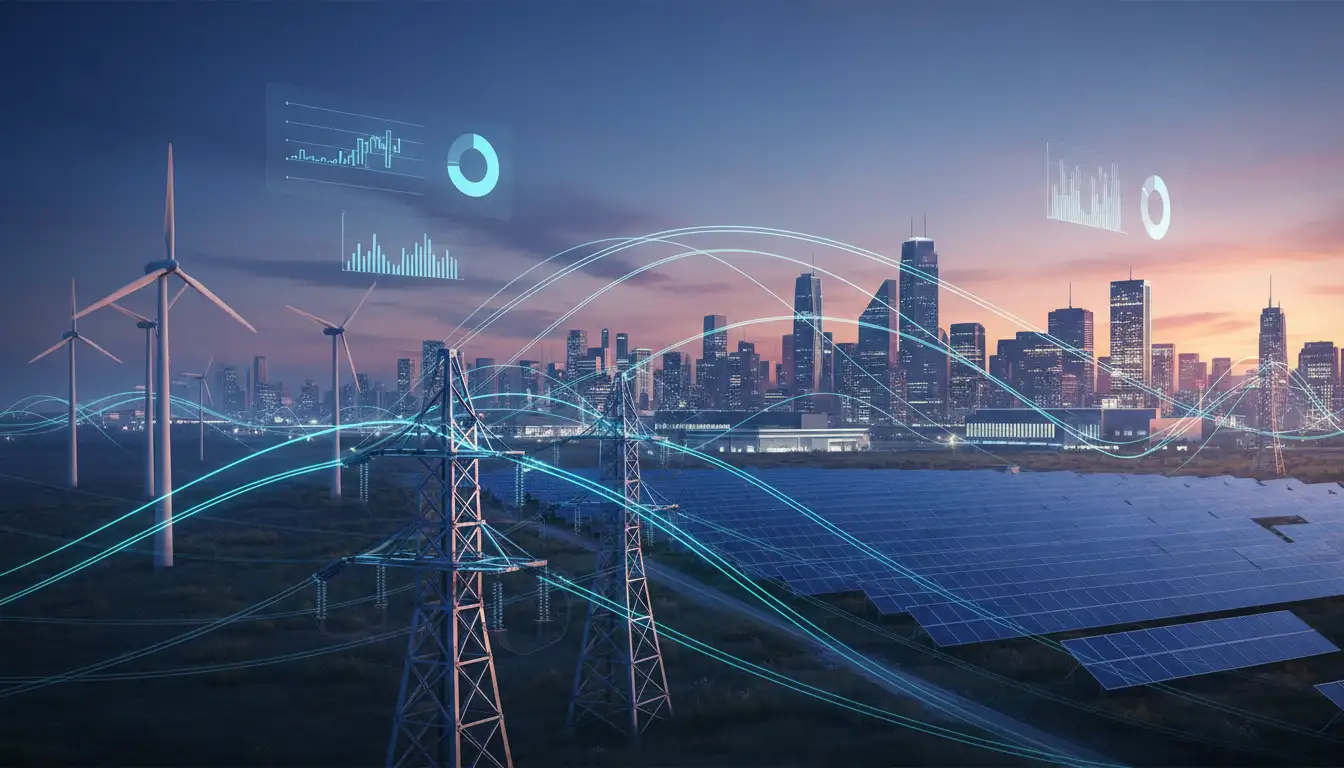

Energy Sector AI: Demand Forecasting and Grid Optimization
Artificial intelligence (AI) is transforming the global energy sector, enabling utilities and grid operators to manage increasingly complex systems with unprecedented precision. As renewable energy capacity grows and electricity consumption patterns become more dynamic, traditional planning methods are no longer sufficient. AI‑driven demand forecasting and grid optimization have emerged as essential tools to ensure reliability, flexibility, and cost‑effective operation across the entire power value chain.
Why AI Matters in the Modern Energy System
The energy sector is undergoing a profound transition:
- Rapid growth of solar and wind generation
- Electrification of transport and heating
- Proliferation of distributed energy resources (DERs) such as rooftop PV and batteries
- Rising expectations for reliability and power quality
These developments make the grid more variable and harder to control using conventional models alone. AI helps by:



- Processing massive volumes of data from smart meters, sensors, and weather systems
- Learning complex, non‑linear relationships that classical models struggle to capture
- Continuously improving as new data becomes available
The result is a smarter, more adaptive energy system that can respond in near real time to changing conditions.
AI for Demand Forecasting in the Energy Sector
Accurate demand forecasting is the foundation of efficient grid operation and energy planning. Utilities have always forecasted load, but AI significantly enhances both short‑ and long‑term predictions.
Short‑Term Load Forecasting
Short‑term forecasting (from minutes to a few days ahead) is crucial for:
- Unit commitment and economic dispatch
- Day‑ahead and intra‑day market bidding
- Real‑time balancing and reserve planning
Machine learning models such as gradient boosting, random forests, and deep neural networks can:
- Ingest high‑resolution consumption data from smart meters
- Incorporate weather variables (temperature, humidity, solar irradiance, wind speed)
- Model special events, holidays, and behavioral changes
This leads to more precise hourly or even sub‑hourly load forecasts, allowing system operators to schedule generation more efficiently and reduce the need for expensive balancing energy.
Medium‑ and Long‑Term Demand Forecasting
Medium‑ and long‑term forecasts (months to years) support:
- Capacity expansion planning
- Network reinforcement decisions
- Investment in storage and flexibility solutions
Here, AI can combine macroeconomic indicators, demographic trends, policy scenarios, and technology adoption curves (e.g., EV penetration) to simulate how consumption patterns will evolve. Energy companies can then prioritize investments that deliver maximum reliability and return on capital.
Grid Optimization with AI
Forecasting is only one side of the equation; the other is how to operate the grid optimally given forecasted conditions. AI‑based grid optimization targets multiple objectives:
- Minimizing losses in transmission and distribution networks
- Enhancing voltage and frequency stability
- Integrating higher shares of intermittent renewables
- Avoiding congestion and overloads on critical assets
Real‑Time Grid Operation
Modern grids generate continuous streams of data from SCADA systems, phasor measurement units (PMUs), and IoT sensors. AI models can analyze this data to:
- Detect anomalies and potential faults before they escalate
- Recommend reconfiguration of network topology to alleviate congestion
- Optimize reactive power and voltage control schemes
Reinforcement learning is particularly promising for real‑time grid control. By interacting with a simulated environment, an AI agent can learn control policies that keep the system stable while maximizing efficiency, and these policies can then be deployed under human supervision in live operations.
Integrating Renewable Energy and Distributed Resources
High penetration of solar and wind introduces variability and uncertainty into the power system. AI helps accommodate these resources by:
- Forecasting renewable generation based on weather data and satellite imagery
- Scheduling flexible assets such as battery storage, demand response, and dispatchable generation
- Coordinating distributed energy resources across thousands or millions of endpoints
This coordination enables virtual power plants (VPPs), where many small assets—EV chargers, rooftop PV, behind‑the‑meter batteries, industrial loads—are aggregated and controlled as if they were a single large power plant. AI optimizes their collective behavior to provide grid services while respecting individual user constraints.
Demand Response and Consumer‑Side Optimization
AI‑driven demand forecasting is not only useful for system operators; it also enables more sophisticated demand response programs. By predicting when and where peak loads will occur, utilities can design dynamic tariffs and incentives that encourage consumers to shift consumption to off‑peak periods.
On the consumer side, smart home energy management systems can:
- Learn household routines and appliance usage patterns
- Automatically schedule EV charging, heating, and cooling
- Optimize self‑consumption of rooftop solar
Industrial and commercial customers benefit from AI‑based optimization that reduces peak demand charges, improves power factor, and supports participation in ancillary service markets.
Asset Management and Predictive Maintenance
Reliable grid operation depends on the health of critical assets such as transformers, cables, switchgear, and generation equipment. AI extends asset life and reduces downtime by:
- Monitoring condition data (temperature, vibration, partial discharge, oil quality)
- Identifying early signs of degradation or failure
- Prioritizing maintenance actions based on risk and impact
Predictive maintenance strategies supported by AI reduce unplanned outages, lower O&M costs, and enhance overall system reliability—all of which contribute indirectly to more stable demand and grid performance.
Cybersecurity and Data Governance
The digitalization that enables AI in the energy sector also increases exposure to cyber risks. As more devices become connected, securing data flows and control signals is essential. AI can:
- Detect unusual traffic patterns and potential cyber intrusions
- Classify and block malicious behavior in real time
- Support anomaly detection in control systems
At the same time, energy companies must implement strong data governance frameworks. Ensuring data quality, privacy, and regulatory compliance is fundamental to building robust AI solutions and maintaining public trust.
Business Value and Strategic Impact
AI‑driven demand forecasting and grid optimization deliver tangible value across the sector:
- Reduced balancing and reserve costs
- Lower network losses and improved asset utilization
- Deferred or better‑targeted capital investments
- Higher renewable integration without compromising reliability
- Enhanced customer experience through personalized and flexible tariffs
Strategically, organizations that invest early in AI capabilities can develop proprietary models, unique datasets, and specialized expertise that are difficult for competitors to replicate. This creates a lasting competitive advantage in markets that are becoming more dynamic and data‑driven.
Challenges and Best Practices for Implementation
Despite its potential, successful deployment of AI in the energy sector faces several challenges:
- Legacy infrastructure and fragmented data sources
- Limited in‑house data science and AI engineering capabilities
- Need for explainability, especially in safety‑critical grid operations
- Regulatory frameworks that may not fully recognize AI‑enabled services
Best practices to address these issues include:
- Building an integrated data platform with standardized interfaces
- Starting with focused use cases such as short‑term load forecasting or predictive maintenance
- Combining domain expertise from power system engineers with data science teams
- Designing human‑in‑the‑loop workflows to validate AI recommendations
- Collaborating with regulators to define transparency and accountability standards
As these practices become more common, AI will shift from experimental pilots to core operational tools in utilities and energy companies worldwide.
Future Outlook
Looking ahead, the convergence of AI, advanced sensing, edge computing, and 5G connectivity will further enhance demand forecasting and grid optimization. Self‑healing grids, fully autonomous distribution networks, and real‑time coordination of millions of distributed assets will increasingly move from concept to reality.
For stakeholders across the energy ecosystem—utilities, transmission and distribution operators, aggregators, and large consumers—investing in AI capabilities today is not simply a technological upgrade; it is a strategic necessity to navigate the energy transition and deliver a resilient, low‑carbon, and customer‑centric power system.