
Ecobee Premium vs. Nest Learning Thermostat: The Ultimate Comparison
Smart thermostats have evolved from simple digital displays into sophisticated energy management hubs. If you are looking to upgrade your home automation system, two titans dominate the market: the Ecobee Smart Thermostat Premium and the Nest Learning Thermostat (4th Gen). Both devices promise to slash your utility bills, enhance indoor comfort, and integrate seamlessly with your smart home. However, they approach temperature control from fundamentally different philosophies. This comprehensive comparison explores their features, design, and performance to help you decide which one deserves a spot on your wall.
Aesthetic Design and Build Quality
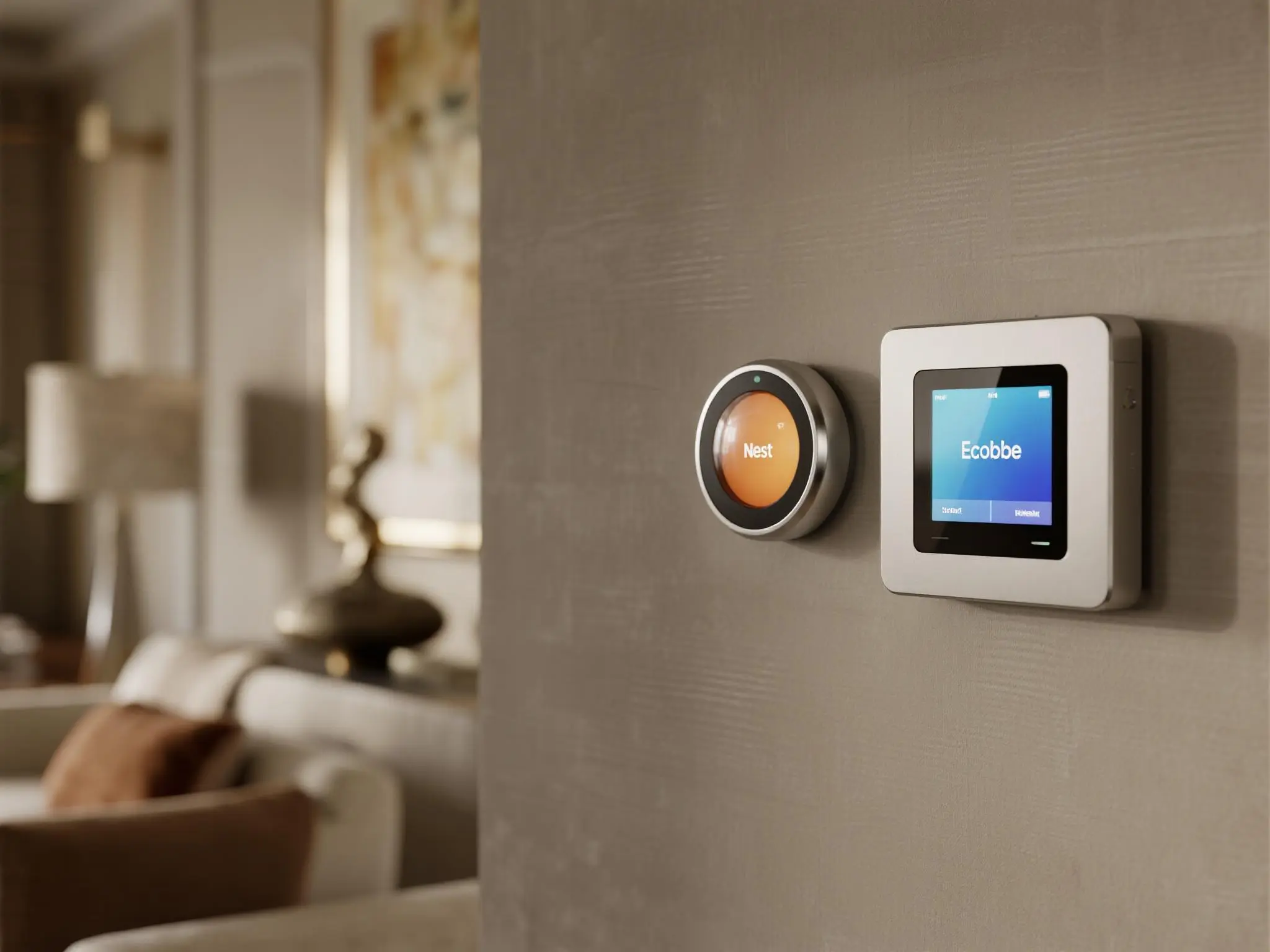
The visual appeal of a smart thermostat often influences the initial buying decision. Google’s Nest Learning Thermostat is famous for its iconic circular design and rotating outer ring. The 4th Generation features a “Dynamic Farsight” display that sits behind polished glass, giving it a timeless, high-end timepiece feel. It fits perfectly in modern homes that value minimalist elegance.
On the other hand, the Ecobee Smart Thermostat Premium opts for a more industrial yet refined look. It features a squarish shape with rounded corners and a zinc-plated metal housing. While the Nest relies on a mechanical twist, the Ecobee uses a large, vibrant touchscreen interface. Both devices feel sturdy and expensive, but the Nest generally wins on pure visual flair, while the Ecobee feels like a robust piece of professional HVAC equipment.



Learning vs. Scheduling: The Core Difference
The primary distinction between these two lies in how they manage your home’s climate. The Nest Learning Thermostat lives up to its name by observing your behavior. For the first week or two, you manually adjust the temperature. Nest remembers these preferences and creates an automated schedule based on your habits. If you consistently turn the heat down at 10 PM, Nest eventually does it for you.
Ecobee takes a more data-driven, proactive approach. Instead of just learning your habits, it uses a high-quality remote sensor system to monitor the actual temperature in different rooms. Ecobee focuses on “Occupancy Sensing.” It prioritizes the comfort of the room you are currently in, rather than just the hallway where the main unit is installed. While Ecobee allows for manual scheduling, its strength lies in its ability to balance hot or cold spots across the entire house.
Air Quality Monitoring and Integrated Sensors
The Ecobee Premium goes beyond temperature by including a built-in air quality monitor. This sensor tracks Volatile Organic Compounds (VOCs), estimated CO2 levels, and humidity. It alerts you when you should open a window or run your furnace fan to improve indoor air circulation. For homeowners concerned about health and allergens, this is a significant advantage.
Nest focuses more on the efficiency of the HVAC system itself. Its “HVAC Monitoring” feature can detect unusual patterns in your heating or cooling system and alert you to potential mechanical issues before they lead to a total breakdown. While it tracks humidity, it lacks the multi-gas air quality sensing found in the Ecobee Premium.
Home Integration and Voice Assistants
If you already have a preferred smart home ecosystem, your choice might be made for you. The Ecobee Smart Thermostat Premium is incredibly versatile. It has a built-in speaker and microphone, allowing it to function as a standalone Amazon Alexa or Apple Siri hub. It is also compatible with Google Home, Samsung SmartThings, and Apple HomeKit.
The Nest Learning Thermostat is, predictably, a centerpiece for the Google Home ecosystem. While it now supports the Matter protocol—increasing its compatibility with Apple Home and Alexa—the deepest integration and smoothest user experience remain within the Google Nest app. If you are an avid Apple user, Ecobee’s native HomeKit support and Siri integration usually make it the superior choice.
Energy Savings and Utility Rebates
Both manufacturers claim their devices can save users between 10% and 15% on heating and cooling costs. These savings often pay for the device within two years. They both offer “Eco” modes that automatically adjust the temperature when you are away from home using Geofencing (tracking your phone’s location).
Furthermore, both Ecobee and Nest participate in “Demand Response” programs. These programs allow utility companies to slightly adjust your thermostat during peak demand hours in exchange for financial incentives or rebates. Before purchasing, check your local utility provider’s website, as many offer $50 to $100 rebates for installing these specific models.
Installation and Compatibility
Most modern HVAC systems are compatible with both thermostats. However, the Nest Learning Thermostat is designed to work without a “C-wire” (common wire) in many homes, as it can trickle-charge its internal battery. Ecobee, conversely, requires a C-wire for power. If your older home lacks this wire, Ecobee includes a Power Extender Kit (PEK) in the box, which is a reliable but slightly more complex installation step.
Which One Should You Choose?
The Nest Learning Thermostat is best for those who want a “set it and forget it” experience. Its ability to learn your lifestyle without manual programming is unmatched, and its design is a work of art. It is the ideal choice for Google Home users.
The Ecobee Smart Thermostat Premium is the better choice for power users and those with larger homes. If you have rooms that stay colder or hotter than others, the included remote sensor is a game-changer. Its built-in air quality monitoring and superior integration with Apple HomeKit and Alexa provide a more “all-in-one” smart home experience.
Amazon.com Product Recommendation
For those who want the most feature-rich experience with air quality tracking and multi-room comfort, we highly recommend the ecobee Smart Thermostat Premium with Built-in Quality Monitor and Remote Sensor. It offers the best value for comprehensive home climate management.