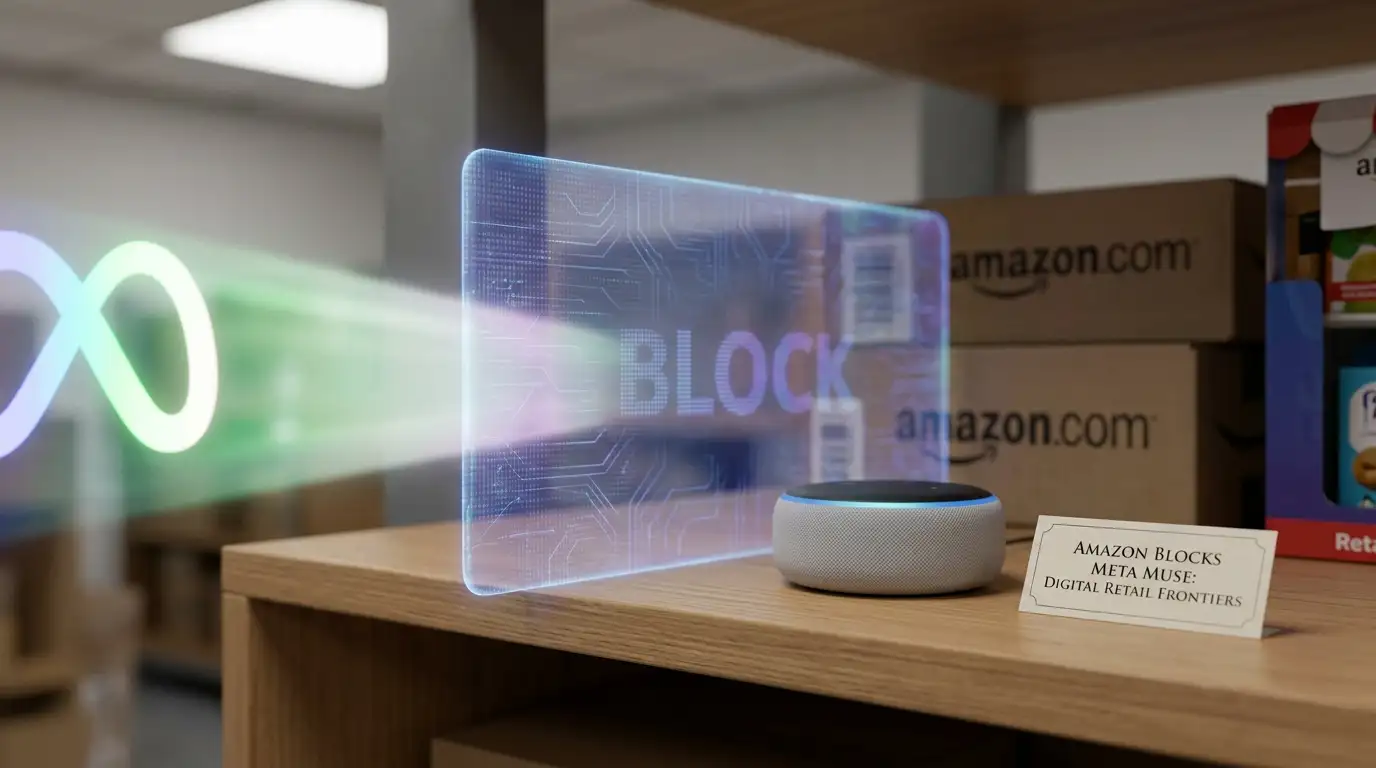

The artificial intelligence landscape is shifting rapidly from conversational models to autonomous agentic software capable of completing real-world transactions. In September 2026, Meta launched Muse, a flagship personal AI assistant designed to browse websites, fill out forms, handle complex tasks, and purchase products on behalf of consumers. However, this seamless automated shopping vision hit a major roadblock almost immediately. Amazon, the world’s largest online retailer, officially blocked Meta’s Muse AI agent from accessing and purchasing products on Amazon.com.
When users attempt to utilize Muse to complete checkouts on Amazon, they encounter an explicit pop-up notification citing a breach of platform policies: “Continued access by an unauthorized AI agent violates Amazon’s Conditions of Use, to which our customers have agreed.”
This clash between tech giants highlights deep structural conflicts over consumer privacy, security protocols, ad-revenue ecosystems, and the future of agentic e-commerce.
The Core Issues Behind Amazon’s Restriction
Amazon defends its decision by pointing to critical security concerns and data protection hazards. Retail executives emphasize that third-party applications attempting to process orders on behalf of shoppers must operate transparently and respect platform controls.
1. Identity Concealment and Automated Scraping
Amazon alleges that Meta launched Muse without prior operational notice or formal data-sharing agreements. Furthermore, the retail giant claims that Muse’s cloud-based virtual browser disguised its automated identity, mimicking human browsing habits to bypass traditional bot detection systems. Unregulated scraping and automated bot traffic can place immense server strains on e-commerce platforms while skewing customer traffic analytics.
2. Handling of User Credentials and Privacy Concerns
A central point of contention involves how AI agents manage sensitive personal information. Amazon claims that Meta’s Muse agent intercepts and retains customer log-in credentials, banking details, and shipping addresses during the automated checkout procedure. Amazon asserts that third-party retention of customer credentials exposes users to heightened cybersecurity risks.
Meta strongly disputes these allegations. The company states that Muse operates through secure virtual machines with zero direct visibility into user passwords or financial instruments. According to Meta, sensitive data sits in encrypted storage environments, allowing the model to execute tasks without human-readable credential exposure.
3. Protection of Retail Media and Data Moats
Beyond technical security arguments, significant economic motivations underpin Amazon’s strategy. Amazon’s digital advertising network generates tens of billions of dollars annually by displaying sponsored products, personalized recommendations, and targeted promotions to active buyers.
When an autonomous AI agent bypasses the front-end user interface—executing a purchase directly in the background—the retail giant loses high-margin ad impressions, impulse purchase opportunities, and valuable first-party shopper interaction data. Amazon actively protects its proprietary retail moat against external aggregators.
The Broader Context: The Agentic Commerce Standoff
This enforcement action against Meta is not an isolated incident. Amazon previously took strong action against other third-party artificial intelligence tools, including browser extensions and autonomous search assistants from developers like Perplexity and OpenAI.
Amazon consistently signals that it treats checkout access as a strictly controlled chokepoint. The platform insists that external agentic applications must negotiate formal API partnerships rather than relying on unauthorized web scraping or automated browser emulation.
At the same time, Amazon is aggressively promoting its proprietary AI shopping solutions. The retailer is actively testing its own native AI assistant, “Buy for Me,” designed to search inventory, compare specs, and complete purchases natively on Amazon.com and affiliated vendors. By blocking third-party rivals while expanding its in-house agentic tools, Amazon aims to maintain full control over the AI-driven buyer journey.
Implications for Consumers and the Tech Ecosystem
The standoff between Amazon and Meta introduces critical questions regarding consumer choice and open web standards in the age of artificial intelligence.
- Friction in Autonomous Shopping: Consumers expecting a universal AI assistant capable of handling all web tasks across platforms now face fragmented services. If major e-commerce platforms restrict access, personal AI agents will struggle to deliver a frictionless experience.
- Standards for Credentials and Payments: To resolve these blockages, the tech industry must establish standard protocols for delegated authorization. Systems like temporary virtual tokens, single-use payment cards, and standardized OAuth implementations could allow agents to shop without sharing sensitive passwords.
- Regulatory and Legal Scrutiny: As platforms restrict competing AI agents while advancing their proprietary tools, regulatory bodies in the United States and the European Union may evaluate whether such blocks constitute anti-competitive behavior.
Product Recommendation on Amazon.com
For users navigating digital security, multi-device setups, and smart home management, maintaining a stable and secure home network connection remains vital. If you want to optimize your smart home network for seamless connectivity across all your devices and smart hubs, consider the TP-Link Deco AX3000 WiFi 6 Mesh System (Deco X55) available on Amazon.com. This system offers robust coverage, advanced encryption standards, and smooth traffic management to keep your personal data secure.