
For years, tech enthusiasts and smart home owners have eagerly anticipated Apple’s entry into dedicated smart displays. While competitors like Amazon and Google dominated living rooms with the Echo Show and Nest Hub, Apple relied primarily on the HomePod mini, Apple TV 4K, and iPad StandBy mode. However, recent reports from reliable industry insiders point toward a dedicated home automation controller, informally dubbed the “HomePad” or Apple smart home hub.
This upcoming hardware release aims to bridge the gap between high-end home audio, central touch command, and next-generation artificial intelligence. Understanding how Apple plans to redefine connected living space management requires analyzing its rumored launch timeframe, projected pricing, hardware design, and software integration.
Rumored Launch Window and Release Timeline
Initial leaks suggested that Apple planned to release its smart display earlier. Technical adjustments, combined with extensive software refinement for the next-generation Siri voice assistant, pushed the development timeline back.
Industry analysts now anticipate an official unveiling during Apple’s fall hardware window. Reports indicate a targeted launch alongside updated home ecosystem accessories, including an updated Apple TV 4K and a refreshed HomePod mini. This strategic timing positioning allows Apple to showcase the hub as the centerpiece of a broader home automation ecosystem update.
Anticipated Hardware Specifications and Physical Form Factors
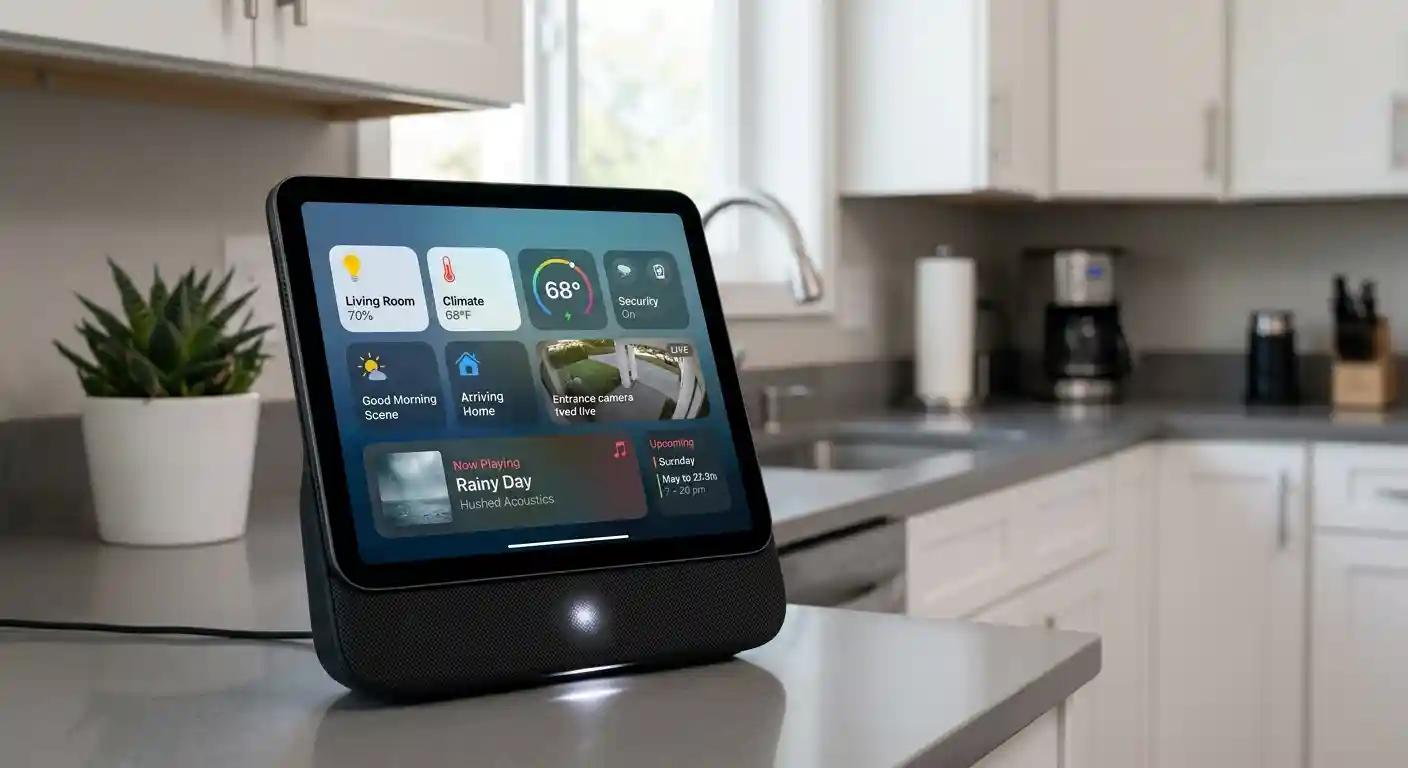
Apple is reportedly developing two distinct configurations of its smart home hub to target different room setups and user preferences:
- Tabletop Smart Display
- Screen Size: Approximately 6 to 7 inches square display panel.
- Base Integration: A specialized base reminiscent of the HomePod mini speaker housing high-fidelity drivers for room-filling audio playback.
- Portability & Placement: Designed for kitchen countertops, bedside tables, or desk workspaces.
- Wall-Mounted Controller
- Form Factor: Ultra-thin, square touchscreen interface designed for flush magnetic wall attachment.
- Target Placement: Hallways, main entryways, or central family room light switch panels.
- Power Supply: Uses standardized low-voltage wiring or high-efficiency magnetic contact pads.
Both models will likely incorporate built-in sensors capable of proximity detection. The device can detect when a user approaches the panel and automatically adjust interface scaling, showing high-density data up close or bold glanceable widgets from across the room.
Software Framework and Apple Intelligence Integration
Software forms the real backbone of the Apple smart home hub. Rather than running standard iPadOS, the system is expected to run a customized operating system tailored explicitly for ambient, multi-user household interaction.
Key Software Capabilities
- Personalized Face Recognition: Integrated camera sensors recognize household members upon approach, tailoring display cards, upcoming calendar events, media recommendations, and personal communication shortcuts automatically.
- Advanced Siri Voice Assistant: Driven by Apple Intelligence models, the updated voice assistant handles contextual multi-step commands natively, processing complex requests like “dim the kitchen lights, lower the temperature, and lock the front door” without pause.
- Unified Matter and Thread Control: Complete, native compatibility with the Matter standard and Thread networking protocols ensures ultra-low latency control over third-party smart bulbs, door locks, sensors, and thermostats.
- FaceTime and Intercom Hub: Built-in front cameras enable video calls, room-to-room audio intercom functionality, and direct security camera feed monitoring.
Projected Pricing and Market Strategy
Pricing strategies for the HomePad position the device above basic smart speakers but comfortably below entry-level iPads. Financial projections point to a starting price around $300 to $350 for the entry model.
+--------------------------+---------------------+------------------------------------+
| Model Version            | Estimated Price     | Target Use Case                    |
+--------------------------+---------------------+------------------------------------+
| Tabletop Speaker Hub     | $300 - $350         | Kitchen / Desk / Nightstand        |
| Wall-Mounted Display     | $350 - $400         | Hallway / Central Wall Control     |
+--------------------------+---------------------+------------------------------------+
This pricing model allows Apple to directly compete with premium offerings like the Amazon Echo Show 15 while leveraging superior hardware materials, tight privacy controls, and deep integration across iOS, iPadOS, and macOS environments.
The Strategic Importance of the HomePad Ecosystem
For Apple, releasing a dedicated smart display goes beyond selling another individual hardware unit. It establishes an anchor within the home. By offering an always-on control center, Apple ensures that users keep their smart home infrastructure connected directly to HomeKit.
Furthermore, as ambient computing continues to advance, having an intelligent display sitting silently on a counter provides the ideal conduit for artificial intelligence to manage ambient home conditions, energy conservation, home security monitoring, and daily family scheduling seamlessly.
Product Recommendation
To prepare your existing ecosystem for native Apple Home integration and low-latency connectivity, equipping your setup with a Matter-certified Thread border router accessory ensures smooth setup when new hubs arrive:
- Product: Aqara Smart Hub M3 (Available on Amazon.com) – A multi-protocol smart home hub featuring native Matter support, local automation execution, Thread border routing, and direct compatibility with Apple HomeKit systems.