
Robotic Keys: How Intelligent Machines Could Transform Everyday Assistance
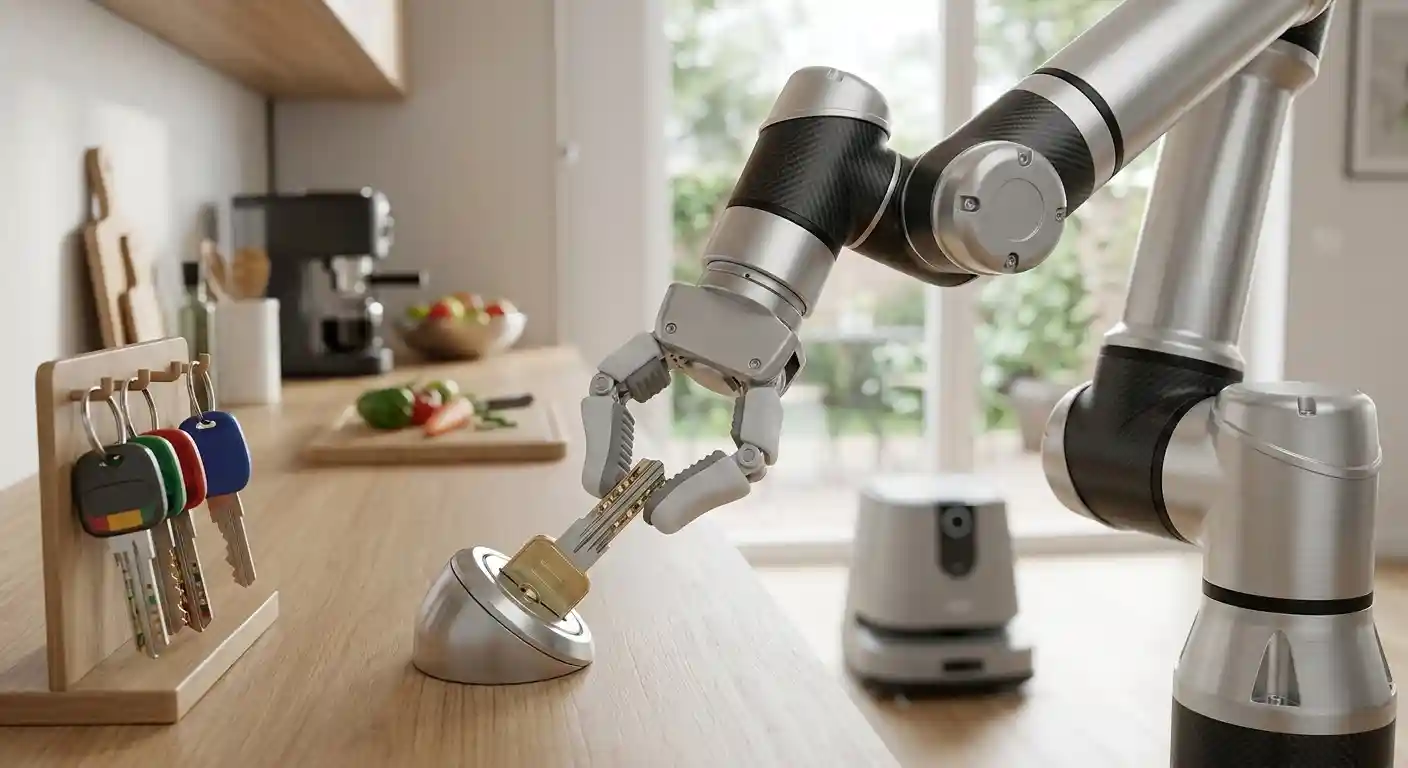
Imagine arriving home with both hands full of groceries, a child’s backpack, or heavy shopping bags. Finding your keys and unlocking the front door can suddenly become a difficult task. A new wave of robotics research explores how machines could help people handle these small but important challenges through intelligent perception, precise movement, and human-centered design.
The Tech Xplore report associated with the topic highlights a broader question: can robots become practical assistants that operate naturally in everyday environments? Instead of performing only factory-based tasks, future robots may support people inside homes, offices, and public spaces.
From Industrial Machines to Personal Assistants
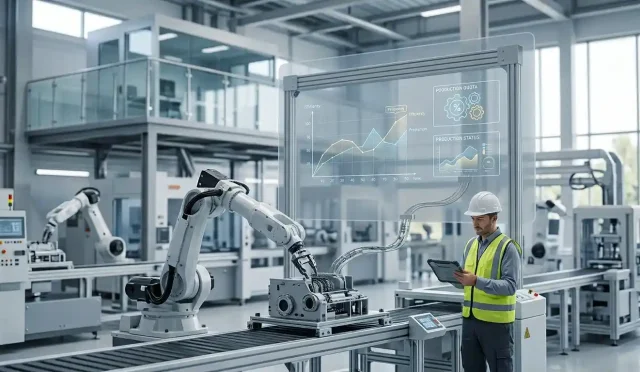
Robots traditionally worked in controlled environments. Industrial robotic arms performed repetitive tasks on assembly lines, where lighting, object placement, and movement patterns remained predictable. Everyday life creates a much more complicated situation.
A household robot must recognize objects, understand changing surroundings, avoid obstacles, and respond safely to human actions. Keys may hide under a bag, fall behind furniture, or remain inside a pocket. A robot must identify the object and plan a safe way to retrieve it.
This challenge requires more than mechanical strength. The machine needs computer vision, artificial intelligence, tactile sensing, and reliable motion control. These technologies allow a robotic system to understand its surroundings and select an appropriate action.
Why Object Retrieval Is Difficult
A key appears simple, but it creates several challenges for a robot. Keys can have different shapes, colors, and sizes. They may reflect light, overlap with other objects, or become partially hidden. A robotic arm must also determine how to grasp a small metal object without pushing it farther away.
Human beings solve these problems almost automatically. We use vision to locate the key, experience to estimate its position, and touch to adjust our grip. Robots must combine several types of sensor data to imitate this flexible behavior.
A robotic hand may use cameras to detect the key and force sensors to determine whether it has achieved a secure grip. Artificial intelligence can then compare the object with previously learned examples. This process helps the robot distinguish a key from coins, cables, or other small household items.
The Role of Artificial Intelligence
Artificial intelligence gives robots the ability to make decisions instead of following a single fixed sequence. For example, a robot may search a table, detect a key ring, move its arm toward the object, and change its grip when the key shifts position.
Machine learning improves this process over time. Researchers can train robots in virtual environments before testing them on physical hardware. Simulations allow developers to expose a system to thousands of object positions and movement patterns without damaging expensive equipment.
However, training data must remain consistent and meaningful. Robotics research increasingly shows that high-quality demonstrations can teach machines more effectively than large collections of random examples. A robot needs to learn reliable relationships between perception, movement, contact, and results.
Human-Robot Collaboration
The most useful household robot will not replace people completely. Instead, it will cooperate with them. A person may ask the robot to find a key, hold a door, carry an object, or bring a tool. The robot must understand the request and complete the task without creating additional work.
Voice commands, mobile applications, and gesture recognition could make these interactions more natural. A user might say, “Please find my front-door key,” while the robot searches nearby surfaces. The system could ask for clarification if it finds several similar objects.
Safety remains essential. A robot working near people must control its speed and force. It should stop when a person enters its path and avoid gripping fragile objects too tightly. Engineers must also design clear warning signals so users understand what the machine plans to do.
Potential Benefits for Accessibility
Robotic assistance could provide meaningful support for older adults and people with limited mobility. A simple task, such as picking up keys from the floor, may cause discomfort or require assistance. A reliable robotic assistant could help users remain independent for longer.
The same technology could support people recovering from injuries or living with conditions that affect hand strength and coordination. A robot could retrieve everyday objects, carry lightweight items, or help organize a living space.
These applications show why assistive robotics needs a human-centered approach. Developers should focus on reliability, affordability, privacy, and ease of use rather than impressive demonstrations alone.
Engineering Challenges Ahead
Robots still struggle with unpredictable environments. Soft materials, cluttered rooms, poor lighting, and unusual object shapes can reduce performance. A system that works well in a laboratory may behave differently inside a busy home.
Battery life creates another limitation. Mobile robots must balance computing power, movement, and operating time. Smaller machines may consume less energy, but they often have limited lifting strength. Larger robots can perform stronger movements, yet they may cost more and require additional safety features.
Manufacturers must also make these systems easier to maintain. Users will expect simple charging, software updates, and troubleshooting. If a robot cannot recover from a minor mistake, people may quickly lose confidence in it.
What the Future May Look Like
The future of robotic assistance will likely combine compact hardware with advanced software. A robot may use cameras, microphones, force sensors, and language models to understand both objects and instructions. It could learn the layout of a home while preserving user control over sensitive information.
Rather than presenting robots as futuristic novelties, researchers are moving toward practical tools that solve everyday problems. Retrieving keys may seem like a small task, but it represents a larger goal: creating machines that understand real environments and respond with useful, careful actions.
The success of this technology will depend on trust. People need robots that behave predictably, protect privacy, and communicate clearly. When engineers combine intelligent perception with safe mechanical design, robotic assistants can become valuable partners in daily life.
Source: Tech Xplore