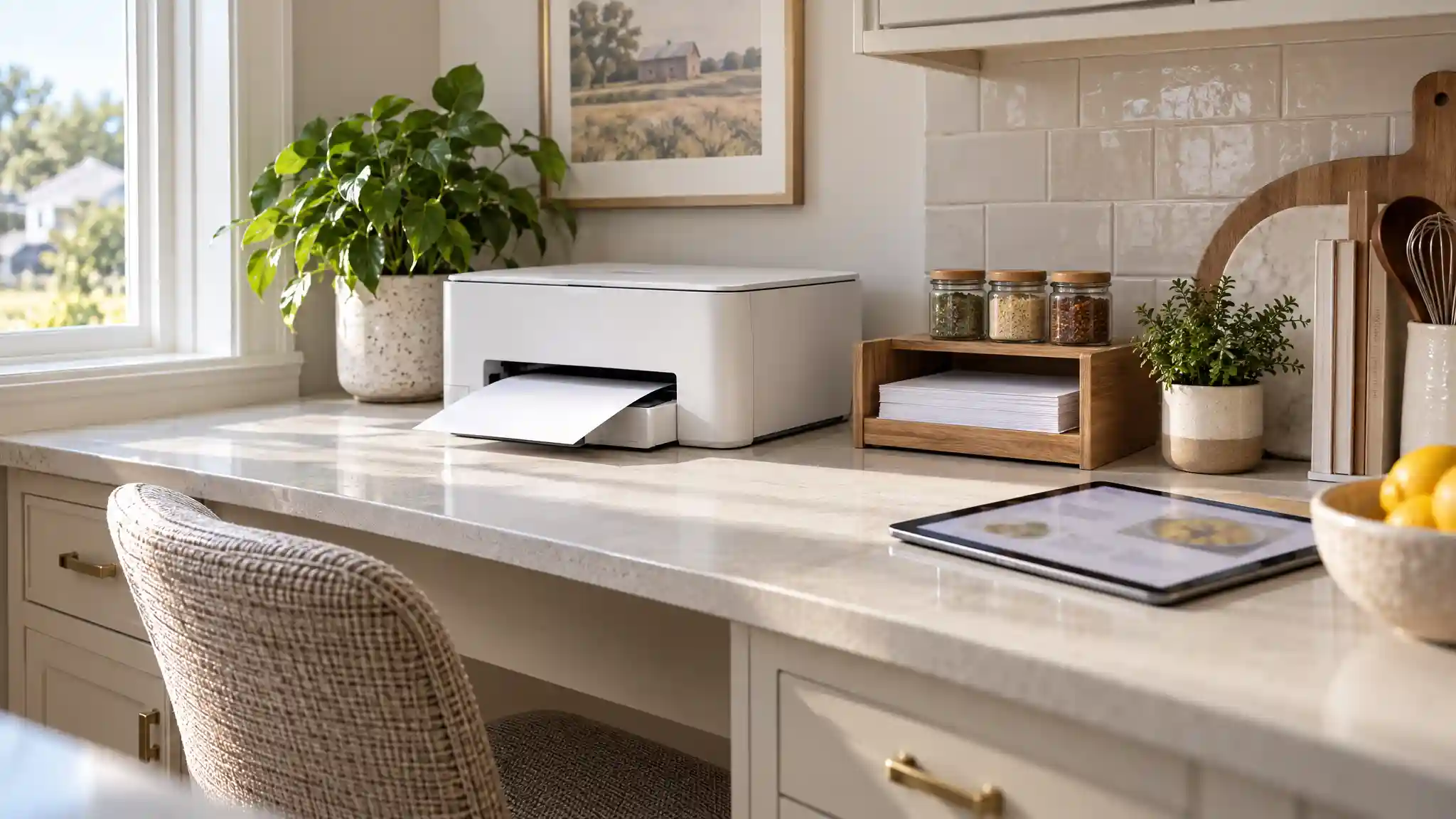

Top Wireless Printers for Ohio Kitchens: Smart Printing for Busy Culinary Spaces
Ohio homes often treat the kitchen as the undisputed command center of daily family life. From Columbus suburban ranch homes to historic Cleveland Victorians and bustling Cincinnati brownstones, kitchen counters witness meal planning, remote work tasks, recipe testing, school schedules, and small cottage food business operations. Placing a bulky, messy wired printer near flour canisters or sizzling pans creates unnecessary clutter and hazard. Installing a streamlined wireless printing solution directly in your culinary workspace solves logistical headaches instantly. Modern compact all-in-one machines withstand ambient kitchen moisture while offering fast wireless connectivity directly from smartphones, tablets, and voice assistants. Selecting the proper model demands a balance among moisture resilience, modest spatial footprints, economical operating expenses, and effortless wireless communication.
Unique Operational Challenges in Buckeye Kitchens
Kitchen environments introduce variables that ordinary home offices never face. Ambient humidity rises significantly when stovetops boil pasta, dishwashers vent hot steam, or Ohio summers elevate indoor humidity levels. Standard laser printer paper trays can absorb moisture, leading to curled stock or paper jams inside high-heat fuser rollers. Inkjet systems, conversely, accommodate changing moisture better when using pigment-based inks that dry rapidly without smudging when damp hands handle fresh recipe cards.
Counter space remains at a premium throughout midwestern homes. An oversized device quickly encroaches upon cutting boards, small appliances, and food prep surfaces. A dedicated kitchen unit must feature enclosed paper trays to prevent rogue grease droplets, stray seasonings, or water splashes from compromising clean sheets. Front-loading paper cassettes and front-facing control panels allow homeowners to tuck machines neatly into open pantry shelves, island cabinets, or beneath overhead cupboards without demanding top clearance for paper reloads.

Essential Features for Culinary Printing Stations
Reliable connectivity represents the cornerstone of an effective kitchen workstation. Family cooks frequently discover recipes on handheld mobile devices, meaning AirPrint, Mopria, and stable dual-band Wi-Fi connectivity must perform seamlessly without requiring a desktop intermediary. When hands get dusted with breadcrumbs or sticky sauces, hands-free voice printing through popular smart kitchen displays saves time and prevents grime transfer to physical device buttons.
Ink economy also dictates long-term satisfaction. Households running home-based catering operations, community bake sales, or bustling family chore systems print significant volumes. Traditional tri-color cartridges burn through budgets quickly, whereas refillable ink reservoir designs provide thousands of resilient pages per bottle. Automated two-sided document production further conserves paper reserves, maximizing kitchen cabinet storage by halving the volume of reams kept on hand.
Evaluating Leading Wireless Printing Technologies
Refillable bottle systems dominate the current consumer landscape for high-volume practicality. These units dispense with fragile cartridge mechanisms, leveraging built-in tanks that users top off with high-yield pigment inks. For an Ohio home cook who regularly prints entire cookbook drafts, nutritional compliance labels, or pantry organization grids, ink bottle platforms keep operating expenses down to pennies per dozen pages.
When printing demands remain sporadic, compact cartridge-based mobile all-in-one printers offer unmatched space-saving convenience. Several portable and semi-portable designs fold into sleek bricks that slip inside deep kitchen drawers or sit unobtrusively beside a knife block. While page yields on compact cartridges stay lower, their tiny footprint preserves valuable granite or butcher block prep space.
Integrating Print Hubs Into Kitchen Cabinetry
Successful installation requires strategic physical placement. Never position equipment immediately adjacent to deep frying setups, open dishwashers, or kitchen sinks where direct liquid splashes threaten sensitive circuit boards. A dry butler’s pantry, a built-in kitchen desk nook, or an appliance garage with integrated electrical outlets provides optimal shelter. Ensure surrounding air circulates freely so device fans disperse warmth effectively without drawing airborne cooking oils inside internal optical sensors.
Routing power cords behind cabinetry prevents accidental snags during hurried dinner preparation. Using an enclosed surge-protected strip protects delicate electronics against occasional voltage spikes during midwestern thunderstorms. Establishing a dedicated static IP address through your home router ensures that family tablets and smartphones never lose pairing, even after power blinks or seasonal router reboots.
Practical Everyday Uses for the Domestic Hub
Modern households utilize kitchen print setups for numerous creative and practical duties beyond standard recipe reprints. Parents frequently generate customized grocery inventory templates, magnetic chore checklists, weekly meal rosters, and school lunchbox notes right where meals come together. Cottage food makers across Ohio rely on these stations to print state-compliant ingredient stickers, allergen warning badges, and festive farmer’s market packaging accents on demand.
Home organizing enthusiasts frequently run waterproof vinyl or matte label sheets through their kitchen setup to mark glass spice jars, airtight dry good containers, and freezer bins. Wireless color accuracy brings botanical garden sketches or holiday menu cards to life for seasonal dinner parties, ensuring hostesses coordinate tabletop themes without running upstairs to a distant second-floor home office.
Maintaining Peak Performance in Culinary Zones
Preventative maintenance keeps printing hardware running smoothly amidst culinary activities. Wipe external casings weekly with a dry microfiber cloth to collect ambient dust before it mixes with humidity. If your kitchen features high ceilings or open range hoods that pull air across the counter, consider resting a simple dust cover over the chassis when inactive. Run nozzle check routines once every fortnight if you use the machine sparingly, as keeping printhead nozzles primed prevents ink coagulation in dry winter heating months.
Always keep spare paper sealed inside its original moisture-barrier wrapping until you load it into the cassette. Loading half a ream at a time prevents paper edges from waving due to changing room vapor pressure, eliminating misfeeds and roller slips.
Recommended Amazon Choice for Kitchen Integration
The Epson EcoTank ET-2850 Wireless Color All-in-One Cartridge-Free Supertank Printer stands out on Amazon.com as an exceptional companion for Ohio kitchen counters. It features an remarkably compact footprint that fits comfortably inside pantry cubbies or kitchen desk corners. Its key benefit lies in its high-capacity refillable ink reservoir system, which slashes replacement consumable costs by up to ninety percent while delivering crisp, smudge-resistant text with black pigment ink. With auto-duplex two-sided document production, responsive voice-activated printing compatibility, seamless mobile setup via the Epson Smart Panel application, and an enclosed internal paper feed pathway, this device masters the demanding environment of modern kitchen living without monopolizing vital food prep surfaces.