
Best Paper Shredders for Document Security in Pennsylvania
Why Pennsylvanians Need a Deliberate Shredding Strategy
Paper records still carry more private information than many people realize. Utility bills, medical notices, payroll papers, insurance letters, bank statements, school forms, and shipping labels can expose names, addresses, account details, or identification data. In Pennsylvania, households, remote workers, nonprofits, and local businesses handle these materials every week. A dependable paper shredder helps them remove that information before discarded documents leave a desk, office, or home.
The best paper shredders for document security in Pennsylvania do more than reduce paper volume. They support a practical document destruction routine. Instead of building a stack for an occasional cleanup, users can destroy sensitive mail and outdated files promptly.
Start With the Right Security Level
Choose cut style before comparing speed, price, or bin size. A strip cut shredder creates long paper ribbons. It may suit low sensitivity material, but it offers the least protection because determined parties may reconstruct strips. A cross cut shredder turns each page into smaller pieces and gives most homes and small offices a stronger balance of security, capacity, and cost.


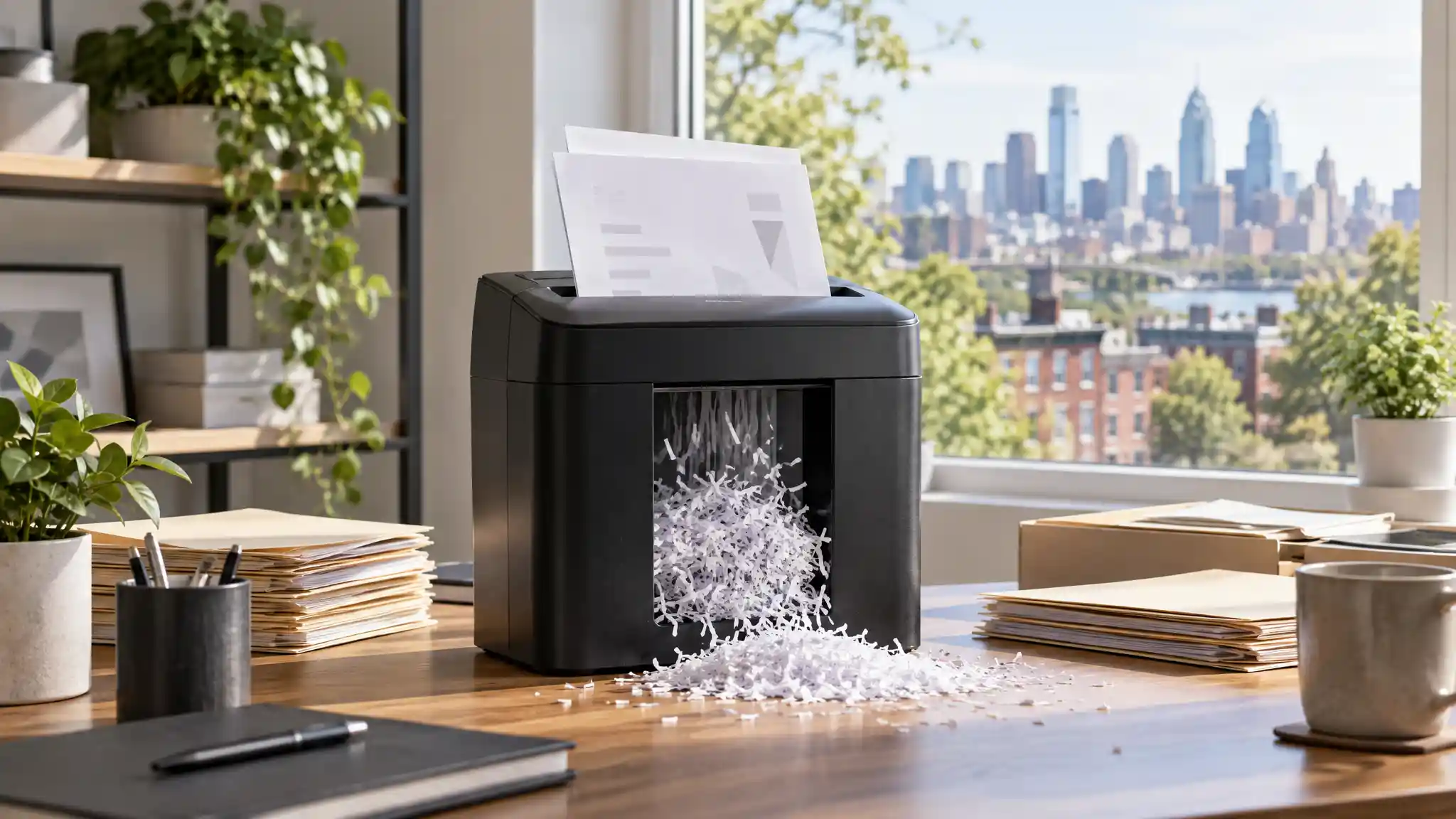
For highly sensitive records, select a micro cut paper shredder. It produces much smaller particles than typical cross cut models, making reconstruction considerably more difficult. Look closely at the stated security level rather than relying only on marketing terms such as secure or heavy duty. Many buyers use P 4 security shredders for routine confidential documents. Organizations with especially sensitive files may consider P 5 or higher equipment after reviewing their internal policies and retention needs.
A secure paper disposal plan should match the document, not just the machine. Shred documents containing financial, health, employee, client, or identity information. Keep records that must be retained in locked, organized storage until their retention period ends. Then shred them in manageable batches.
Match Capacity to Your Real Workload
A powerful machine is not always the right machine. First estimate how many sheets you normally destroy at one time. A small household may only need a compact unit that handles incoming mail, expired cards, and occasional tax related papers. A busy home office may need a larger bin, longer runtime, and dependable credit card shredding. A Pennsylvania practice, retailer, or administrative team may require a commercial paper shredder that supports frequent use without long cooling pauses.
Sheet capacity tells only part of the story. Manufacturers often state a maximum number based on standard paper under ideal conditions. Heavy paper, folded sheets, envelopes, labels, staples, and humidity can lower practical capacity. Feed fewer pages than the maximum when security work cannot wait for a jam to clear. A shredder with anti jam technology can help, yet careful feeding remains the most reliable defense against interruption.
Also assess continuous run time. A model that runs briefly before cooling may work well for light home use. A unit with a longer duty cycle fits recurring office tasks more comfortably. If several people share the machine, prioritize a sizable pullout bin and a clear full bin indicator. These features reduce mess, prevent overflow, and encourage staff to use the device correctly.
Prioritize Features That Protect People and Information
The safest purchase combines information security with everyday operational safety. Look for automatic start and stop controls, overload protection, and a safety lock when children or visitors may access the area. Some machines stop automatically when the bin is removed.
A credit card shredder offers added value for households and offices that retire cards, badges, or similar items. Check the product description to confirm whether the device accepts cards, staples, paper clips, CDs, or other media. Do not assume every shredder handles each material. Feeding unsupported items can damage cutters and compromise the paper shredding routine.
Noise matters. A quiet shredder can make regular destruction easier in apartments, shared offices, libraries, and customer facing locations. Casters help a heavier office shredder move between departments, while a compact design fits beneath a home desk. Choose practical features that improve consistent use, not a long list of extras that never support your workflow.
Evaluate Home Office and Business Needs Separately
A home office shredder should feel convenient enough for frequent use. Prioritize a P 4 cross cut or micro cut design, an appropriate bin, easy controls, and protection against overheating. If your work includes client records, invoices, personnel files, or financial correspondence, move toward higher security and longer run time. Place the machine close to where documents accumulate, since distance often delays secure disposal.
Business users should also map who creates documents, where papers collect, and who empties the bin. A single high capacity shredder may work for a small team, while larger operations may need several units or a professional destruction service for bulk archives. Establish clear responsibilities. Designate a secure holding container for documents awaiting destruction, restrict access, and empty internal bins into protected waste handling rather than an open trash area.
Pennsylvania organizations should consider how their records move through the workplace. Documents can become vulnerable at printers, reception desks, mailrooms, conference rooms, and remote employee homes. A policy that requires prompt shredding, not merely a machine purchase, creates better protection. Train staff to recognize confidential paper and to avoid leaving it beside the device after a jam or maintenance task.
Maintain Your Shredder for Reliable Security
Maintenance affects security because a broken shredder invites risky shortcuts. Follow the manufacturer instructions for oiling or lubricating sheets, depending on the model. Empty the basket before it becomes tightly packed. Remove paper slowly when clearing a jam, and unplug the unit before any manual intervention. Never force a thick bundle through cutters that show signs of strain.
Keep the area around the shredder tidy. Loose papers, plastic bags, and non approved materials can cause errors or tempt someone to dispose of documents improperly. Schedule a short monthly check: confirm that the sensors work, inspect the power cord, clear paper dust, and review whether the machine still meets your volume and security needs. Replace equipment that frequently jams, overheats, or produces pieces larger than your current risk tolerance allows.
Make the Final Purchase Decision With Confidence
The best paper shredders for document security in Pennsylvania combine a suitable cut type, trustworthy capacity, useful safety features, and a workflow that people will follow. Start with the sensitivity of your records. Then choose a security level, runtime, bin size, and material compatibility that fit the real volume of paper your household or organization creates.
Avoid buying solely on price or a headline sheet count. A modest model that users operate consistently can protect more information than a powerful machine left unused in a closet. Read current product specifications and customer feedback, verify delivery availability for your Pennsylvania address, and keep the receipt and instructions for future reference.
Amazon Product Recommendation
Consider the Amazon Basics 6 Sheet High Security Micro Cut Paper and Credit Card Shredder, listed with P 4 security level and a compact, easy to empty design. It is a sensible option for light household or home office disposal where micro cut protection matters more than high volume processing. Confirm the current listing details, price, and shipping eligibility before purchasing through Amazon from your regular workspace.