
Best Easy-to-Use Printers for Pennsylvania Home Offices
A dependable printer still earns its place in a Pennsylvania home office. Remote employees, freelancers, students, consultants, and small business owners often need more than occasional pages. They print contracts, shipping forms, invoices, tax records, school documents, marketing drafts, and signed paperwork. This guide explains how to choose a practical home office printer that suits Pennsylvania workspaces, everyday workloads, and different budgets.
Why Pennsylvania Home Offices Need the Right Printer
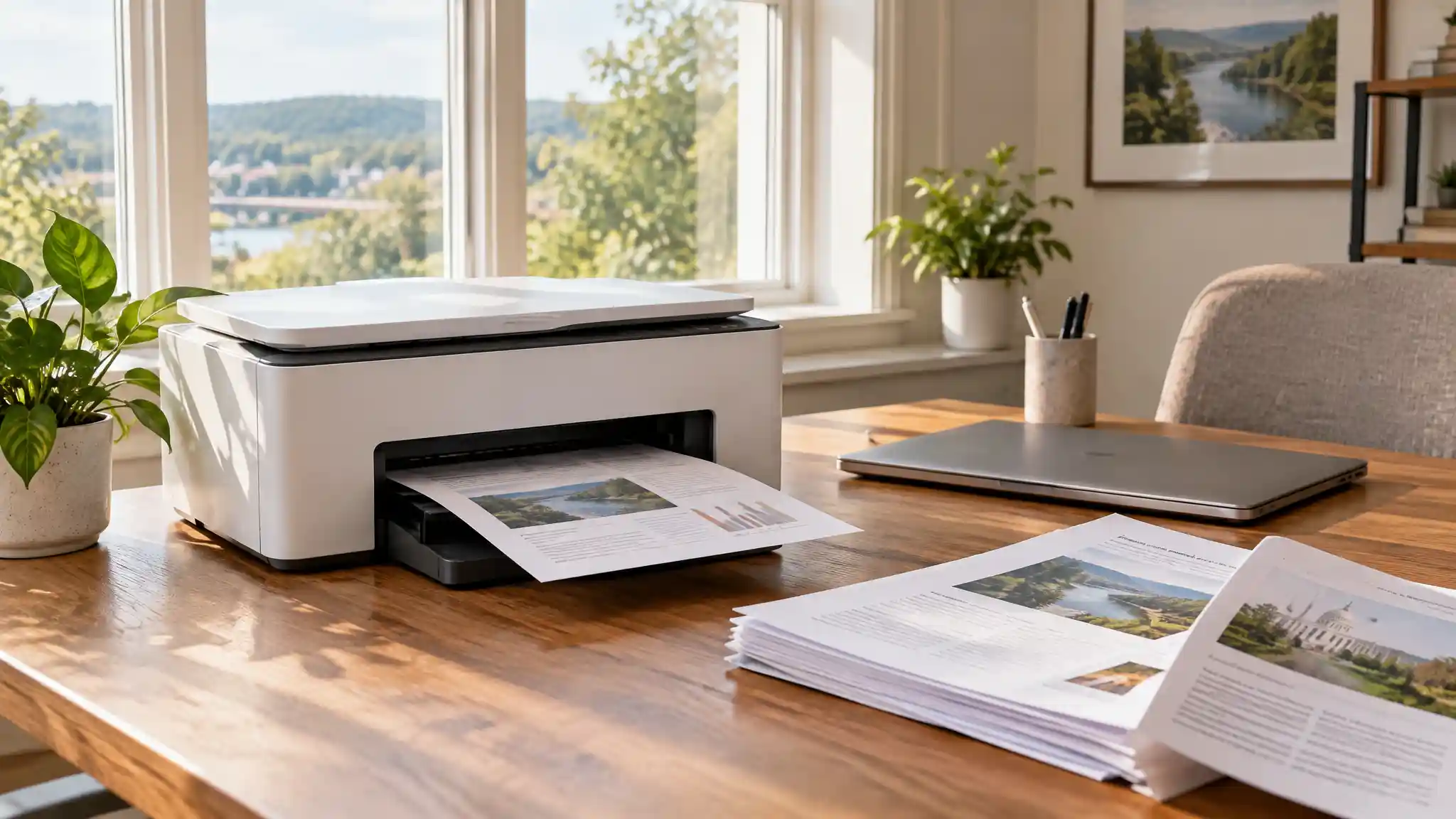
Pennsylvania workdays can involve a mix of digital and paper-based responsibilities. A real estate professional may print disclosures, while an online seller may prepare labels and packing slips. A family business might scan receipts, copy forms, and send documents to clients from the same desk used for video meetings. That variety makes an all-in-one printer especially useful. It combines printing, copying, and scanning in one compact machine, which saves space and reduces device clutter.
Ease of use should guide the purchase. A printer with a confusing setup process or an unreliable connection can waste valuable time. Look for straightforward controls, a clear display, and a guided mobile app. Wireless printing lets users send files from laptops, phones, and tablets without moving cables around a crowded workspace.


Choose Printer Technology Based on Your Work
Start by matching printer technology to the documents you create most often. An inkjet printer works well for home offices that need color pages, flyers, occasional photographs, presentations, or graphics. Many models offer a compact printer footprint and provide flexible paper handling. They can be a sensible choice for varied, low-to-moderate print needs.
A laser printer often suits professionals who print mostly black-and-white text. It can be an efficient option for reports, legal-style documents, estimates, and frequent correspondence. Toner-based devices generally avoid the issue of dried ink after long idle periods, which may appeal to people who print in batches. Color laser models can also support business materials, although they can require more desk space and a higher initial investment.
For households or microbusinesses with regular color printing, an ink tank printer deserves attention. Instead of replacing standard cartridges frequently, users refill built-in reservoirs. This approach can simplify supply planning for people who print steadily over time. Before choosing one, check how comfortable you are with refilling and confirm that the model meets your scanning, copying, and paper-size needs.
Prioritize Features That Reduce Daily Friction
The best wireless printer for a home office should connect reliably to your network and support the devices you actually use. Confirm compatibility with your computer operating system and mobile workflow before buying. A simple setup wizard and an accessible companion app can make a major difference on day one. Keep the printer within a strong Wi-Fi signal range, and use its software updates when available to support stable performance.
Automatic duplex printing is another valuable feature. It prints on both sides of the paper without manual flipping, helping you create polished packets and use less paper. If you scan or copy multi-page documents, an automatic document feeder can save time. Rather than placing each page on the scanner glass, you load a stack and let the machine process it. These two functions can turn a basic device into a far more productive small office printer.
Also consider paper capacity. A small tray may be perfectly adequate for a few pages each week, but it becomes frustrating during a busy month. If you print invoices, lesson materials, or client packets, select a capacity that prevents constant refills. Check whether the printer accepts envelopes, labels, card stock, or legal-size paper if your work requires them. Do not pay for specialized features that you will never use, but do not overlook a capability that supports a recurring task.
Think Beyond the Purchase Price
A low sticker price can be attractive, yet the cost of printer ownership depends on supplies, maintenance, and usage patterns. Compare replacement cartridge or toner options before you commit. Consider whether high-yield supplies are available, how easily you can find them, and whether a refillable system matches your volume. A device that costs more at checkout may provide better long-term value when it reduces recurring supply expenses.
Estimate your typical monthly pages honestly. Include personal paperwork as well as work documents. Light users may prefer a simple, affordable model with cartridges, while heavier users may benefit from a laser or tank-based design. Avoid choosing solely on advertised speed. Print quality, dependable connections, scanning convenience, and reasonable operating costs influence the everyday experience just as much.
How to Select the Best Model for Your Situation
Choose a compact printer if your desk area is limited and your weekly page count is modest. Choose an all-in-one printer when scanning and copying are routine tasks. Select a laser printer when sharp text and frequent monochrome output matter most. Consider an ink tank printer when recurring color documents make supply costs a priority. Finally, select a model with automatic duplex printing and an automatic document feeder when you regularly handle multi-page paperwork.
Read current specifications carefully rather than relying on a product name alone. Manufacturers sometimes offer similar models with meaningful differences in duplex capability, paper trays, fax support, touchscreen controls, or wireless features. Review the included supplies, warranty terms, return policy, and supported paper sizes. If possible, plan for your needs over the next year, not only this week’s urgent print job.
Final Thoughts
The best printer for a Pennsylvania home office is not necessarily the most expensive one. It is the device that fits your documents, workload, workspace, and comfort level. Focus on uncomplicated setup, dependable wireless printing, useful scanning tools, manageable supply costs, and features that remove repetitive effort. By choosing intentionally, you can create a home office that handles paper tasks quickly and lets you return your attention to meaningful work.
Amazon Product Recommendation
Consider the Canon PIXMA TR7120 Wireless Color Inkjet Printer. Amazon lists print, copy, scan, duplex printing, an automatic document feeder, and an intuitive control panel for this compact home printer. It suits Pennsylvania home-office paperwork. View the current Amazon product listing before ordering.