
Best Paper Shredders for Document Security in Michigan
Michigan households and businesses handle more paper than they expect: bank mail, insurance notices, tax records, patient information, employee files, and supplier invoices. Throwing those pages into a recycling bin can expose details that identity thieves value. A dependable paper shredder creates a practical final step in a document security routine. It turns outdated paperwork into material that is far harder to reconstruct.
The best paper shredders for document security in Michigan are not identical for every buyer. Instead of choosing solely by price or sheet count, buyers should match a shredder’s security level, cutting method, workload capacity, and placement to the information they actually discard.
Why Shredding Matters for Michigan Document Security
Paper records often reveal enough information to support account fraud or targeted scams. An address paired with an account reference, signature, phone number, or partial identification detail can help a criminal build a more complete profile. A document shredding solution reduces the risk created by papers that have finished their useful life.



Michigan’s seasonal routines make an in-house device especially helpful. People may accumulate statements, school paperwork, medical notices, and tax documents until a spring cleanup or year-end filing session. With a secure paper disposal process available at home or work, staff and residents can destroy sensitive pages promptly rather than store vulnerable piles in a drawer, garage, or open recycling container.
Start With the Right Security Level
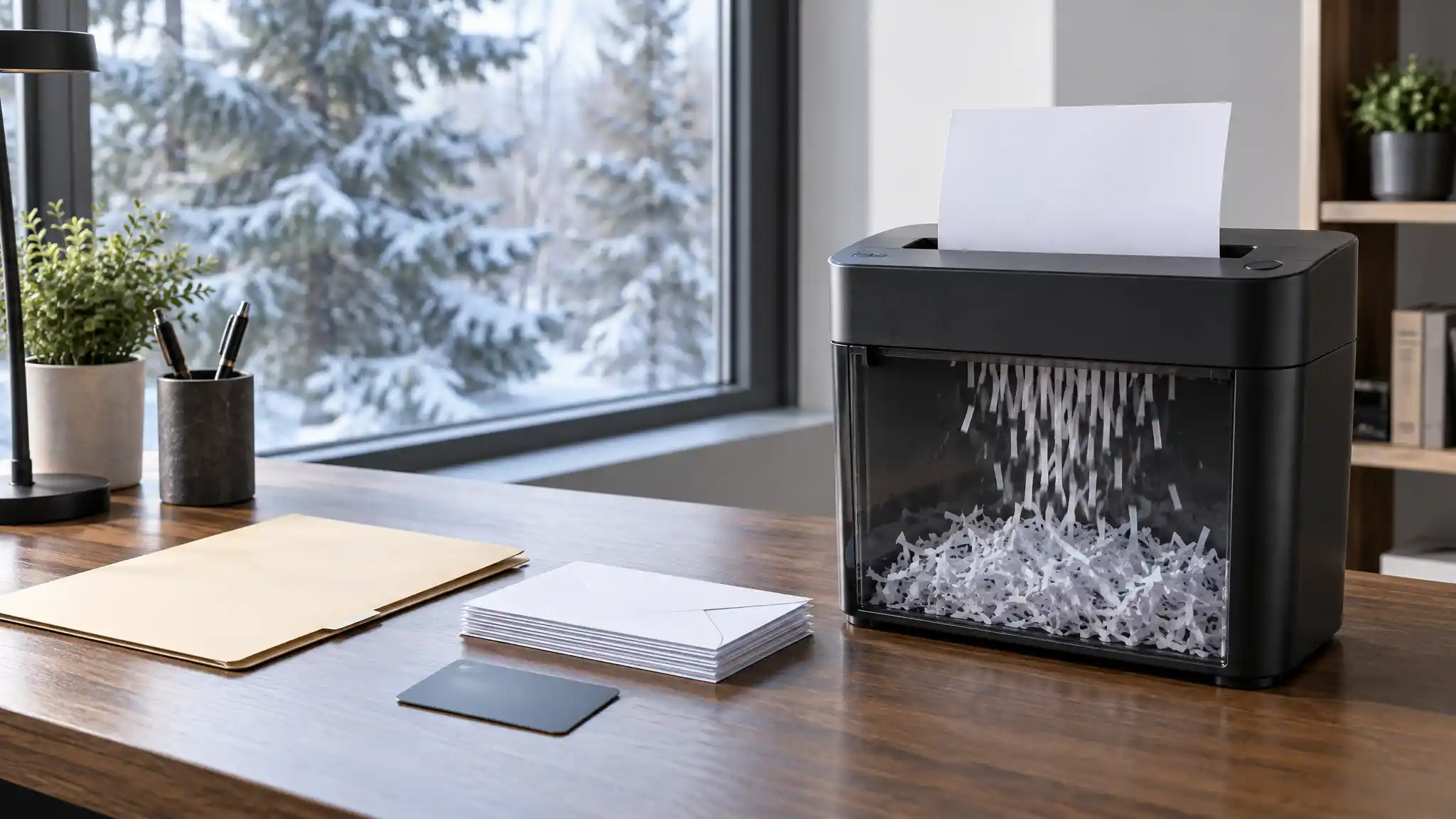
The security level should guide the purchase. Strip-cut shredders create long ribbons. They handle low-sensitivity material economically, but the strips remain relatively easy to recognize and should not be the first choice for personal records. A cross-cut shredder slices pages in two directions, creating smaller fragments and providing a stronger everyday defense for routine financial mail and ordinary office documents.
For stronger privacy needs, choose a micro-cut shredder. It produces much smaller particles than a standard cross-cut unit and supports high security document shredding for paperwork containing account information, health details, client data, or employee records. Many shoppers will see P-4 listed as a common high-security level. However, a label alone is not a substitute for considering the type of information, volume, and internal disposal procedures involved.
Choose Capacity That Fits Actual Use
Manufacturers typically state the maximum number of sheets a machine can accept at once. Treat that number as a ceiling, not a daily operating promise. Thick paper, folded sheets, labels, and paper that has absorbed humidity can change performance. A reliable home office paper shredder often works best when users feed a modest stack consistently rather than overloading it to save a few seconds.
Also compare continuous run time and cooldown time. A small unit may be excellent for occasional mail but frustrating during a records purge because its motor needs a rest. A heavy duty paper shredder suits teams that regularly destroy forms, invoices, or archived files. Look for a sufficiently large pullout bin as well. A transparent window helps users empty the basket before fragments back up into the cutters.
Prioritize Anti-Jam and Safe Operation
Paper jams interrupt work and can tempt users to force paper through the opening. An anti-jam shredder with reverse functionality gives users a safer, faster way to clear an overloaded feed. Overheat protection matters too. These features protect the motor and support more predictable document disposal.
Safety features deserve equal attention. Choose a model with automatic shutoff, a covered feed area where appropriate, and stable construction. Place it on a level surface, keep hair, loose clothing, and hands away from the feed slot, and follow the manufacturer’s instructions for clearing jams. If children or visitors can access the space, position the machine thoughtfully rather than leaving it beside an unattended workstation.
Think Beyond Paper Alone
Sensitive information does not live only on printed pages. Old payment cards, identification cards, optical discs, and storage media may also require disposal. If those items form part of your workflow, select a credit card shredder or a unit specifically rated to process the media you use. Never assume a paper-only model can accept cards, staples, clips, or discs. Doing so can damage the cutters and undermine the value of the purchase.
This check is important for small businesses. A compact document shredder may suit a reception desk with light traffic, while a larger office shredder can support multiple employees. Consider noise in open-plan spaces. Convenient placement encourages compliance; an inconvenient machine invites people to keep a stack for later.
Build a Consistent Disposal Routine
Even the best machine cannot secure documents that nobody shreds. Create simple rules that identify which papers require destruction and when. Examples include expired statements, rejected application forms, duplicate invoices, mailing labels, payroll drafts, and records retained past their approved period. Designate a locked collection container for documents waiting to be processed, then assign a responsible person or set a regular shredding schedule.
For organizations, train employees not to place confidential documents in ordinary waste or recycling bins. Keep the shredder maintained with the manufacturer-approved method, empty the bin before it overfills, and test the reverse function periodically. A clean, working device reinforces a culture of privacy more effectively than a policy that employees cannot easily follow.
What Michigan Buyers Should Compare
Before buying, list your typical monthly volume and the most sensitive material you handle. Then compare cut style, security rating, feed capacity, duty cycle, bin size, accepted materials, noise, dimensions, warranty terms, and service access.
A Michigan document security plan should also include sensible storage and retention practices. Keep current records organized and protected, limit access to confidential files, and destroy unneeded copies quickly. Shredding is not a complete privacy program, but it is an especially accessible control that turns a routine cleanup task into meaningful identity theft prevention.
Conclusion
The right shredder gives Michigan users a direct, repeatable way to protect private paper records. Select a cut type that matches the sensitivity of your documents, choose a capacity aligned with real workloads, and use the machine as part of a clear disposal routine. By focusing on security, reliability, and convenient use, you can make confidential document disposal an ordinary habit rather than a last-minute response to an overflowing file box.
Amazon Product Recommendation
For a practical option, consider the Amazon Basics 8-Sheet High Security Cross Cut Paper and Credit Card Shredder with P-4 Security and auto shut-off. Amazon currently lists it as an Amazon’s Choice product and describes it as handling paper and credit cards. Confirm current price, stock, and Michigan delivery eligibility before purchasing through Amazon’s paper-shredder results page.