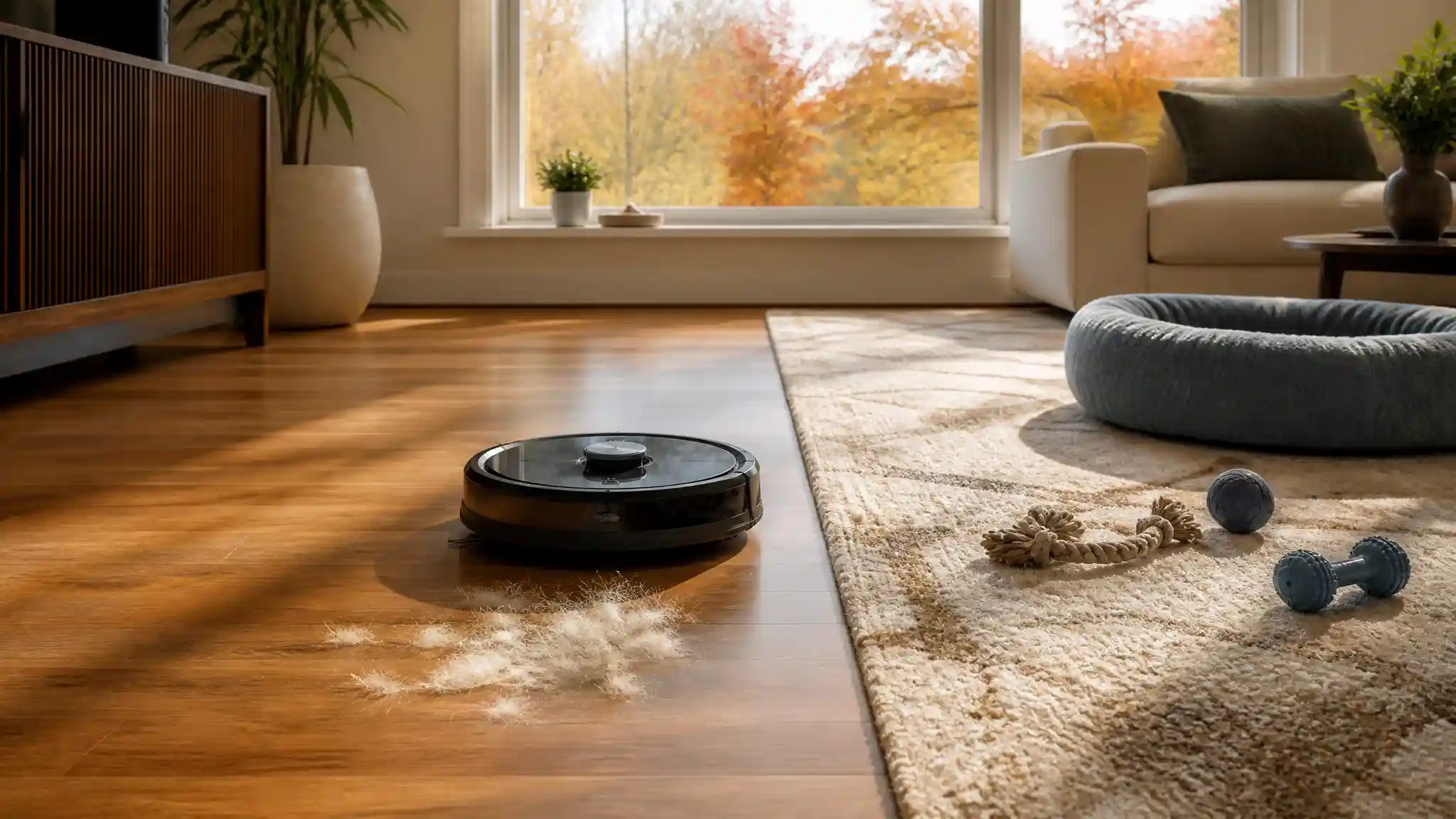

Best Robot Vacuums for Pet Hair in Pennsylvania
Pet owners in Pennsylvania often deal with a constant cycle of shedding, tracked-in dirt, seasonal debris, and dust. Cats and dogs can leave hair on hardwood floors, carpets, rugs, and upholstery within hours. A robot vacuum designed for pet hair can reduce daily cleaning time while helping your home feel fresher.
However, not every robotic vacuum performs well in a pet-friendly home. The best models combine strong suction, anti-tangle brush systems, smart navigation, effective filtration, and convenient self-emptying docks. This guide explains what Pennsylvania pet owners should consider before choosing the right device.
Why Pet Owners in Pennsylvania Need a Specialized Robot Vacuum
Pennsylvania homes often include a combination of carpet, hardwood, tile, and area rugs. During colder months, pets can also bring in salt, mud, leaves, and small particles from outside. A standard robot vacuum may collect surface dust but struggle with embedded fur or larger debris.
A pet-focused robot vacuum uses stronger airflow and specialized brush rolls to lift hair from different surfaces. Many models also include automatic scheduling, app controls, room mapping, and self-emptying bases. These features allow you to clean regularly without manually operating the machine every day.
Frequent cleaning also helps reduce the buildup of pet dander. Although a robot vacuum cannot replace professional allergy management or deep cleaning, a model with a high-efficiency filter can capture many fine particles before they circulate through the room.
Important Features to Look For
Before buying a robot vacuum for pet hair, compare the features that directly affect cleaning performance.
Strong suction power: Pet hair can become trapped deep inside carpet fibers. High suction helps remove loose fur, dander, crumbs, and outdoor debris. However, suction power alone does not determine performance. The brush design and airflow system also matter.
Anti-tangle brush roll: Long pet hair can wrap around a traditional roller and reduce cleaning efficiency. A rubber brush roll, cutting mechanism, or dual-brush system can limit tangles and make maintenance easier.
Self-emptying base: Dogs and cats can produce a surprising amount of hair. A self-emptying dock transfers debris into a larger container or bag, allowing the robot to operate for weeks with less attention.
Reliable home mapping: LiDAR navigation or advanced camera-based mapping helps the vacuum clean in organized patterns. Mapping also lets you schedule specific rooms and create no-go zones around food bowls, pet beds, or delicate objects.
Obstacle avoidance: Pets often leave toys, cords, and bowls on the floor. A robot with object recognition can avoid common obstacles instead of becoming stuck or dragging items across the room.
High-efficiency filtration: A quality filter can capture fine dust and pet dander. Look for a sealed filtration system if your household includes allergy-sensitive residents.
Carpet detection: Some robot vacuums automatically increase suction on carpet or lift their mopping pads. This feature prevents wet pads from crossing rugs and improves fur pickup.
Best for Hardwood Floors and Mixed Surfaces
Homes with hardwood floors need a robot vacuum that collects hair without scattering it. A side brush should guide debris toward the main roller, while edge-cleaning technology can reach along baseboards and furniture.
For mixed flooring, choose a model that automatically adjusts its cleaning mode. Pennsylvania homes may have hardwood in living areas and carpet in bedrooms, so the robot should transition smoothly between surfaces. A compact design also helps it clean beneath sofas, beds, and cabinets where pet hair often gathers.
Mopping can add convenience, but it should not become the main priority when pet hair is the biggest problem. A vacuum-and-mop combination works best when it offers carpet detection, mop lifting, and a separate setting for dry vacuuming.
Best for Carpets and Heavy Shedding
Carpeted rooms require deeper agitation and consistent suction. If your dog or cat sheds heavily, prioritize a robot with an anti-tangle roller, automatic suction adjustment, and multiple cleaning passes.
A larger dustbin can also help, although a self-emptying station usually provides greater convenience. Without automatic emptying, dense fur may fill the robot’s internal bin before it completes a full cleaning cycle.
Pet owners should also examine replacement costs. Brushes, filters, dust bags, and mop pads require regular replacement. A reasonably priced robot can become expensive if its consumables are difficult to find or cost more than expected.
Recommended Amazon Product: Shark AI Ultra
One strong option available through Amazon.com is the Shark AI Ultra Robot Vacuum, AV2511AE. Amazon lists this model with Matrix Clean technology, 360-degree LiDAR home mapping, a self-emptying base, a self-cleaning brush roll, Wi-Fi connectivity, and Alexa compatibility.
The Shark AI Ultra suits pet owners who want dependable daily vacuuming across carpets and hard floors. Its self-cleaning brush roll can reduce hair buildup, while the HEPA-equipped base helps manage collected allergens. LiDAR mapping also supports more systematic cleaning than random navigation.
According to current product listings and expert buying coverage, the model offers a practical combination of pet-hair pickup, mapping, and hands-free debris management. However, Amazon prices, stock status, colors, and seller details can change. Check the current listing before purchasing: Shark AI Ultra Robot Vacuum on Amazon.com.
How to Get Better Results
Even the best robot vacuum needs a consistent routine. Pick up cords, toys, and small objects before starting a cleaning cycle. Keep pet bowls in a designated area and create virtual boundaries when necessary.
Run the robot frequently instead of waiting until the floor looks visibly dirty. Daily or near-daily cleaning prevents fur from accumulating in corners and becoming embedded in carpets. Empty or inspect the base according to the manufacturer’s instructions, even when it supports automatic disposal.
Clean the side brush, roller, sensors, and wheels regularly. Hair can collect around the wheel axles and affect movement. Replace filters and brushes when they show visible wear or when cleaning performance declines.
Final Buying Advice
The best robot vacuum for pet hair in Pennsylvania depends on your flooring, pet’s shedding level, home size, and desired level of automation. Choose strong suction and an anti-tangle roller for heavy shedding. Select LiDAR mapping and obstacle avoidance for larger or busy homes. Add a self-emptying dock if you want minimal daily maintenance.
For many households, the Shark AI Ultra provides a balanced solution with pet-hair features, mapping, filtration, and convenient automatic emptying. Used on a consistent schedule, it can help control fur, dander, and everyday debris while reducing the amount of manual vacuuming your home requires.