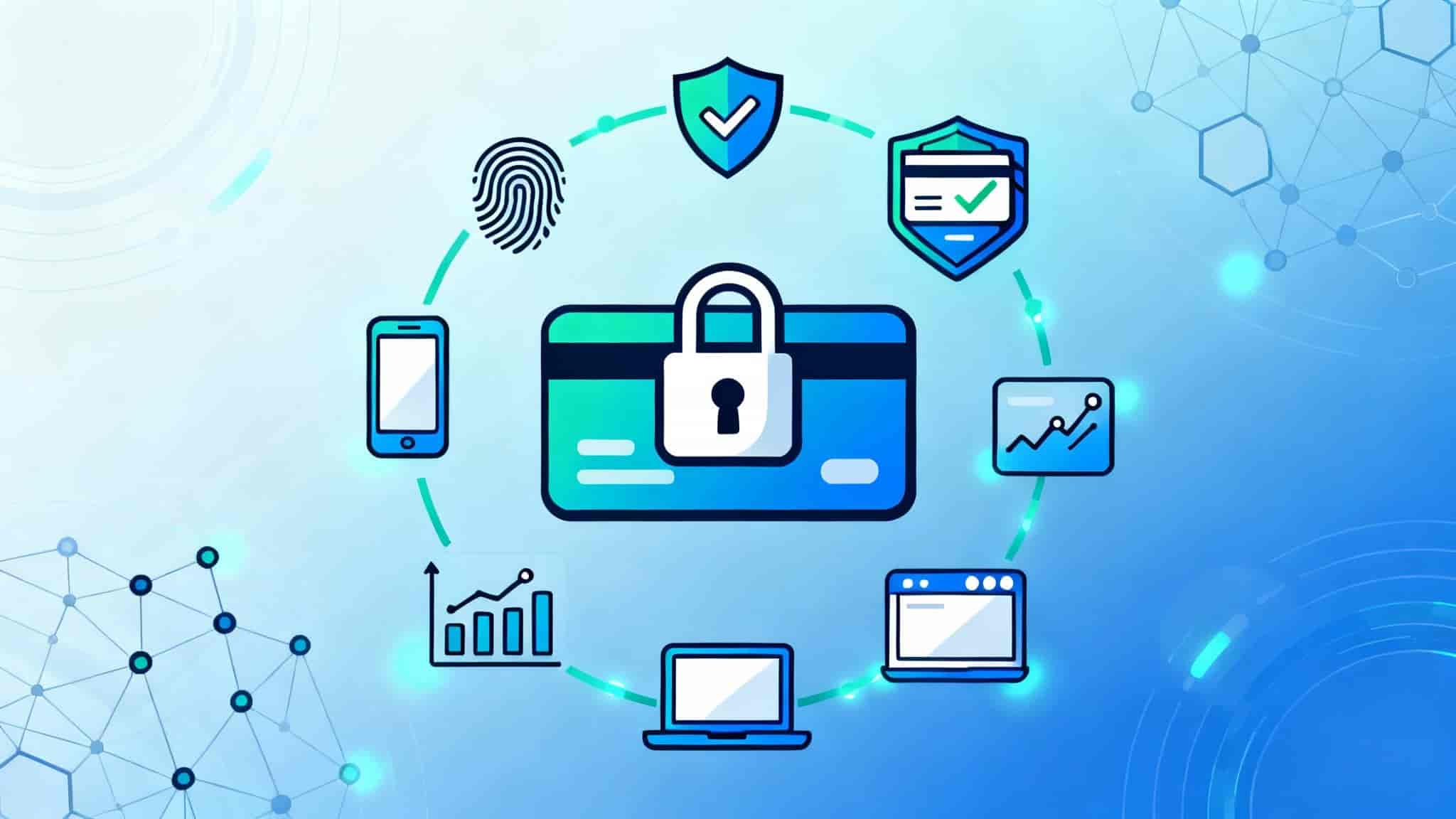

Credit card fraud prevention has become an essential capability for businesses and consumers alike. As online transactions grow, so do the tactics of cybercriminals—from card-not-present attacks to account takeover and synthetic identities. This guide explains how credit card fraud works, the most effective prevention strategies, tools to use, and best practices for both merchants and cardholders. You’ll also find implementation tips that balance fraud reduction with customer experience, plus compliance and data privacy considerations.
What is credit card fraud?
Credit card fraud is the unauthorized use of a card or card details to make purchases or withdraw funds. Common types include:
- Card-present fraud: Physical card theft, skimming at POS terminals or ATMs, and counterfeit cards.
- Card-not-present (CNP) fraud: Online or phone purchases using stolen card numbers, often sourced from data breaches, phishing, or malware.
- Account takeover (ATO): Criminals gain access to a customer’s account via credential stuffing, social engineering, or SIM swapping.
- Synthetic identity fraud: Fraudsters combine real and fake data to build a new “person” who can pass credit checks and open accounts.
- Friendly fraud/chargeback fraud: Legitimate customers dispute charges they actually authorized.
Fraud costs extend beyond direct losses. Chargebacks carry fees, hurt authorization rates, degrade brand trust, and can trigger network monitoring programs. The goal of prevention is to reduce fraud while preserving a frictionless checkout.



Key pillars of fraud prevention
Effective credit card fraud prevention blends layered controls, risk-based decisioning, and continuous monitoring.
- Strong authentication
- 3-D Secure 2 (3DS2): Shifts liability in many regions and adds step-up authentication only when needed. Supports low-friction flows with risk-based assessments.
- Multi-factor authentication (MFA): Use SMS, authenticator apps, passkeys, or WebAuthn for login and high-risk events.
- Address Verification Service (AVS) and CVV: Simple yet effective checks to stop basic CNP fraud attempts.
- Device and behavior intelligence
- Device fingerprinting: Identify returning devices, match to user accounts, and flag anomalies (new device, TOR/VPN use, emulator signals).
- Behavioral biometrics: Keystroke dynamics, mouse movements, swipe patterns, and session velocity can distinguish bots from humans and legit users from fraudsters.
- Velocity rules: Rate-limit failed logins, payment attempts, or card adds; detect burst activity across multiple accounts or IPs.
- Data enrichment and risk scoring
- Consortium and network data: Use shared fraud signals across merchants and issuers.
- Geolocation and IP reputation: Flag mismatches (billing vs. IP country), disposable emails, or high-risk proxies.
- Machine learning models: Supervised models evaluate features like transaction amount, merchant category, time of day, historical spend, device history, BIN country, AVS/CVV results, and chargeback feedback loops.
- Payment tokenization and secure storage
- Network tokens and vaulting: Replace PANs with tokens to reduce exposure and preserve lifecycle updates.
- PCI DSS compliance: Minimize card data access, encrypt at rest and in transit, and segment systems.
- Chargeback management and prevention
- Clear descriptors and receipts: Lower “I don’t recognize this” disputes.
- Order validation artifacts: Keep delivery confirmation, IP logs, and communication records.
- Representment strategy: Dispute invalid chargebacks using compelling evidence aligned with card network reason codes.
- Human-in-the-loop review
- Queue only borderline cases: Let automation handle clear approvals/declines; send ambiguous transactions to analysts.
- Calibrate thresholds: Tune for seasonality, promotions, product launches, and new geographies.
Balancing fraud controls with customer experience
A common pitfall is over-tightening controls that reduce approvals and frustrate good customers. Focus on:
- Risk-based step-up: Trigger 3DS or MFA only when risk is high (e.g., first purchase on a new device, atypical amounts, mismatched AVS).
- Smart declines with recovery: If you must decline, offer alternative payment methods, ask to try another card, or initiate a verification flow.
- Adaptive checkout: Store trusted devices, pre-fill known details, and avoid unnecessary friction for repeat customers with clean histories.
- Monitor approval rates by issuer BIN: Identify banks with high declines and adjust routing or retry strategies.
Implementation blueprint for merchants
- Assess baseline KPIs: Fraud rate, chargeback rate, approval rate, false positive rate, time-to-refund, and manual review share.
- Layered architecture: Combine AVS/CVV, device fingerprinting, velocity rules, IP reputation, behavioral signals, and 3DS2.
- Model training loop: Feed confirmed fraud and chargeback outcomes back into ML models; retrain regularly to catch evolving patterns.
- A/B test controls: Measure impact on approvals, fraud, and conversion. Avoid one-size-fits-all thresholds.
- Tokenize everywhere: Use network tokens or payment processor tokens for recurring and card-on-file transactions.
- Logging and observability: Track events from login to checkout, including step-ups, rule hits, and issuer responses.
- Incident response: Have runbooks for credential stuffing waves, BIN attacks, and refund fraud spikes.
Best practices for consumers
- Use MFA and strong, unique passwords. Prefer password managers and enable biometric logins where available.
- Monitor statements and alerts: Turn on real-time transaction notifications; dispute suspicious charges immediately.
- Secure devices: Update OS and apps, avoid jailbreaking, use anti-malware, and be cautious on public Wi‑Fi.
- Beware phishing: Verify senders, avoid clicking unknown links, and never share OTPs or CVVs via chat or email.
- Virtual card numbers: For one-time or merchant-locked use to reduce misuse risk.
- Freeze or lock cards: Many issuers let you instantly lock a card in the app if you suspect compromise.
Compliance, privacy, and regional nuances
- PCI DSS: Maintain scope reduction with tokenization, network segmentation, and strict access controls.
- PSD2 SCA (EU/EEA): Align with strong customer authentication requirements; leverage exemptions (low value, TRA) via 3DS2 risk-based flows.
- Data privacy: Comply with GDPR/CCPA; practice data minimization, proper consent, and secure data retention policies.
- Network programs: Monitor Visa/Mastercard chargeback thresholds; implement early warning systems to avoid fines.
Metrics that matter
- Fraud rate: Fraudulent volume / total processed volume.
- Chargeback rate: Disputed transactions / total transactions (by count and amount).
- Approval rate: Authorized transactions / total attempted transactions.
- False positive rate: Legitimate orders incorrectly declined.
- Manual review rate and SLA: Share of orders reviewed and time to decision.
- Cost per prevented fraud dollar: Operational costs vs. avoided losses.
Emerging trends
- Passkeys and FIDO2: Phish-resistant authentication reduces ATO.
- Issuer/merchant collaboration: Enhanced data sharing (e.g., transaction risk indicators) to boost approvals for low-risk orders.
- Graph-based ML: Entity resolution across devices, emails, addresses, and cards to detect mule networks and synthetic identities.
- Real-time bot mitigation: Advanced WAFs and bot management tools to repel credential stuffing before checkout.
Action checklist
- Enable AVS/CVV and 3DS2 with risk-based step-ups.
- Deploy device intelligence and behavioral analytics.
- Tokenize cards; keep systems PCI DSS compliant.
- Build and retrain ML models with feedback loops.
- Implement tiered velocity rules and IP/email reputation checks.
- Optimize manual review for edge cases only.
- Track approval, fraud, and false positive rates weekly.
- Educate customers about phishing, alerts, and virtual cards.
By adopting a layered, data-driven strategy and continuously tuning controls, you can meaningfully reduce credit card fraud without sacrificing conversion. The organizations that win treat fraud prevention as an ongoing program—blending technology, analytics, process, and user education.