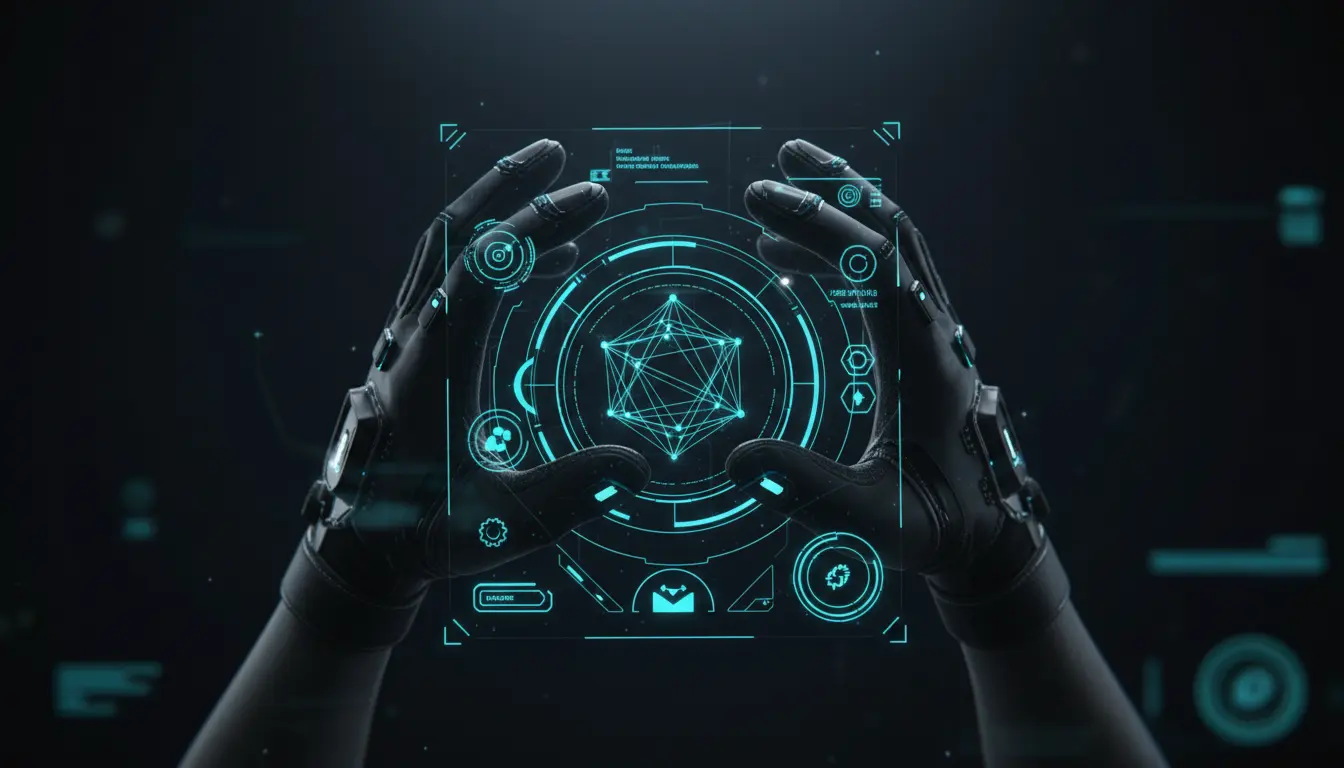

The Future of Digital Touch: A Comprehensive Guide to Haptic Feedback Gloves
The digital world has long mastered sight and sound, but the sense of touch remained the final frontier. Today, haptic feedback gloves are shattering that barrier, allowing users to feel, grip, and interact with virtual objects as if they were real. Whether you are a gamer seeking total immersion or a surgeon practicing a complex procedure in a simulator, haptic technology is redefining the boundaries of human-computer interaction.
Understanding Haptic Feedback Technology
Haptic feedback refers to any technology that communicates with the user through the sense of touch. While your smartphone vibrates to alert you of a notification, haptic gloves take this concept to an exponential level. These wearable devices use a combination of sensors and actuators to simulate textures, resistance, and spatial weight.
Engineers typically design these gloves using two primary methods: tactile feedback and force feedback. Tactile feedback simulates the surface texture and vibration, letting you feel the roughness of a stone or the buzz of an engine. Force feedback, on the other hand, provides physical resistance. When you close your hand around a virtual ball, the glove’s mechanical exoskeleton stops your fingers from moving further, mimicking the solid shape of the object.



How Haptic Gloves Simulate Touch
The magic happens through a sophisticated interplay of hardware and software. Most high-end haptic gloves utilize micro-fluidics, pneumatic actuators, or vibrotactile motors. Micro-fluidic systems use tiny pockets of air or liquid that inflate to apply pressure to specific points on the skin. This precision allows users to distinguish between the soft click of a button and the heavy impact of a wall.
Furthermore, motion tracking sensors play a crucial role. These sensors map the exact position of your hand and fingers in 3D space with sub-millimeter accuracy. When the software detects a collision between your virtual hand and a digital object, it triggers the actuators instantly. This low-latency response is vital for maintaining the “illusion of presence,” ensuring that your brain accepts the virtual sensation as a physical reality.
Revolutionizing Industries: Beyond Gaming
While the gaming industry remains a primary driver for VR peripherals, the applications for haptic gloves extend far into professional sectors. In healthcare, medical students use these gloves to perform virtual surgeries. This allows them to feel the tension of a suture or the density of different tissues without any risk to a live patient.
In the industrial sector, companies use haptic gloves for remote robot operation, also known as teleoperation. An operator in one country can control a robotic arm in another, feeling the weight of the tools the robot holds. This is particularly useful for hazardous environments, such as nuclear decommissioning or deep-sea exploration. Additionally, aerospace engineers use haptic simulations to prototype cockpits and engine layouts, testing ergonomics before a single physical part is manufactured.
The Evolution of VR Immersion
Virtual Reality (VR) has evolved from simple 360-degree videos to fully interactive ecosystems. However, without touch, the experience often feels “ghostly.” Haptic gloves provide the missing link. By engaging the somatosensory system, these devices reduce motion sickness and increase the “sense of agency”—the feeling that you are truly the one performing the actions in the digital space.
Modern haptic gloves are becoming increasingly lightweight and wireless. Early prototypes were bulky and tethered to massive computers, but the latest iterations use breathable fabrics and high-speed Bluetooth or Wi-Fi 6 connections. This freedom of movement is essential for training simulations where users must move around a physical room while interacting with virtual panels.
Challenges and the Path Ahead
Despite the rapid progress, challenges remain. The “uncanny valley” of touch is a significant hurdle; if a sensation is almost real but slightly off, it can be jarring for the user. Achieving high-fidelity “thermal feedback”—the ability to feel heat or cold—is also a complex engineering task currently being perfected by industry leaders.
Cost is another factor. Professional-grade haptic gloves can cost thousands of dollars, limiting their use to enterprise clients. However, as manufacturing scales and new materials like “electronic skin” (e-skin) become viable, we expect to see consumer-grade versions hitting the market. These will likely offer a simplified but effective version of the technology for home VR enthusiasts.
The Impact on Social Interaction and Accessibility
Haptic gloves also hold incredible potential for social VR and accessibility. Imagine being able to shake hands or give a high-five to a friend who lives thousands of miles away. For the visually impaired, haptic devices can translate visual data into tactile signals, providing a new way to navigate digital interfaces or even physical environments through “haptic maps.”
As we move toward the “Metaverse” or a more integrated spatial computing era, the demand for natural interaction will grow. We are moving away from controllers with buttons and toward our most natural tools: our hands. Haptic feedback gloves are not just an accessory; they are the interface of the future.
Conclusion: A New Era of Interaction
The development of haptic feedback gloves represents a monumental shift in how we perceive digital data. By turning bits and bytes into physical sensations, we are closing the gap between the biological and the digital. As the technology matures, the line between the virtual and the real will continue to blur, opening up possibilities we have only seen in science fiction.
Product Recommendation on Amazon.com
For those looking to start their journey into hand-tracking and haptic-ready environments, the Meta Quest 3 is the leading consumer choice. While it uses advanced infrared “inside-out” hand tracking rather than a full mechanical glove, it is the primary platform that developers use to integrate third-party haptic glove solutions like those from Fluidic or HaptX.