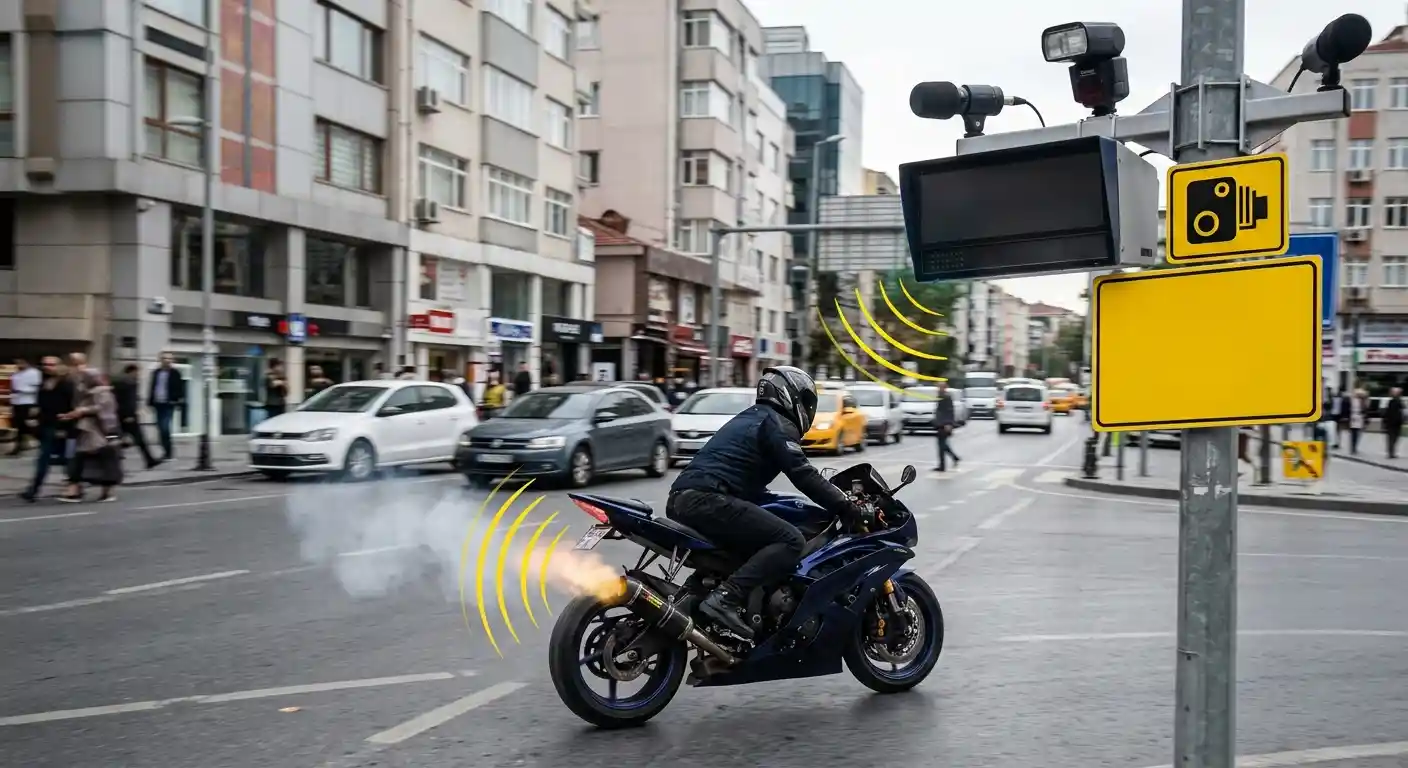

A loud exhaust may soon attract more than annoyed looks from pedestrians and neighbors. Across several US cities, local authorities are testing or deploying noise detection cameras that can identify excessively noisy vehicles and connect recorded events to license plate information. The technology creates a new form of vehicle noise enforcement, particularly for drivers who use modified mufflers, aftermarket exhaust systems, or high-volume stereos.
The trend reflects a wider shift in traffic surveillance. Traditional license plate readers typically help police locate stolen vehicles or investigate suspected crimes. Newer systems combine those cameras with acoustic sensors. As a result, authorities can potentially identify a vehicle, record an excessive noise event, and send the information for official review.
For drivers, the development raises an important question: can a loud exhaust now lead to an automatically issued ticket?
How Noise Detection Cameras Work
Noise cameras use microphones and visual recognition technology to monitor passing traffic. When the system detects sound above a defined threshold, it can capture the vehicle’s license plate and create a record of the incident. Some systems may also identify whether the noise comes from an engine, exhaust system, or loud audio equipment.
However, the process is not always fully automatic. In West Haven, Connecticut, for example, officials plan to connect audio detection devices to existing license plate readers. The system is expected to alert police, who would then review the recorded event before taking enforcement action.
This human review matters because traffic conditions can influence sound levels. A truck, motorcycle, emergency vehicle, or construction site may create a temporary noise spike. Police verification can help reduce incorrect citations and distinguish a genuine muffler violation from an unusual but legitimate situation.
New York Shows the Potential Scale
New York City has become one of the most visible examples of this technology. The city began piloting noise cameras in 2021 and launched its program in 2022. According to the reported figures, 12 cameras recorded 15,994 noise events during 2025 and generated 1,691 summonses.
The penalties can be significant. A muffler violation in New York City reportedly starts at $800, while the maximum penalty can reach $2,625. These figures show why vehicle owners need to understand local automotive regulations before installing an aftermarket exhaust system.
The rules do not necessarily target every performance vehicle. Many car enthusiasts install legal systems that improve engine sound without exceeding local limits. The main concern involves exhaust modifications that remove emissions equipment, bypass noise controls, or create unreasonable sound levels in residential areas.
Connecticut Considers Its Own Approach
West Haven is preparing to become one of Connecticut’s first municipalities to activate noise cameras. The city plans to place four audio detection devices along the shoreline, where residents have complained about noisy cars and motorcycles. One device had already been installed, although it was inactive when local officials discussed the project.
The city had not yet finalized the exact sound level that would trigger an alert. That decision will play a central role in the program’s fairness. If the threshold is too low, ordinary traffic could produce excessive warnings. If it is too high, the cameras may fail to address the vehicles that residents find most disruptive.
West Haven officials have also emphasized data control. The city says it owns the equipment, manages the collected information, and does not share it with outside companies. This approach attempts to address public concerns surrounding private surveillance systems and third-party access to vehicle data.
Privacy Concerns Are Growing
Noise cameras do more than measure sound. When authorities combine decibel detection with license plate readers, the system can associate a specific vehicle with a particular time and location. That capability has created privacy concerns among residents, civil liberties advocates, and technology critics.
The public debate becomes more complicated when cities use artificial intelligence or private contractors to analyze images and classify possible violations. Residents want clear answers about data storage, retention periods, access rights, and deletion policies.
Recent controversies involving license plate surveillance have increased skepticism. Critics have questioned whether officers always provide valid reasons when searching vehicle databases. Other disputes have involved cameras that remained active or returned to service after local governments ended contracts.
These examples do not automatically prove that every noise camera program will be misused. They do show why municipalities need transparent rules, independent oversight, and a reliable appeal process.
What Drivers Can Do
Drivers can reduce their risk by checking local exhaust and muffler regulations before modifying a vehicle. A system that is legal in one state may violate noise limits in another city. Owners should also keep documentation, installation records, and certification details for aftermarket parts.
A professional mechanic can inspect the vehicle for damaged mufflers, leaks, missing catalytic converters, or improperly installed components. Even a factory exhaust can become unusually loud when it develops a crack or loses a silencer.
Drivers should also avoid unnecessary revving, aggressive acceleration, and prolonged idling in residential neighborhoods. These habits can attract complaints even when the vehicle technically meets the legal standard.
If a driver receives a citation, the notice should explain the alleged violation, the location, the date, and the available appeal process. Reviewing local rules and requesting evidence may help determine whether the ticket resulted from a genuine violation or an incorrect reading.
The Future of Vehicle Noise Enforcement
Noise detection technology will likely expand as cities search for faster ways to respond to complaints. Authorities may view these systems as an efficient alternative to placing officers at every noisy intersection. Residents may also welcome the technology when loud vehicles repeatedly disturb homes, hospitals, schools, or waterfront communities.
At the same time, local governments must balance enforcement with privacy and due process. A camera should not become an unquestioned source of evidence. Officials need to publish clear thresholds, explain how officers verify alerts, and provide drivers with a meaningful way to challenge mistakes.
The broader lesson is simple: vehicle noise is becoming a measurable enforcement issue. A modified muffler may once have produced only a warning from a police officer or a complaint from a neighbor. In some cities, it can now create a digital record linked to a license plate and potentially lead to a substantial fine.
As noise cameras become more common, responsible vehicle maintenance and awareness of local rules will matter more than ever.