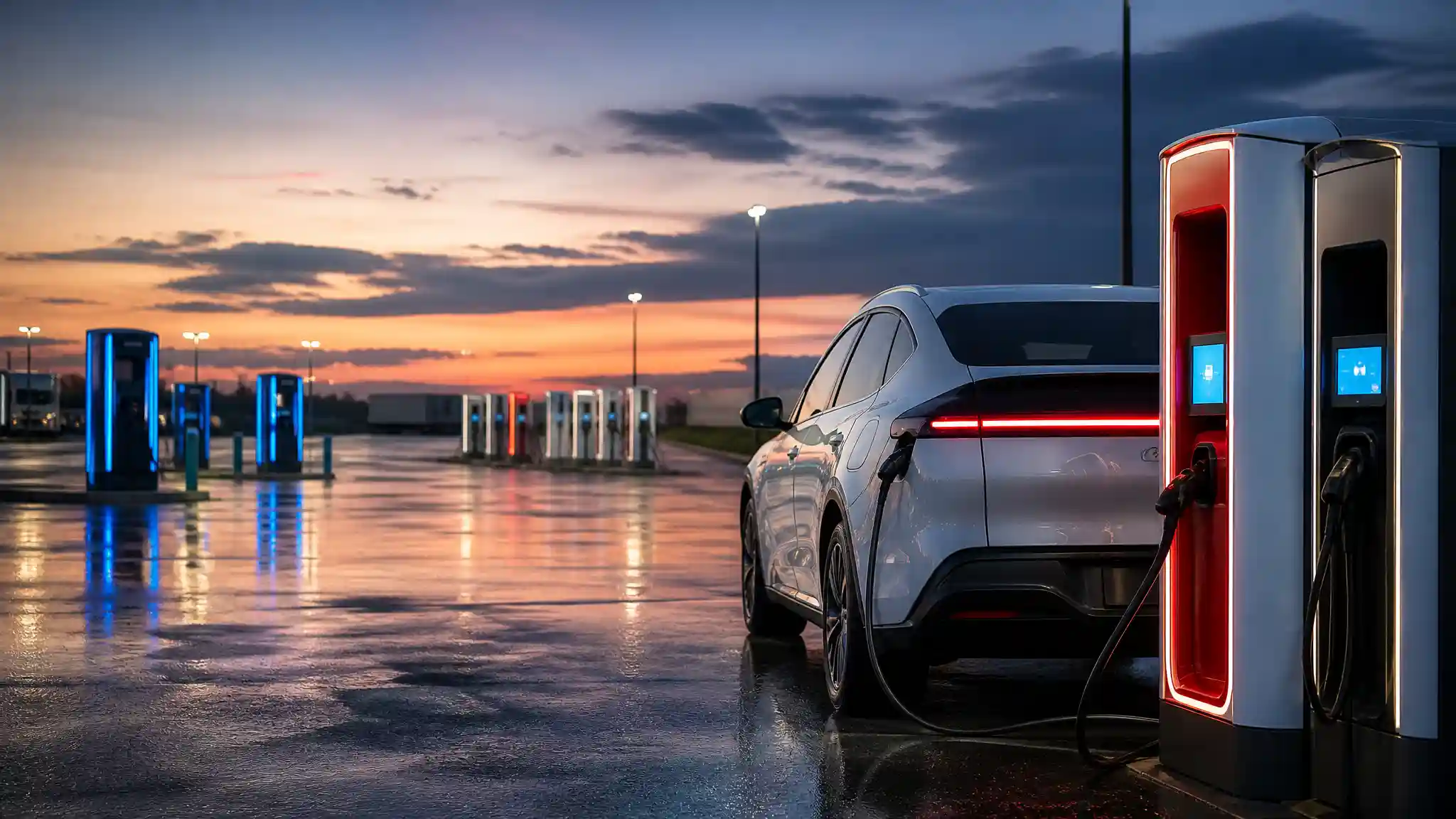

The Battle of America’s Fast Charging Networks: Tesla Supercharger vs Electrify America vs ChargePoint
The United States electric vehicle market runs on more than just batteries and motors. It runs on chargers. As millions of drivers switch to EVs, three networks dominate the conversation: Tesla Supercharger, Electrify America, and ChargePoint. Each network takes a different approach to speed, reliability, and pricing, and each shapes the daily experience of EV ownership in a unique way. This article breaks down how these networks compare and helps you decide which one fits your driving habits best.
Tesla Supercharger: The Reliability Champion
Tesla built its Supercharger network with one goal in mind: eliminate range anxiety. The company controls the hardware, software, and vehicle integration end to end, and that vertical integration pays off in consistency. Independent studies consistently rank Tesla’s uptime above 99%, far ahead of most competing DC fast charging networks.
Tesla’s NACS connector plays a major role in this success. The plug is compact, reliable, and now recognized as the industry standard across North America. Ford, GM, Rivian, and several other automakers have already adopted NACS, giving non-Tesla drivers native access to thousands of Supercharger stalls through the Tesla app or a simple adapter.
Speed-wise, Tesla’s V3 stations deliver up to 250 kW, while newer V4 stalls push toward 325 kW and beyond. Pricing typically ranges from $0.25 to $0.60 per kWh, with Tesla owners and subscribers enjoying the lowest rates. The Plug and Charge technology Tesla pioneered removes the need for apps, cards, or manual authentication — you simply plug in and charging begins automatically.
With roughly 30,000 stalls across North America, Tesla’s network dwarfs its rivals in raw scale. For long-distance road trips, this coverage translates into fewer detours and shorter wait times, especially along major interstate corridors.
Electrify America: Power at the Cost of Consistency
Electrify America emerged from Volkswagen’s diesel emissions settlement, and the company invested heavily in ultra-fast charging infrastructure. Its stations use the CCS compatibility standard, which remains the most widely supported connector among traditional automakers, though NACS ports are now being added at many locations.
Electrify America’s biggest selling point is raw power. Its newest V4 cabinets can theoretically reach 500 kW, with individual posts delivering up to 325-350 kW. For EVs built on 800-volt architecture, like the Porsche Taycan or Hyundai Ioniq 5, this translates into faster charging sessions and more miles added per minute than a typical Tesla V3 stall.
However, that power advantage comes with tradeoffs. Reliability sits between 90% and 95% uptime, noticeably behind Tesla’s near-perfect record. Drivers occasionally encounter broken units, software glitches, or throttled charging speeds during peak hours. Pricing runs from $0.31 to $0.48 per kWh for Pass+ members, with non-member rates climbing significantly higher in expensive states like California.
Electrify America continues to expand aggressively, adding NACS connectors at major hubs and converting select stations to serve both connector types. This transition matters because it signals where the entire industry is headed: toward a single, interoperable charging standard that benefits every EV owner regardless of brand.
ChargePoint: The King of Everyday Charging
ChargePoint takes a fundamentally different approach. Rather than focusing on highway corridors, it dominates destination charging — workplaces, apartment complexes, shopping centers, and hotels. With tens of thousands of Level 2 charging ports nationwide, ChargePoint owns the largest footprint by station count of any network in America.
Most ChargePoint stations deliver Level 2 charging, adding roughly 20 to 30 miles of range per hour. This makes the network ideal for commuters who charge overnight or during a workday rather than travelers who need a rapid top-up. ChargePoint does operate DC fast chargers as well, though speeds typically max out around 62.5 kW, well below what Tesla and Electrify America offer.
Pricing on ChargePoint varies because individual site hosts set their own rates. This creates inconsistency, but it also means many workplace and retail locations offer highly competitive or even free charging as an employee or customer perk. The ChargePoint app provides real-time availability data, helping drivers avoid wasted trips to occupied stations.
ChargePoint’s ownership model, where third parties own and maintain the hardware, does create some reliability concerns. Maintenance quality varies by location, and some stations experience longer downtime than networks with centralized control. Still, for daily urban EV charging, ChargePoint’s sheer number of public EV charging stations gives it an advantage no rival can match.
Which Network Wins for Your Driving Style?
There is no single winner in this fast charging network comparison because each company optimizes for a different use case.
Tesla owners and drivers planning EV road trip charging should default to Superchargers for their unmatched reliability and dense highway coverage. Non-Tesla drivers covering long distances will find Electrify America’s raw speed valuable, especially with an 800-volt vehicle capable of exploiting those higher charging rates. Commuters and urban dwellers who charge overnight or during errands benefit most from ChargePoint’s widespread Level 2 charging presence.
The broader trend across all three networks points toward convergence. NACS adoption is unifying the connector landscape, and pricing models are becoming more transparent as competition increases. The EV charging cost per kWh gap between networks is narrowing, though Tesla still holds a measurable edge in charging network reliability.
Final Thoughts
America’s fast charging war isn’t really about who wins outright. It’s about giving drivers more choice, more coverage, and better technology every year. Tesla leads on consistency and scale, Electrify America pushes the limits of raw charging speed, and ChargePoint quietly powers the daily routines of millions of EV owners at home and work. Understanding these differences helps you choose smarter, save money, and spend less time waiting at a charger.
Recommended Product
If you frequently switch between charging networks or own a non-Tesla EV wanting Supercharger access, consider the Lectron Tesla to J1772 Adapter available on Amazon. It lets non-Tesla EVs charge at Tesla destination chargers, giving you extra flexibility across multiple networks.