
Best In-Car Dash Cameras for Hot Climates: A Florida Heat-Resistance Guide
Florida drivers face a unique challenge every summer: scorching heat that can destroy standard electronics parked under direct sunlight. Choosing the right dash camera for extreme temperatures isn’t just a convenience—it’s essential for protecting your investment and ensuring reliable footage when you need it most.
Why Heat Resistance Matters for Dash Cameras
Standard dash cameras rely on lithium-ion batteries, which degrade rapidly when temperatures inside a parked car exceed 140°F (60°C) during Florida summers. Manufacturers design heat-resistant dash cams with supercapacitors instead of batteries, allowing the device to function reliably even in extreme heat. These capacitors charge faster, last longer, and won’t swell or leak like traditional batteries do under intense sun exposure.
Drivers who skip this consideration often experience camera shutdowns, blurry footage, or complete device failure within months. Investing in a temperature-resistant model protects you from costly replacements and ensures your camera captures crucial evidence during accidents or insurance claims.



Key Features to Look for in a Heat-Resistant Dash Cam
Supercapacitor Technology
Supercapacitors handle high temperatures far better than lithium batteries. They store less energy but recharge instantly, making them ideal for continuous parking mode recording in hot climates like Florida.
Wide Operating Temperature Range
Look for cameras rated to withstand temperatures between -20°C and 70°C (or higher). This specification indicates the manufacturer tested the device specifically for extreme heat and cold conditions, giving you confidence during Florida’s humid summers.
Quality Image Sensors
High-quality sensors maintain clear video resolution even when internal components heat up. Sony or OmniVision sensors typically perform better under thermal stress compared to generic alternatives found in budget models.
Ventilation and Housing Design
Manufacturers now design dash cameras with improved airflow and heat-dissipating materials. A well-ventilated housing prevents internal component damage and extends the camera’s overall lifespan significantly.
Parking Mode and Motion Detection
A reliable parking mode conserves energy while monitoring your vehicle in extreme heat. Motion detection triggers recording only when necessary, reducing strain on internal components during long, hot Florida afternoons.
Top Considerations for Florida Drivers Specifically
Florida’s combination of intense UV exposure, high humidity, and prolonged sunshine creates a demanding environment for automotive electronics. Windshield-mounted cameras absorb direct sunlight for hours, causing internal temperatures to spike dramatically.
Choose cameras with UV-resistant lens coatings to prevent discoloration and image distortion over time. Additionally, select models with automatic overheat protection that pauses recording temporarily rather than permanently damaging the device. This feature alone saves drivers significant money on replacements.
Humidity resistance also matters. Look for dash cams with sealed connectors and moisture-resistant circuit boards, since Florida’s tropical climate introduces additional stress beyond just heat.
Installation Tips to Reduce Heat Exposure
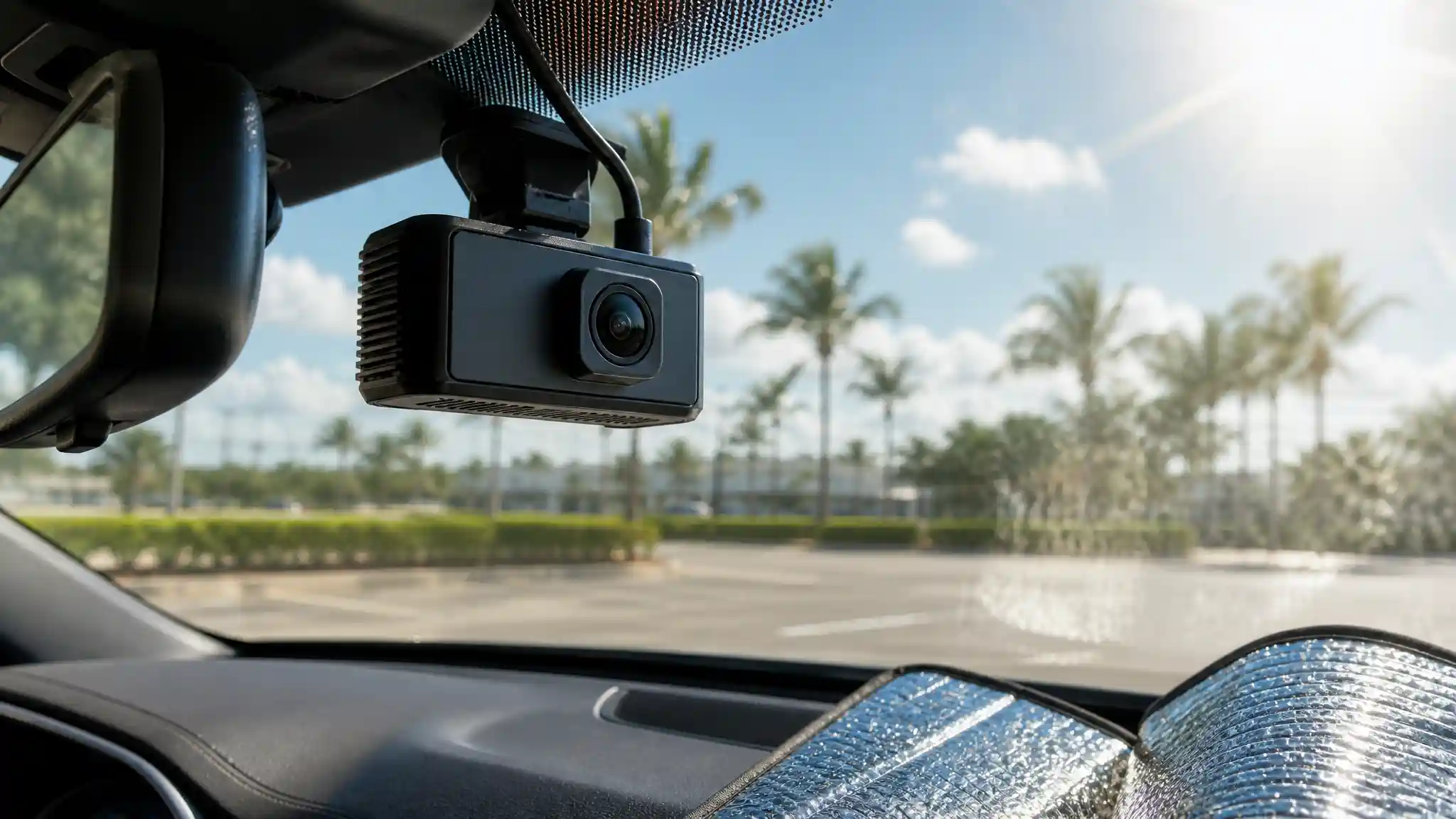
Proper installation extends your dash camera’s lifespan considerably. Position the camera away from direct sunlight when possible, and use reflective windshield sunshades during extended parking periods. Route power cables carefully to avoid trapping heat near the device’s internal components.
Regularly clean the camera’s housing and lens to prevent dust accumulation, which can trap heat and reduce cooling efficiency. Check mounting adhesive periodically, as extreme heat weakens standard adhesives faster than expected.
Recommended Dash Cam Specifications for Extreme Heat
When shopping for a heat-tolerant dash camera, prioritize these specifications:
- Operating temperature range of at least -20°C to 70°C
- Supercapacitor power storage instead of lithium battery
- 1080p or 4K resolution with quality night vision
- Automatic thermal shutdown protection
- GPS logging for accurate location and speed data
- Wide dynamic range (WDR) for handling Florida’s intense glare
Cameras meeting these criteria typically cost more upfront but deliver significantly longer service life in hot climates, making them a smarter long-term investment.
Maintaining Your Dash Camera During Summer Months
Regular maintenance keeps your camera functioning optimally throughout Florida’s punishing summer season. Remove the device during extended parking if temperatures exceed manufacturer recommendations. Store it in a shaded location or insulated bag when not actively recording.
Update firmware regularly, since manufacturers often release patches that improve thermal management and overall performance. Check memory cards for corruption periodically, as extreme heat can affect data storage reliability over time.
Recommended Product: Amazon Pick
For Florida drivers seeking a reliable, heat-resistant option, the VIOFO A129 Pro Duo Dash Cam stands out as an excellent choice. It features a supercapacitor design, wide temperature tolerance, 4K front recording, and robust parking mode capabilities—all essential qualities for surviving Florida’s extreme summer conditions. You can find it listed on Amazon.com.
Final Thoughts
Selecting a dash camera built for extreme heat protects your investment and ensures reliable performance throughout Florida’s demanding climate. Prioritize supercapacitor technology, wide temperature ratings, and quality construction over flashy features alone. A well-chosen heat-resistant dash cam delivers peace of mind, clear footage, and long-term reliability no matter how high the mercury climbs.